
From Novel Strain to Global Panzootic
Subtype H5N1 was first described in 1966. Although it was already known that certain variants possessed a polybasic cleavage site — the hallmark of their high pathogenicity in birds — it was not until 1997 that their zoonotic potential was confirmed following 18 human infections in Hong Kong (6 fatalities). Since 2021, a panzootic wave driven by clade 2.3.4.4b has devastated the global poultry industry and caused mass mortality in wild and domestic birds.
Situation update on avian influenza through March 2025 inclusive
Clade 2.3.4.4b: The Evolution That Changed the Rules
- H5NX reassortants: since 2014, H5N2, H5N5, H5N6 and H5N8 combinations have emerged.
- Global expansion: the H5N1 variant of this clade, which originated in Europe in 2021, reached Asia, Africa and North America via migratory birds.
- Full-length neuraminidase stalk: unlike the classically truncated NA, this trait may increase fitness in mammals and facilitate cross-species spillover.
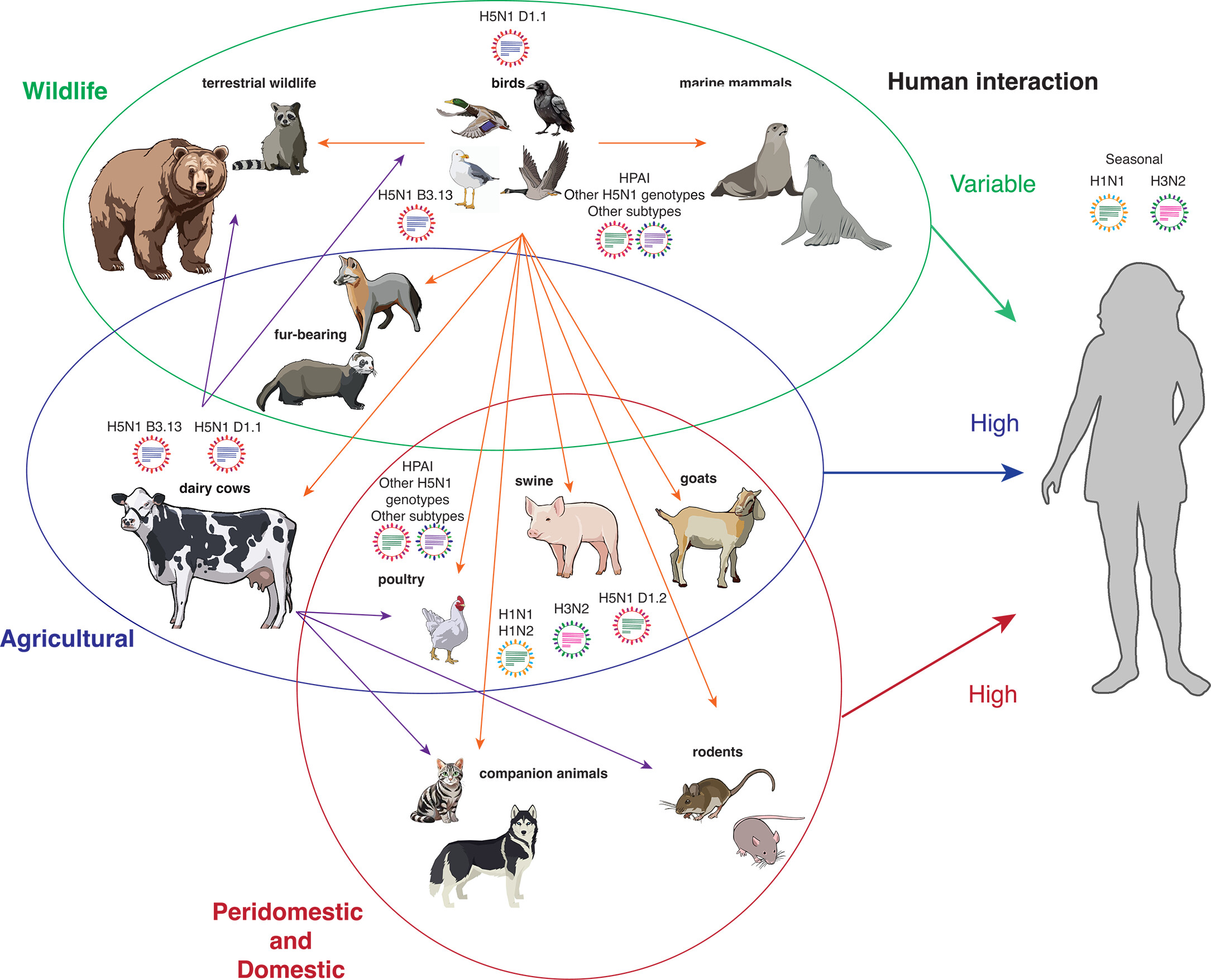
- Multi-species involvement: in addition to birds, infections and mortality have been documented in domestic and wild carnivores, with mammal-to-mammal transmission even recorded on fur farms in Spain and Finland.
Epizootic in U.S. Dairy Cattle
In March 2024, genotype B3.13 was unexpectedly detected in dairy cows in Texas. The virus — introduced by a single bird-to-bovine spillover event in late 2023 — spread rapidly: 973 affected herds across 17 states as of 22 February 2025.
- Primary route: milk and milking equipment; milk from infected cows contains 7–9 log10 TCID₅₀/ml.
- Clinical signs: mastitis, sharp drop in milk production and permanent sequelae in animals infected via the intramammary route.
- Public health: 41 confirmed cases in farmworkers and serological evidence of subclinical infections; 70 total human cases in the U.S. (22 Feb 2025). Most cases are mild, but severe and fatal cases linked to genotype D1.1 (of avian, not bovine, origin) have been recorded.
Impact and Risks for the Poultry Industry
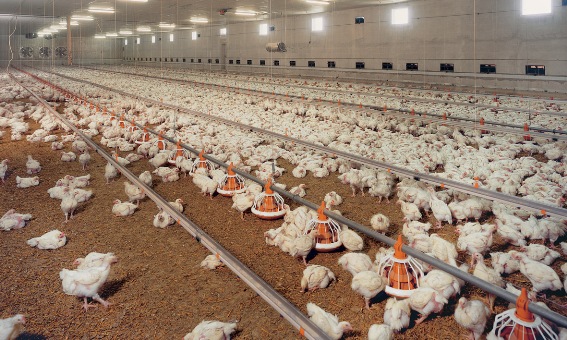
- Wildlife reservoir: tolerant migratory ducks facilitate dissemination and seed explosive outbreaks on poultry farms.
- Receptor compatibility in pigs: the co-expression of α2,3 and α2,6 receptors makes swine a potential “mixing vessel” for reassortants with human seasonal viruses.
- Historical human case fatality rate: 52% between 2003 and 2023 (878 cases, 458 deaths). The apparent rate in the current wave is lower, but the frequency of infections is increasing and each new case expands the opportunity for viral adaptation.
Available Countermeasures
- Vaccines: candidate viruses and a licensed formulation (A/Astrakhan/3212/2020, H5N8-MF59) are available, the latter matching the clade 2.3.4.4b HA. Several European countries are already offering it to high-risk workers.
- Antivirals: neuraminidase inhibitors and cap-snatching inhibitors (polymerase PA) have demonstrated efficacy against these genotypes in animal models.
- Biosecurity: vaccination of poultry and cattle, control of animal, equipment and personnel movements, and reinforcement of PPE for farmworkers are urgently needed to reduce the bird–human–mammal interface.
The growing number of confirmed host species, both wild and livestock, reinforces the need to review biosecurity measures and monitor their strict implementation.
Clade 2.3.4.4b H5N1 combines a broad host range, rapid evolution and reassortment capacity. The bovine epizootic reveals its potential to become established in new production species, increasing the risk of human exposure and the emergence of pandemic variants.
For field veterinarians and poultry producers, the priorities are:
- Ongoing clinical and virological surveillance in domestic poultry and local wildlife.
- Immediate reinforcement of biosecurity measures on poultry farms and any facility with inter-species interaction.
- Vaccination planning: evaluate the incorporation of H5 antigens into prevention programmes where they are not yet in use.
- Staff training to recognise early signs and correctly handle equipment and waste.
History shows that H5N1 has not needed to achieve sustained human-to-human transmission to cause severe economic and public health losses. Containing its circulation in birds and other animals remains, today, the most effective barrier against the next evolutionary leap.
Source:
-. Highly pathogenic avian influenza H5N1: history, current situation, and outlook. Krammer F, Hermann E, Rasmussen AL. 2025. Journal of Virology 99:e02209-24. https://doi.org/10.1128/jvi.02209-24
To learn more:
-. Current status of vaccines against Avian Influenza (H5N1)
-. Poultry vaccination against avian influenza
-. Vaccination of poultry farm workers at NeXusAvicultura.com