
The specialist from the Animal Health Research Centre (INIA-CSIC) warns that border controls for monkeypox make no sense, nor does linking zoonotic viruses to immigration, as some politicians have done
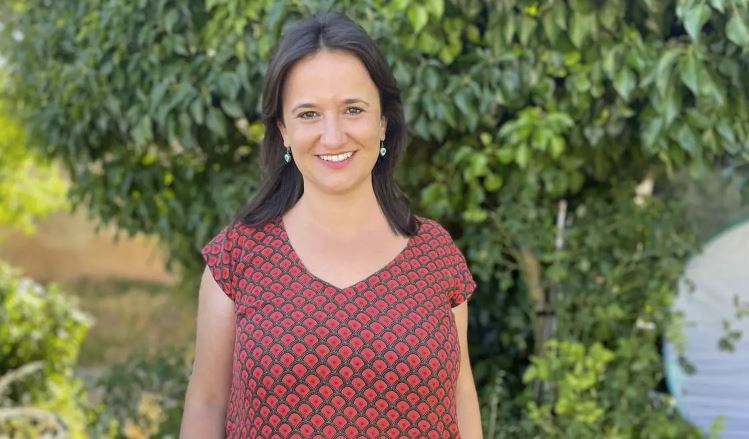
Elisa Pérez Ramírez holds a doctorate in veterinary medicine and is one of the leading national experts in the transmission of pathogens between animals and humans — the well-known zoonosis that came to prominence during the coronavirus pandemic and continues to open new fronts and make headlines. In the midst of a surge in zoonotic virus cases, Ramírez has become a reference figure in Global Health, the title of a book published by Penguin in 2023 of which she is co-author. She has also just published, together with Irene Iglesias, a comprehensive overview of the worrying global advance of avian influenza and what we know so far: Avian Influenza H5N1: an unprecedented epidemic.
To explain the spectacular progression of this disease, Ramírez develops the concept of the zoonotic risk ladder and includes a graphic representation showing the different rungs that this pathogen has progressively climbed since 2020. One after another, the virus has completed all the preceding steps that bring it dangerously close to humans, making it the prime candidate to trigger a new pandemic.

We spoke with this veterinary virologist from the Animal Health Research Centre (INIA-CSIC) via videoconference to discuss this work and current developments in human and animal health.
Monkeypox, West Nile virus outbreaks, Crimean-Congo cases, Oropouche… Are we experiencing a summer of zoonoses?
Many of these viruses were already present — it’s not that they have re-entered. But yes, it is something we must get used to, because our interactions with animals are becoming ever more intensive, both at the domestic livestock level and at many points across the planet where we are encroaching on wildlife habitats. Combined with climate change, this means that these flows of pathogens between animals and humans are very active now and will certainly continue to be so in the future.
Are there ways to reduce these pathogen flows?
It is quite difficult, but anything that reduces interactions with wildlife, both on our part and on the part of livestock, helps. It is very hard to know which virus will jump next, where, and from which host. We are seeing, for example, that the H5N1 avian influenza virus jumped to cattle from wild birds. The type of animals we keep, how we care for them, the type of farms, and their biosecurity all matter. Many of these emergencies are linked to global change, to changes in land use, in climate… We need far more global action.
Is calling for border controls for diseases like monkeypox absurd?
It makes absolutely no sense at the moment. Besides, how would you implement such controls? Are you going to start examining people’s armpits or groins for pustules? As far as I know, there is no rapid test that works reliably — I find it very far-fetched. We know this disease is transmitted through close contact; it is not like COVID-19.
And as for the other infections, you cannot control the movement of mosquitoes or ticks. The West Nile virus circulates between birds and mosquitoes that are already here. It is endemic and has been present in Spain since the early 2000s.
Do scientists feel they are not being listened to?
Those of us who work in zoonoses can see how difficult it is for people to view these emerging diseases in a much more holistic way. It seems that until there are human cases, no one cares — or even until it happens in Europe or the United States. With avian influenza, for example, it was not until these first cases appeared in farmworkers on dairy cattle operations that attention was drawn to the problem, yet three years earlier we were already discussing one of the most devastating diseases in history for wildlife. Hundreds of thousands of birds and mammals have died across every continent except Australia; the impact on biodiversity has been absolutely devastating and utterly unprecedented, and it seems as though no one cares. It seems no one understands that if all the marine mammals in South America die, the impact on the ecosystem is enormous and will ultimately affect us too. That is why I believe we have an outstanding task to talk much more about this interconnectedness, because we love to focus solely on humans and struggle to see that everything is linked.
No one understands that if all the marine mammals in South America die, the impact on the ecosystem is enormous and will ultimately affect us too
And on top of that, the information is being used politically.
Yes, like many things in science, it is heavily influenced by misinformation and the interests of social and political groups who would have you believe that the Crimean-Congo or West Nile virus is here because a man from the Congo arrived with a tick attached to him and it bit us. Or that West Nile virus appears because of high levels of immigration. You don’t need to travel to those places to become infected — all it takes is a walk around Coria del Río or Salamanca and a tick bite.
Although we are now focusing on monkeypox, the prime candidate to turn everything upside down again is avian influenza, isn’t it?
Yes, I believe Influenza viruses have no rival in terms of pandemic potential. It is true that coronaviruses got there before them, but influenza viruses have all the perfect characteristics to give us a serious scare. And what we have been witnessing with avian influenza over the past three and a half years is unprecedented — we have never seen anything like it, for several reasons. First, the global spread: we are talking about a panzootic, a pandemic in animals that has reached remote locations such as Antarctica. The worldwide distribution it has achieved in such a short time is remarkable. Another factor is that avian influenza generally caused severe disease in domestic poultry, while wild birds transported it with very rarely showing clinical signs or dying. Now we are seeing massive mortality events involving hundreds of thousands, even millions, of birds. In Peru, for example, 200,000 birds died within four months — 20% of the country’s entire pelican population — along with thousands upon thousands of seabirds in Europe and Africa. And the mass mortalities of marine mammals in South America have been staggering.
Influenza viruses have all the perfect characteristics to give us a serious scare
It sounds like a disaster movie — we seem incapable of recognising that the death of 20% of all pelicans is a warning sign.
Exactly — people are indifferent to the deaths of pelicans. At Península Valdés in Argentina, there was an area where 97% of all southern elephant seals died — it is an absolute catastrophe; no other pathogen has ever caused such mass mortality. And we shall see whether they manage to recover from that impact, whether they return to breed in those areas or never do so again. I think we have lost a great deal of our connection with nature and with animals, our understanding of how important that is. This virus is sending us a warning. I like to explain it using what I call the “zoonotic risk ladder”: for three years we have been climbing rungs, from wild birds to mammals, then major outbreaks on mink farms, then in cats, and now we have reached cattle. We do not know whether the next jump will go directly to humans, or whether another rung involving other species will be added first, but the virus is sending us signals. It is advancing step by step, and fortunately it has not yet acquired the ability to adapt to humans — but we are giving it an enormous number of opportunities.
Do we have any idea how many changes would be needed in the H5N1 virus for it to begin transmitting between humans and become pandemic?
That, of course, is the critical question — whether it jumps from human to human. Several studies have been conducted using ferrets, the animal used as an experimental model. It is thought that the virus would need to greatly improve its ability to bind to human receptors and to transmit via the airborne route, since at present it is having considerable difficulty doing so — since 2020 we have been in a panzootic, yet only 25–30 cases of this variant have been recorded and only four have been severe. It would also need to adapt to evade the human immune system, which is complex.
Essentially, modifications would be required in the haemagglutinin protein on the surface of the virus, as well as in the NP protein and in the RNA polymerase (PB2). It has been calculated that approximately five mutations would be needed for the virus to adapt to humans. It is also noteworthy that these could be point mutations — a reassortment of segments would not be necessary. The genome of these viruses is divided into eight segments; if an animal is infected with two different viruses, it can exchange these genomes and thereby give rise to a virus with different capabilities. This is one of the main evolutionary pathways for influenza viruses, which is why pigs and mink concern us so much — they are what we call “mixing vessel species,” capable of being infected by both avian and human influenza viruses.
In short, not a great many changes are required, but they are key changes that are difficult to achieve. I always say that acquiring this combination of mutations is like winning the lottery — it is unlikely, but in recent years the virus has been buying an enormous number of tickets.
The virus is sending us signals. Fortunately, it has not yet acquired the ability to adapt to humans — but we are giving it an enormous number of opportunities
In 2009, pigs were precisely the route of transmission, weren’t they?
Yes, the 2009 pandemic influenza jumped from pigs, where a triple reassortment occurred — it contained elements of human, swine and avian influenza. It combined all three and produced a fairly problematic virus that managed to jump from pigs to people and adapted to human-to-human transmission. In the current situation, the danger would be a jump from birds or from an intermediate host — if pigs or mink were to become infected, for example — in which case this reassortment could occur and the virus could jump to humans more easily.
Yet, surprisingly, the main focus of concern right now is cattle.
Yes — it was a host species that nobody had on their radar for avian influenza; it is something completely unexpected and unprecedented. All the phylogenetic studies conducted have indicated that the virus probably jumped from wild birds to cattle around late December 2023, and it was not detected until 25 March, when the United States confirmed it was H5N1. This was entirely off everyone’s radar — the symptoms were very unusual, involving mastitis and drops in milk production along with fever and loss of appetite. All the common bovine pathogens were tested and everything came back negative.
The fortunate thing was that a very sharp-eyed veterinarian made the connection, because cats had started dying on a dairy cattle farm. Dead wild birds had appeared, and one day she arrived in her truck and was puzzled that the cats did not come out to greet her. As she recounted in an interview, she asked the farmer, who told her that three or four cats had died within two days. That was when the light went on — she sent samples to be tested for avian influenza, though without much expectation of a positive result. This illustrates just how much nobody had anticipated it appearing in dairy cattle. That is why there were very few studies on avian influenza in cattle until now, when a major effort has been made.
Controlled experiments have recently been conducted in which cattle were deliberately infected to investigate the route of transmission — what did they find?
A group of scientists conducted a dual experiment: first infecting calves via the nasal route, and they found that the animals can shed some virus, albeit very little, but they were unable to infect other healthy cattle housed together with the infected animals. The respiratory airborne route, unlike other influenza viruses, does not appear to play an important role in this case. However, when cattle are infected via the intramammary route, through the udder, a very severe mastitis develops, the clinical signs are very serious, and there is an enormous amount of virus produced in the udder and shed in the milk — which is also a very unusual characteristic of this virus. So fortunately there appears to be little respiratory transmission; instead, transmission is associated with milk and milking systems.
Will we ever need to worry about milk consumption?
We certainly should be concerned, but specifically about raw, unpasteurised milk. Fortunately, all the experiments conducted in the United States and Canada involving the pasteurisation of milk samples from infected cows have shown that the virus is completely inactivated and would be safe for consumption. Raw milk, however, can perfectly well serve as a route of transmission and infection. No case of transmission through ingestion of raw milk has been detected so far: the four human cases recorded involved workers engaged in milking with very close contact with the cattle. However, experiments have been conducted in which mice were given raw milk from infected cows to drink, and the animals developed a systemic infection with severe neurological symptoms. The virus distributed throughout the mice’s bodies, even reaching the mammary glands of the female mice, and it was confirmed that they could transmit it to their offspring through lactation.
We certainly should be concerned — raw unpasteurised milk can be a route of transmission and infection
Has the United States lost control of the situation on its farms?
I think the response has been deficient, particularly in terms of reacting far more swiftly once H5N1 was confirmed. Because, of course, so much time was lost that the virus had already spread to other states, since cattle were being moved without anyone actually knowing what disease they had. There have also been transparency issues: sequences have been shared, but metadata was lacking — we did not know the location of the farms or the detection dates. That information is crucial for understanding how the virus has been evolving. A great deal of basic information that would have allowed far more to be extracted from those sequences has been missing. Even so, the international scientific community has responded in a much better and more collaborative manner. It has become apparent that there was likely a single spillover from wild birds, and this has helped us understand that the virus has subsequently spread back from cattle to domestic poultry and to cats, and even to wild birds and raccoons in the vicinity of farms — meaning that very complex and concerning transmission chains are being established.
Could US farms become the new Wuhan?
Well, it sounds alarming, but to me they seem like the hottest hotspot, without any doubt. In Spain we have had no cases since February of last year — things are much quieter here. We shall see what happens when bird migrations begin.
Is the greatest warning sign of this virus its jump between mammals?
This new strain of avian influenza is adapting in a very remarkable way to an enormous variety of mammals and, above all, to transmission between them. The first time we saw this was in 2022 on a mink farm in Galicia, and it was subsequently confirmed in sea lions and in this latest case involving cattle. It has adapted to mammal-to-mammal transmission — that is something we had never seen before. This makes it easier for the virus to progress; we are giving it many opportunities to adapt and trial strategies, to buy lottery tickets for mutations. And of course, never before in a livestock species have we seen outbreaks so large in which the virus is transmitting so readily among cattle — it is dangerous.
Given what we know about mink farms, isn’t it time to close them all?
Many countries have closed them entirely. For me, what happened with COVID was already serious enough to warrant drastic measures. Mustelids are highly susceptible to many human respiratory viruses, and we are talking about facilities like the one in Galicia that housed 50,000 mink reared in extremely close proximity to one another. This is a species highly susceptible to human viruses, reared at high density in facilities with very considerable biosecurity shortcomings. In the Galicia case, it appears clear that there was direct contact with infected seabirds — gulls or gannets — entering to feed on the mink’s food. That cannot be allowed; those intensive interactions with wildlife must be prevented by all possible means, because you have there a perfect breeding ground.
Fortunately, on that occasion the entire veterinary surveillance system functioned very well and it quickly occurred to someone that it could be avian influenza. All the animals were culled and there was no spillover to the farm workers, which could have been a very serious scare. After so many scares — first with COVID, then with avian influenza — I honestly do not know what more needs to happen for more decisive measures to be taken.
After so many scares, I do not know what more needs to happen for more decisive measures to be taken [against mink farms]
Some countries are vaccinating their poultry against this influenza — how does that work?
A vaccine exists that can be used in poultry. Since some European countries were massively affected — and it was an economic and personal tragedy, because all the animals on each affected farm are culled — France ultimately decided to implement a vaccination programme. However, it is quite complex, because while it greatly reduces clinical signs and mortality, it does not block viral transmission. This means you may face the problem of other countries being reluctant to import poultry from France because the virus could be circulating silently without revealing its presence. Some vaccines are administered as drops in water to chicks, while others are injectable. Millions of ducks were vaccinated and the incidence was indeed reduced dramatically — from over two hundred affected farms to just ten.
So if an avian influenza pandemic were to break out, would we have some groundwork already done on vaccines?
Vaccine platforms are quite well advanced, yes — it would be a matter of adapting them to the specific H5 type that jumps to humans. We are not starting from scratch as we were with COVID; in terms of vaccine preparedness, we are in a far stronger position.
Is our farming system a magnet for future pandemics?
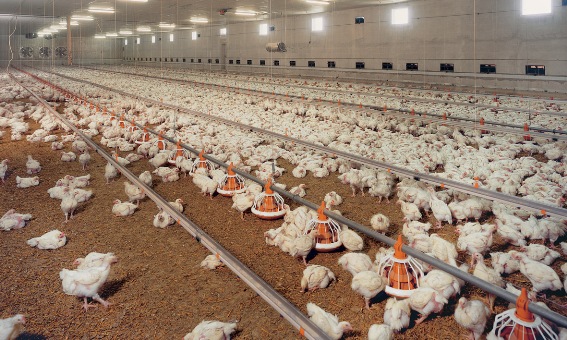
One telling statistic: over the past 50 years, the number of poultry reared worldwide each year has gone from nearly 6 billion to 35 billion — a sixfold increase, which is staggering. There are enormous farms housing millions of birds; if a low-pathogenicity virus carried by wild birds encounters one of these operations, it can spread extremely rapidly and the transition to high pathogenicity occurs easily. With farms of this scale, controlling viruses is very difficult. And if you site them next to a wetland used by migrating wild birds, the risks are enormous. On top of that, in some countries the biosecurity of the facilities is very poor and the virus can enter through many routes.
Are cats at risk?
Yes — it has already happened, in fact. What has not occurred so far is transmission between these animals. But there were significant outbreaks in Poland in the summer of 2023, because cats are highly susceptible to this subtype, unlike dogs, and they develop very unpleasant neurological symptoms. There were deaths, and the route of transmission appears to have been the consumption of contaminated poultry meat — so a sound recommendation for cat owners is not to feed raw meat to your cat, and not to let it roam outdoors.
What news about the next step this virus takes would you least want to wake up to?
Several things. I would not want to start seeing symptoms in the wife or children of a dairy farm worker in the United States — that would imply some human-to-human transmission had occurred, and that would be rather alarming. It would also be very bad news if this virus were detected in another livestock species, particularly pigs, which we know have this great capacity to act as a viral mixing vessel.
Source: Interview of 19 August 2024 on elDiario.es conducted by Antonio Martínez Ron