
This study investigates the genetic changes associated with domestication in animals such as pigs and chickens, compared with their wild ancestors, the wild boar and the red junglefowl. Through an analysis of gene expression data collected from public databases, differentially expressed genes were identified between domesticated animals and their wild counterparts. These genes play key roles in biological processes such as immune response, metabolism, and stress response.
Background and Objectives
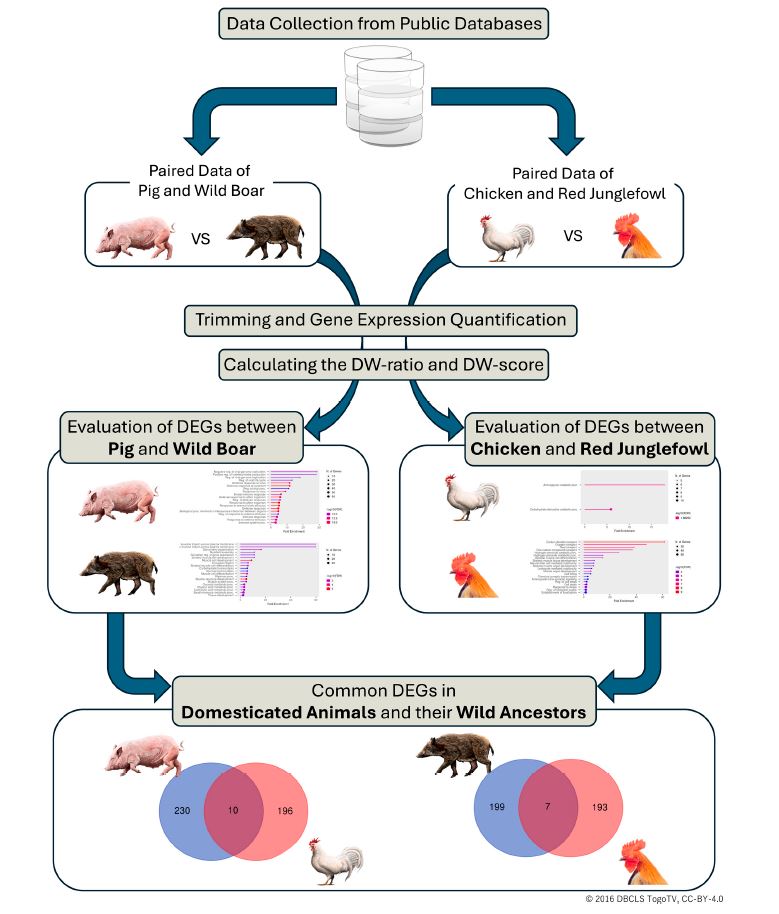
Domestication has had a significant impact on the behaviour, morphology, and physiological functions of animals, altering their genetic characteristics. The aim of the study was to identify common patterns in gene expression that could explain the adaptations observed during the domestication process. To this end, gene enrichment analyses were performed and the gene expression profiles of domesticated pigs and chickens were compared against those of their wild ancestors.
Main Results
- Differentially Expressed Genes:
- In domesticated animals, genes related to the immune response, such as those involved in defence against viral infections, were significantly more highly expressed. This suggests that domesticated pigs and chickens were selected for disease resistance, a beneficial trait in intensive farming environments.
- In contrast, genes associated with energy metabolism and stress response were more highly expressed in wild ancestors, reflecting their need to adapt to more hostile environments.
- Key Species and Genes:
- Ten key genes were found in common between domesticated pigs and chickens, including IFI6 (associated with immune response) and EZH2 (involved in epigenetic regulation).
- In wild ancestors, 7 common genes were associated with functions such as cell proliferation and cardiovascular regulation.
- Gene Enrichment Analysis:
- In domesticated pigs, an enrichment of genes favouring viral replication and interferon production was observed, whereas in wild boars, genes related to leucine uptake were prominent, which is critical for muscle growth and metabolism.
- Implications for Animal Breeding and Health:
- The findings offer new opportunities to improve animal breeding through the genetic selection of desirable traits, such as disease resistance and growth capacity. The identification of specific genes could guide future genetic improvement programmes aimed at producing healthier and more productive animals.
Practical applications in livestock farming
This study provides a valuable genetic basis for understanding the domestication process and how it has shaped the gene expression profiles of domesticated pigs and chickens. Furthermore, it highlights potential candidate genes that could serve as targets in future breeding programmes, with the aim of improving the sustainability and health of farm animals.
For further reading: “Transcriptional Signatures of Domestication Revealed through Meta-Analysis of Pig, Chicken, Wild Boar, and Red Junglefowl Gene Expression Data“