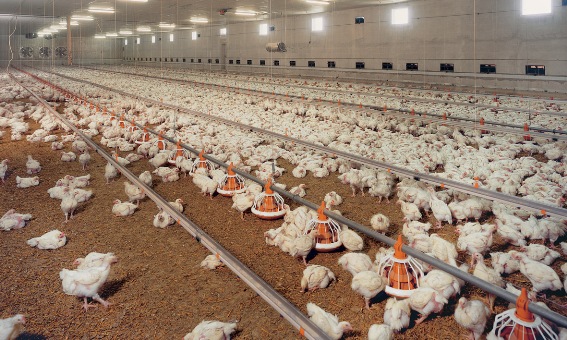


Brazil overcomes the Avian Influenza (AI) outbreak and self-declares AI-Free Country following a swift quarantine
End of the Sanitary Standstill Period and Self-Declaration as AI-Free Country
The Brazilian Ministry of Agriculture and Livestock (Mapa) officially notified, on 18 June 2025, the World Organisation for Animal Health (WOAH) of the end of the sanitary standstill period, in accordance with international protocols. After 28 days with no new cases recorded, the country self-declares free of highly pathogenic avian influenza (HPAI) in commercial farms. The quarantine period began on 22 May, following the disinfection of the farm located in Montenegro (RS), where on 16 May the first and only outbreak of the disease in a commercial farm in Brazil was detected. Prior to this incident, all previously recorded cases in Brazil had occurred exclusively in wild and backyard birds.

International health status restored, but the impact on exports has been substantial
As the world’s largest exporter of poultry meat, Brazil’s confirmation of the outbreak triggered alarm and led to nearly 65 countries imposing various trade restrictions. Major importers such as China and the European Union applied suspensions on purchases from the entire Brazilian territory, although some opted for regional restrictions limited to the state of Rio Grande do Sul or the municipality of Montenegro.
According to the Brazilian Animal Protein Association (ABPA), these measures resulted in a 12.9% decline in poultry exports in May compared to the same month in 2024.
Mapa is directly notifying the countries that imposed temporary restrictions with the aim of restoring international trade as quickly as possible. ABPA’s expectation is that, with the end of the sanitary standstill period and the confirmed containment of the case, trade barriers will be lifted in the coming weeks, allowing the full normalisation of trade flows without detriment to export performance in 2025. It should be noted that Brazil’s poultry production is the most exported in the world.
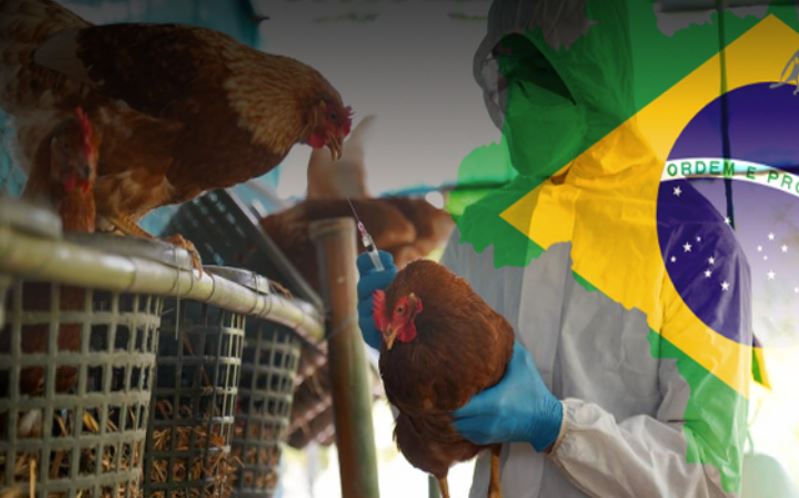
A highly professionalised and robust sector
The Minister of Agriculture and Livestock, Carlos Fávaro, highlighted the “robustness of our health system, which responded with full transparency and efficiency”. He stated that the country “followed all protocols, contained the outbreak and is now moving responsibly towards a gradual resumption of foreign trade, demonstrating the strength of Brazil’s sanitary service”. The notification process to WOAH was carried out in a technical and transparent manner by Mapa’s Secretariat of Agricultural Defence, providing a robust technical basis to support the decision-making of health authorities in other countries.
Carlos Goulart, Secretary of Agricultural Defence at Mapa, emphasised that overcoming the outbreak “not only strengthens the credibility of our health system, but also represents a fundamental step towards the reopening of markets and the normalisation of exports”.
“Brazil was the last of the major producers that had never had a single case even in commercial poultry. This time it had one, it controlled it, prevented it from spreading and showed the world that it was prepared for it.” – Ricardo Santin, President of ABPA.
Ricardo Santin, President of ABPA, noted that the episode was an “important test” that demonstrated both the vulnerability and the maturity of Brazil’s animal health defence system. He highlighted that Brazil, being the last of the major producers never to have had a case in commercial poultry, controlled it and “showed the world that it was prepared for it”. Through this response, Brazil reaffirms its position as one of the world’s largest exporters of poultry meat, upholding its health standards and its commitment to biosecurity in poultry production, thus strengthening its image as a reliable supplier of animal protein.
Strengthening biosecurity and reaching consensus on international policies on Avian Influenza vaccination: the main lessons from this outbreak
Despite the successful resolution of this outbreak, Brazilian authorities acknowledge that constant vigilance is essential, that one battle has been won but the country must prepare for a war against AI, as this disease — in Brazil and worldwide — is here to stay, and the poultry industry must learn to live with it.
Minister Carlos Fávaro stressed that the country will seek to lead a global discussion on avian influenza vaccination, with the aim of preventing future disruptions to international trade, and proposed that Brazil host an international conference on the subject in 2026.
“The country will seek to lead a global discussion on avian influenza vaccination, with the aim of preventing future disruptions to international trade.” – Carlos Fávaro, Brazil’s Minister of Agriculture.
Ricardo Santin stressed that the global spread of Avian Influenza demands “ever-greater investment in preparedness to deal with situations such as this one”. He also highlighted the need to increase investment in farm biosecurity and to advance health agreements with importing markets, given that the disease will continue to circulate in migratory birds throughout Latin America. The ABPA President concluded that it is necessary to “coexist with this disease that is here, flying over our farms on the wings of migratory birds”, and that the sector must strengthen farm biosecurity to protect animals and ensure that food does not become scarce on Brazilian tables.
For further information:
-. Brazilian poultry industry on NeXusAvicultura
-. Avian Influenza on NeXusAvicultura
-. Current status of vaccination in poultry against Avian Influenza, and in humans, on NeXusAvicultura