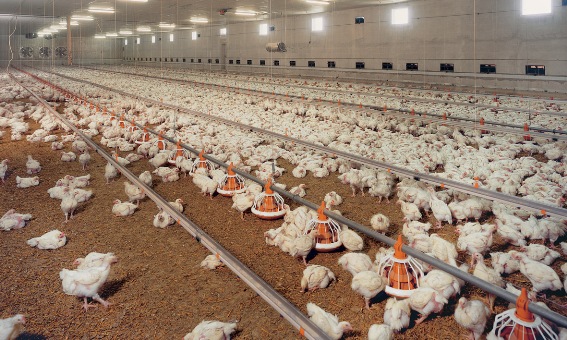


Biosecurity measures are being stepped up on poultry farms to prevent possible outbreaks
RTVE.es analyses avian influenza and its potential consequences with immunologist María Montoya
Avian influenza: How is it affecting Spain?
On 3 January, Portuguese authorities confirmed the first highly pathogenic avian influenza (HPAI) outbreak in poultry of the current season. It involved a flock of 55,427 laying hens located in the municipality of Sintra, very close to Lisbon.
Suspicions that the H5N1 virus had reached the Portuguese farm arose from an abnormal increase in mortality. Once the presence of avian influenza was confirmed, the European Union protocol for controlling the outbreak was immediately applied: culling of all 55,427 hens and destruction of their carcasses to prevent transmission of the virus. A protection and surveillance zone of 10 kilometres has also been established.
Cold weather and migration favour the spread of influenza
Across the rest of Europe, the drop in temperatures and the increase in migratory movements of wild birds at this time of year have intensified the circulation and spread of the virus. In January alone, 99 cases of HPAI H5N1 were detected in wild birds across 14 countries, 23 cases in captive birds across 7 countries, and 33 outbreaks in poultry across 8 countries, the majority concentrated in Central Europe.
Gulls, ducks and other wild birds in a wetland. “All influenza viruses are found in wild aquatic birds,” explains immunologist María Montoya. GETTY IMAGES
In Spain — according to the Avian Influenza Surveillance Programme of the Ministry of Agriculture, Fisheries and Food (MAPA) — virus circulation to date remains limited. No cases of HPAI H5N1 have been detected in poultry; however, the surveillance programme implemented by the Autonomous Communities has detected — since 1 July 2024 — a total of 20 cases in wild birds (mainly in various gull species) and 1 case in captive birds, in the Autonomous Communities of Galicia (19), Castilla y León (1) and Catalonia (1).
María Montoya, immunologist
To understand what avian influenza is and what consequences it may have, we visited the Centro de Investigaciones Biológicas Margarita Salas (CIB-CSIC) to draw on the expertise of immunologist and influenza virus specialist María Montoya.

Immunologist María Montoya in her laboratory at CIB-CSIC Margarita Salas
QUESTION: What is avian influenza?
ANSWER: The origin of the influenza virus, in general, lies in wild aquatic birds — ducks, gulls… migratory birds. That is where all influenza viruses are found. Some of them then naturally infect humans, others infect pigs, others infect horses, and so on. “Influenza viruses are classified by two proteins — two molecules found on their surface — namely haemagglutinin (H) and neuraminidase (N). Avian influenza encompasses all possible combinations of H and N subtypes. Some cross over to humans, some to pigs, some to horses and to various other hosts.

There are 18 H subtypes and 11 N subtypes that can combine with one another. Viruses carrying H5 or H7 are classified as highly pathogenic — they are the dangerous ones. In humans, we currently do not have them — except for sporadic infections. In birds, they are quite common.
Q: How is it transmitted to humans?
A: At present, it does not transmit efficiently from human to human. Influenza requires prolonged contact between birds and a person. What we know is that transmission occurs via the respiratory route. If you are in what is called close contact — very near to someone — you are naturally breathing their air, and there are droplets that we secrete when we speak and breathe that contain viral particles.
Avian influenza viruses behave differently in birds compared to mammals. They are not solely respiratory — they also infect the digestive tract. When birds are in a wetland, because the digestive tract is infected, their faeces contaminate the water, and the water infects the animals that come to drink and interact with the birds. In mammals, however, transmission is exclusively respiratory — as far as we know.
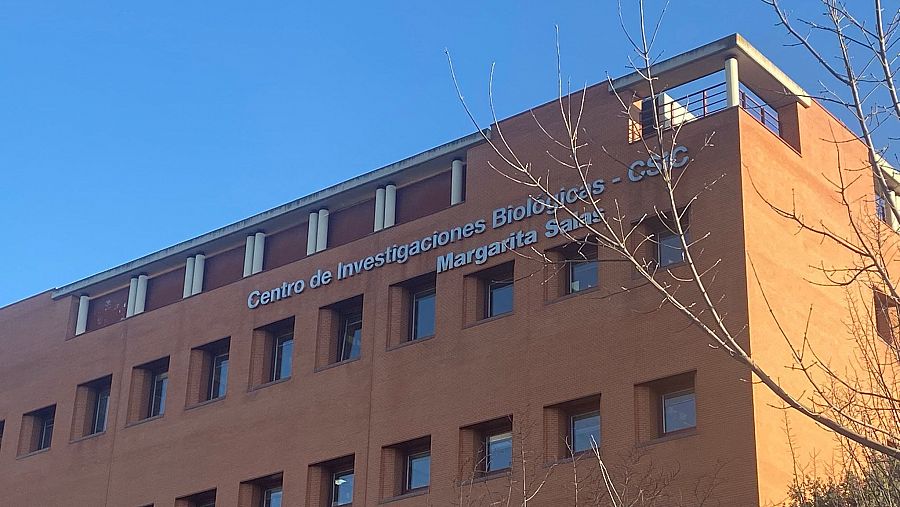
Centro de Investigaciones Biológicas Margarita Salas. Immunologist María Montoya leads a team of researchers studying influenza viruses at the CIB.
Q: How can it be prevented?
A: For now, transmission of H5N1 between humans is not very efficient. It may evolve. What can we tell the public? That it will not be like the SARS-CoV-2 pandemic, because we have all had influenza once or twice and we have a set of defences. Our immune system will react against those defences and we will be better equipped to fight it. With SARS-CoV-2, we had no pre-existing immunity. We must be vigilant, but not frightened.
Q: What kind of surveillance does the WHO carry out?
A: The World Health Organization has a network of influenza reference centres around the world, and these report on what is circulating. They hold reference strains and have all the tools needed to provide a diagnosis, particularly for complex influenza strains and highly pathogenic ones. When those reference centres issue an alert, a mechanism is set in motion. For influenza we have a structure in place — for SARS-CoV-2 we had nothing.
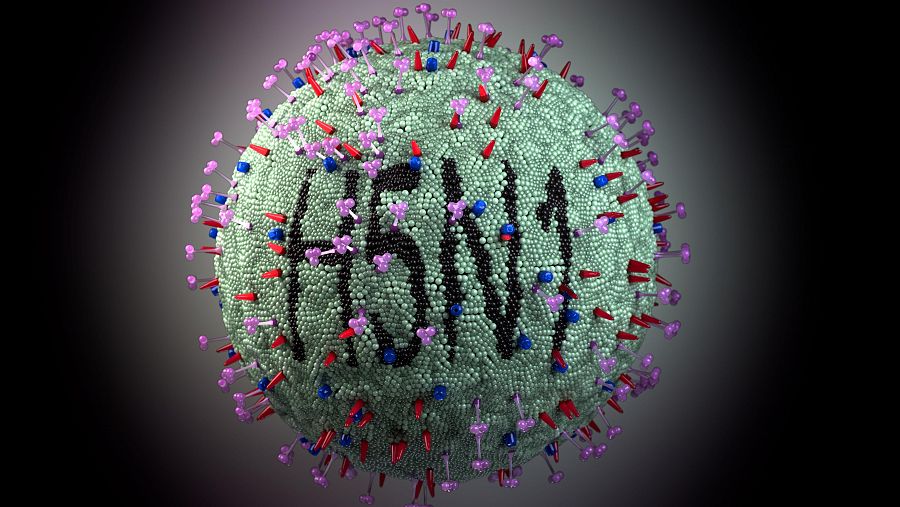
Representation of the avian influenza virus.
Q: Is there a vaccine for avian influenza?
A: The topic of influenza vaccines is very complex because what is circulating changes completely every year. In the global population, it is rare to find a person who has never had influenza. Our immune system is our defence system — our army — and our army has memory: it remembers. When it has encountered an enemy, it recalls it and knows what it needs to activate to destroy the virus.
Q: Why has free-range hen keeping been prohibited?
A: They must implement containment measures for safety reasons. Only workers are permitted entry, subject to a set of restrictions. Surveillance is the first priority.
Q: What impact does the ban have on the poultry industry?
A: “The price of eggs — a fairly inexpensive and accessible food — has skyrocketed because many farms have been affected,” notes Spanish scientist María Montoya. In the first week of January 2025, in the United States, a trailer carrying 100,000 eggs valued at $40,000 was stolen. The North American country is experiencing a worrying egg shortage caused by avian influenza, which has forced the culling of millions of laying hens since December 2024.
Source:
-. RTVE