
Research published in the journal Nature warns that control strategies for the avian influenza virus (H5N1) “are not working”, raising the possibility that variants may be spreading silently without being detected.
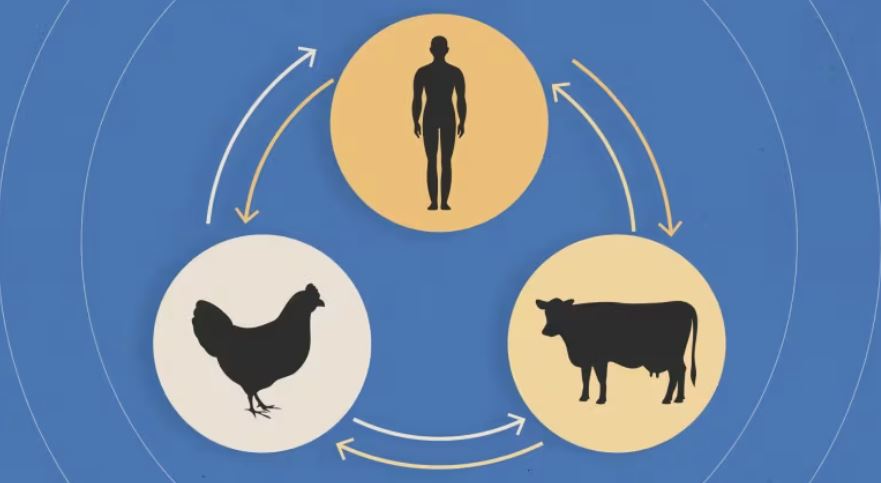
The study, led by researchers from the Pirbright Institute of veterinary sciences in the United Kingdom, has analysed recent outbreaks of the H5N1 virus in mink on fur farms in Galicia, in seals and sea lions in South America, and on dairy cattle farms in the United States, where more than 200 herds across 14 states have already been affected.
It was precisely in Missouri (USA) that the first human case of AI with no contact with infected animals was detected last August, marking the fourteenth human infection reported so far this year in that country, although the previous 13 cases did involve individuals exposed to infected animals.
Lack of control in the USA
The researchers found that virus surveillance strategies are failing to report transmission data, particularly on US dairy cattle farms, creating “enormous gaps in control mechanisms”.
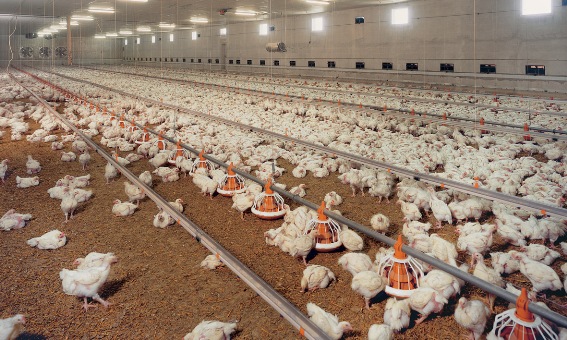
“The problem stems from the fact that in the USA, reporting avian influenza is only mandatory in poultry, not in mammals. The Department of Agriculture only requires H5N1 testing when lactating livestock is moved from one state to another,” notes one of the study’s authors, Thomas Peacock, a zoonoses specialist at the Pirbright Institute.
Peacock highlights the contrast between the current lack of data on the spread of AI virus on US farms and the comprehensive control that previous generations of livestock farmers in that country applied to foot-and-mouth disease, which allowed them to effectively contain it.
Silent outbreaks and asymptomatic carriers of avian influenza
The scientists also raise concern about the risk posed by the fact that avian influenza virus analysis in wildlife focuses solely on carcasses, with no testing of live animals, “which means there may be H5N1 variants spreading silently without being detected”.
“The lack of data, and of commitment and resources from public authorities, may be giving rise to silent outbreaks spreading not only on farms, but among people who work with animals,” Peacock states in a press release.
In addition to more and better data reporting, the researchers consider that vaccination must also be employed, arguing that influenza vaccines exist for poultry which, while they do not prevent infection, do reduce the AI viral load.
They also note that “there are H5 vaccine stockpiles related to circulating avian influenza viruses that could be produced at large scale using messenger RNA platforms should H5N1 begin to spread in humans”.
“The severity of a future H5N1 pandemic remains unclear,” the researchers stress, because the low fatality rate of recent human infections, compared with the highly lethal outbreak that occurred in Asia, may be due to the infection having entered through the eye rather than the lung.
Along these lines, they state that older individuals appear to have partial immunity to H5N1 due to childhood exposure, but those born after the 1968 H3N2 pandemic may be more susceptible to severe disease in an H5N1 pandemic.
To date, AI viruses have caused more documented global pandemics in human history than any other pathogen, the researchers note.
Further reading:
The global H5N1 influenza panzootic in mammals. Nature (2024).
Peacock, T., Moncla, L., Dudas, G. et al.