
Exclusive interview with Anne Marie Quemener, Director of SPACE, on the leading annual trade show for livestock and poultry
A dialogue on 38+1 successful editions, innovation and the future of the sector.
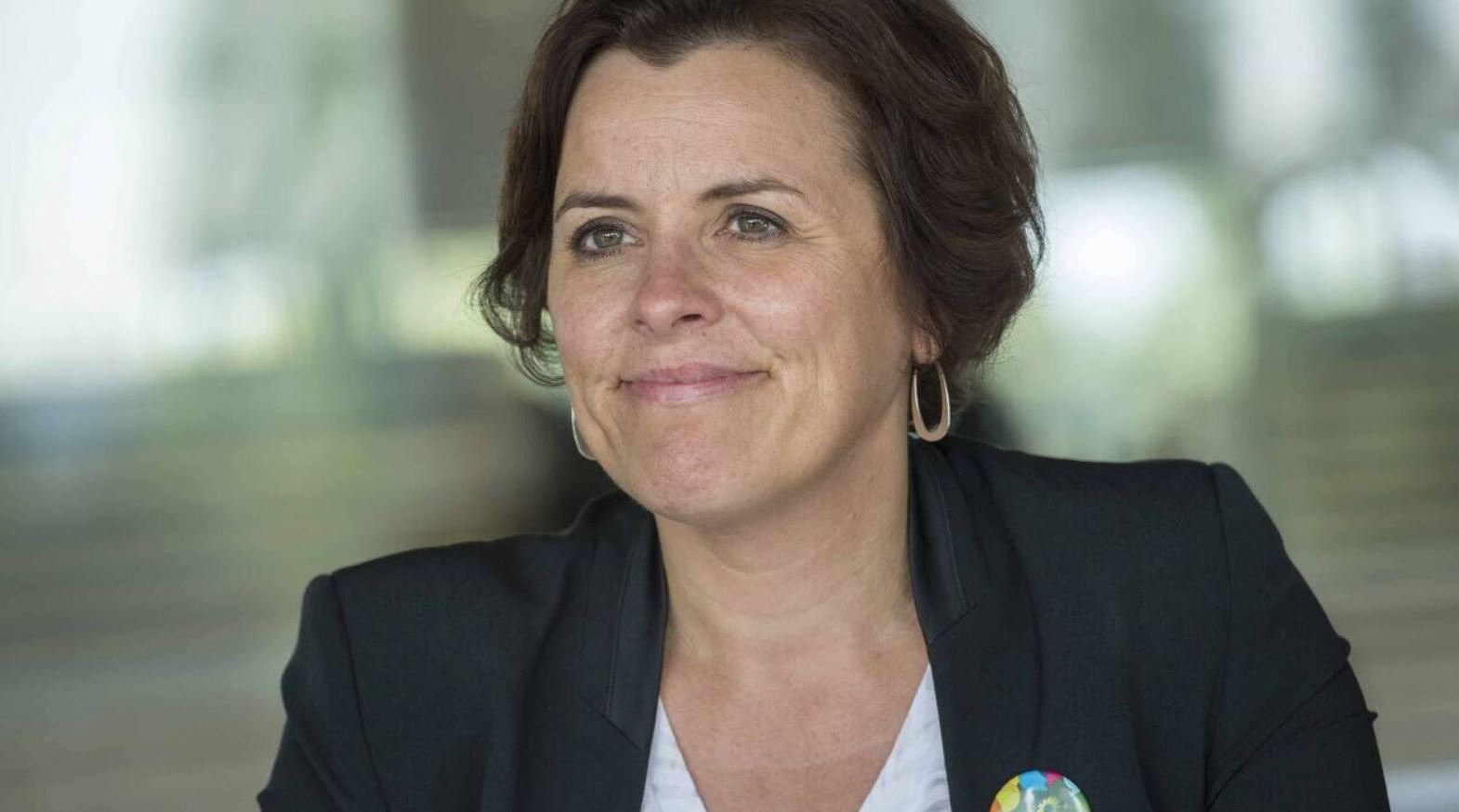
Federico Castelló, founder of NeXusAvicultura, had the opportunity to meet with Anne Marie Quemener, Commissioner General and Director of SPACE, the annual international trade show for livestock and poultry. Together they discuss the history of the show and the achievements that have made it an international benchmark. The 39th edition of the event will be held on 16–18 September 2025 in Rennes, France.
SPACE’s track record: 39 editions and 30 years of innovation recognised through the Innov’Space Awards
Federico Castelló (FC): Anne Marie, the SPACE trade show is celebrating its 39th edition this year, and in particular, the Innov’SPACE awards are marking their 30th anniversary. Could you comment on the significance of these milestones?
Anne Marie Quemener (AMQ): Yes, that is correct. We are celebrating the 39th edition of the show and the 30th anniversary of the Innov’SPACE Awards. It is an important milestone that reflects our long track record and commitment to the sector.
FC: What do you think have been the main factors that have established SPACE as the leading annual trade show (more than 100,000 visitors each year) for livestock and poultry, not only in France but at a European and international level, throughout these 39 years?
AMQ: The keys to success lie in staying true to our origins and the vision of the show’s founders. From its creation in 1987, they decided to build a show that would serve as a tool for professionals — French, European and international — and where people would feel at home. We have always prioritised a professional approach, despite competition or suggestions to open it up to the general public. We have a board of directors composed of livestock farmers and agricultural managers, which ensures our closeness to the sector. We have also always listened to the expectations of our participants — both exhibitors and visitors — through annual surveys. In addition, we have placed a strong focus on the international dimension, particularly in Africa, which required many years of investment. Innovation has also been a fundamental driver, establishing us as a reference and helping many companies to develop their business.
FC: An exhibitor told me that SPACE has been instrumental in the development of their company, particularly in terms of exports. Do you think that the reputation of the Innov’SPACE awards — highly regarded for their rigorous evaluation by industry experts — is one of the keys to this prestige?
AMQ: Yes, I do. The INNOV’SPACE awards are very well recognised within the profession. Receiving an “INNOV’SPACE” is a major advantage and a source of pride for the company and its team. To that end, we have always ensured that we have a highly professional judging panel. We have five committees, one for each sector (poultry, pig, cattle, machinery and animal nutrition), with at least around 10 people on each, and around 15 in the poultry committee. We also include livestock farmers on the panel so that they can assess the practical value of each innovation for the producer. It is important to note that the judging panel is completely independent of our organisation and does not take into account the size of the stand or the exhibitor’s investment.
FC: Brittany and the Grand Ouest of France remain a key area for French livestock farming, accounting for around 40% of production. Is this strategic location also one of the key factors?
AMQ: It is one of the key factors, yes. It is the largest livestock farming region in France. In pig production, we account for 75% of national output. Approximately one in every two bottles of milk is produced in the Grand Ouest; in poultry meat, Brittany represents two thirds of national production; and in laying poultry, Brittany is the largest egg-producing region in France. We are situated at the heart of livestock farming, with tens of thousands of farms within a 300–400 km radius around Rennes.
Annual frequency and new trends
FC: Unlike other trade shows, SPACE is held annually. What has been the rationale behind this decision, especially when other shows opt for biennial or triennial editions?
AMQ: We have always committed to an annual frequency. Before the pandemic, we had already decided to hold a three-day show rather than four, because companies told us that, unless it was three days, they would only attend every other year due to costs. The three-day professional trade show format also allows visitors to return home on the Friday.
FC: What trends or new developments would you highlight for the 2025 edition? Beyond the awards, where are the sector’s interests heading?
AMQ: We will see a large number of people retiring over the next ten years, which means that many young people are now taking an interest and investing in the sector. For this reason, three years ago we created the Young People’s Space, to give a voice to those who will be inheriting from the generation about to retire. This new generation wants to live their lives as livestock farmers or agricultural producers differently, with less time spent on the farm, which implies a modification and expansion of farm structures. Managing these farms requires different equipment and far greater automation and technology. We see this most clearly in dairy production, but also in poultry and pig production. The products on show at the fair will be primarily focused on automation and animal health quality, as animal health is the foremost future challenge facing livestock production.
The strategic role of livestock farming and poultry production in France
FC: What is the strategic role of poultry and livestock farming in the agri-food economy of the Grand Ouest and France as a whole? In the current context, is food sovereignty more important than ever?
AMQ: As you rightly say, we need to redevelop production in France, and particularly in western France, where the know-how and infrastructure for production, integration and slaughter are already in place. Currently, one in every two broiler chickens is imported, so we need to maintain and develop domestic production. Integrators are looking for new farms. Consumption of poultry meat and eggs is growing. It is a matter of food sovereignty and we must address it now, because in a few years’ time it could be too late.
FC: Which major companies in the poultry sector — not only in France but internationally — tend to be present at SPACE every year?
AMQ: Of course, Doux, LDC Group (which is the number one integrator) and Terrena are all present, among many other companies. LDC, for example, covers the majority of current production in France. And all these poultry integrators bring thousands of poultry farmers to their stands over the three days. At SPACE it is also possible to find, on the stands of the world’s leading meat and laying genetics companies, virtually the entire senior management of those organisations.
Advice for visitors and international visibility
FC: For a poultry professional coming from Spain, Latin America or another country, what recommendations would you give to make the most of their visit to SPACE, especially if they only have one or two days available?
AMQ: It is very important to plan your visit in advance. To help with this, we have many tools available, such as our website, available in full in Spanish, and the official app. The SPACE app is updated in real time, including new companies or changes. A key advantage of SPACE is that exhibitors are organised by species, which allows poultry sector visitors to easily locate all the suppliers they are looking for in the relevant halls.
FC: What percentage of exhibiting companies at SPACE are international or have significant international activity?
AMQ: Approximately one third of the companies are international, meaning they have operations in other countries. And nearly 70% of our exhibitors tell us that they have or are seeking to develop international activity. The international dimension of the show is very important. Some exhibitors, primarily in the poultry sector, attend solely for the international visitors, and above all for visitors from Africa, particularly West and Sub-Saharan Africa — a Francophone region that is growing rapidly. SPACE has helped them greatly in developing their business.

The challenges facing the poultry and livestock sector and how SPACE addresses them
FC: Beyond generational renewal, what other major challenges do you see the poultry and livestock sector facing over the next 3, 5 or 10 years?
AMQ: The challenge is to maintain and be able to develop production in France. It is crucial that people outside the agricultural sector understand that continuing to produce chickens and eggs in our region is vitally important, because otherwise we will import from other countries with less stringent health standards. If we continue to have a strong production zone, we will remain strong for our suppliers and for the show, and we will maintain our appeal to other parts of the world.
FC: To conclude, if you had to sum up in one sentence the key message for a poultry professional considering attending SPACE, what would it be?
AMQ: Because SPACE is practically the only trade show that offers such a comprehensive programme for the poultry sector every year, it is very easy and practical to come to Rennes, and it is the show to attend for innovation.
A look to the future: artificial intelligence applied to livestock production
FC: Artificial Intelligence is making very tentative inroads into animal production, often with approaches that leave much to be desired. It is a highly cross-cutting and democratically accessible technology, as it can be used by companies large and small, poultry farmers, technicians and others, at very reasonable cost and with a strong return on investment. Does SPACE have any activities planned relating to the application of AI in the agri-livestock sector?
AMQ: Yes, in fact the featured theme this year in the SPACE FOR THE FUTURE area is AI — referred to here as Agricultural Intelligence. Products and solutions for livestock farmers will be showcased, and talks and debates will be organised between experts, agricultural representatives and producers on this topic. In addition, we have organised a hackathon on artificial intelligence to identify solutions for livestock production over two days. It will be one of the highlights of SPACE.
Federico Castelló
fedecastello@NeXusAvicultura.com
Founder and Director of NeXusAvicultura.com
To find out more:
-. World calendar of POULTRY EVENTS (updated weekly by NeXusAvicultura)
-. Official website of SPACE Rennes
-. Innovations awarded at SPACE 2024 and 2023
-. Poultry farming in France
-. News about SPACE on NeXusAvicultura