
- The footwear and ceramics technology centers are developing this strategic project together with the Valencian Poultry Association and La Unió Llauradora i Ramadera
- Materials will be obtained for the manufacturing of ceramic frits and soles, polymers for the footwear sector, and biostimulants for agriculture
The Generalitat Valenciana, through the Ministry of Innovation, Industry, Trade and Tourism led by Nuria Montes, presented in March 2024 its public support for an innovation project to transform hen eggs that are broken at packing centers into valuable raw materials for the agri-food, ceramic, and footwear sectors.
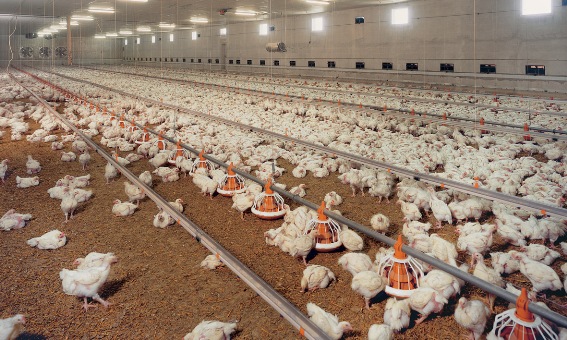
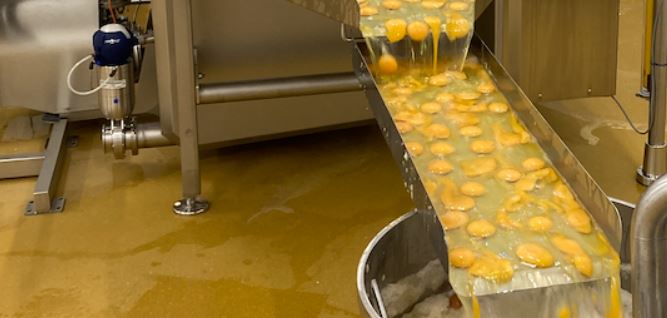
This initiative, which promotes the circular economy and industrial symbiosis among companies from different sectors of activity, proposes a comprehensive solution to a problem—the accidental breakage of eggs—that generates around 2,300 tons of waste per year in the Valencian Community alone.
Currently, it is the egg-producing companies that bear the cost of the proper treatment of these biological waste products by delivering them to an authorized manager, as established by current legislation. However, this process entails an economic impact for this industry, which must pay between 60 and 150 euros for each ton of waste, depending on the location of the farm and the volume generated.
This strategic project, called OVOVAL, is coordinated by the Footwear Technology Center, Inescop, and is carried out in collaboration with the Ceramic Technology Institute (ITC-AICE); the Valencian Poultry Association (ASAV) and La Unió Llauradora i Ramadera. It also has the financial backing of IVACE+i and funding from the European Union through the European Regional Development Fund (ERDF) Valencian Community 2021-2027 program.
The initiative aims to make use of this animal waste for the development of renewable, high-value-added products and materials with potential applications in different strategic industries of the Valencian Community, such as ceramics, footwear, or even the agri-food sector.
With the inorganic part of the egg, that is, the shell, the consortium plans to obtain bio-calcium carbonate, a material that could be used as a raw material in the formulation of frits for ceramic tiles or for the manufacturing of footwear soles, according to ITC and Inescop.
On the other hand, the egg white, yolk, and membrane will be used in the production of new bioproducts with protein content intended for the development of biopolymers for the leather industry, while, in the agricultural field, other alternative applications are envisioned, focused on the development of organic farming and the production of biostimulants based on free amino acids, which reduce the environmental impact compared to synthetic fertilizers.
In addition to promoting the circular economy, OVOVAL will help improve the competitiveness of egg-producing poultry companies through an industrial symbiosis initiative, which will minimize the economic impact that the management of this waste has entailed until now.
Likewise, the renewable raw materials that will be obtained from these animal remains will contribute to developing new sustainable products in the footwear and ceramics sectors, which in turn will help both industries move forward toward the decarbonization targets required by the European Union for the year 2050.
With this goal in mind, ITC contributes to the project its extensive knowledge on the valorization of calcium carbonate obtained from this waste and its application in the ceramics sector, while Inescop’s contribution focuses on its experience in harnessing proteins obtained from animal by-products to produce polymers and natural stimulants.
The consortium is completed by two professional organizations, the Valencian Poultry Association (ASAV), which brings together the companies that generate the bio-waste, and La Unió Llauradora i Ramadera, representing the agricultural sector, which stands as one of the main beneficiaries and users of the products generated, specifically the protein biostimulants.
OVOVAL is aligned with the conclusions of the Circular Economy innovation committee, which advocates for more efficient waste valorization and the production of more sustainable consumer goods. Likewise, the initiative falls within the main pillars of the Smart Specialization Strategy of the Comunitat Valenciana, S3, coordinated by the Regional Ministry of Innovation, Industry, Trade and Tourism.
To learn more:
-. OVOVAL Project
-. OVOVAL seeks to turn eggshells into high-value polymeric materials