
F. Javier González González
Veterinarian STC Poultry Nanta
Valladolid, 23 Nov. 2025. What times those COVID days were! Our sector emerged as one of the heroes of that crisis. An obvious truth — as plain as the nose on your face — was laid bare: the importance of eating every day without spending your entire wage in the process. But memories are short, and now hardly anyone remembers the hardships we went through.
We can speak of a “regulatory crisis” to explain, at least in part, the decline in livestock numbers across Europe in general, and in our country in particular. It seems that the urban majority does not cope well with having livestock units nearby — whether on account of a biased and manipulated “ethics”, or of supposed sustainability concerns.
But reality is stubborn: we want to keep eating every day, which will in all likelihood lead us to relocate our farms to countries where this very European set of values has not yet taken hold, because basic needs there are of a different kind — Eastern European countries, North Africa. We will eat worse, but sleep more soundly. Added to this is the rising cost of staple products, which is pushing many consumers towards ultra-processed foods: cheaper, but far less healthy.
“The primary sector is the solution, not the problem.”
Manuel Pimentel said it in his book “La venganza del campo” (The Revenge of the Countryside): decades of scorning and marginalising the work of farmers, livestock producers and fishermen, criminalising producers, imposing restrictions and burying their work in bureaucracy, inevitably lead us towards more expensive food and force us to rethink the relationship between all parties: the primary sector is the solution, not the problem.
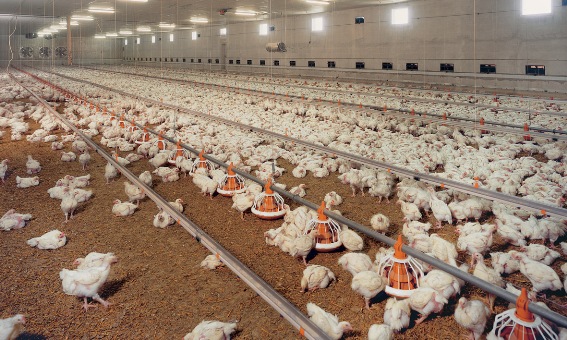
In my view, the recent avian influenza cases in Spain, involving the culling of more than 2.5 million birds and the immediate rise in prices of such basic products as eggs and chicken, could be the opportunity for us to lay all our cards on the table.
This disease has brought us back to the headlines, although, fortunately, the focus has been primarily on the negative aspect of rising egg prices — making it very easy indeed (and forgive the pun) for those exploiting this surge to push up prices at retail outlets or for omelettes in cafés and bars, when there is, in fact, no shortage. This aspect stands out far and above any concern about a possible mutation or transmission of the virus to humans. Let us hope it stays that way.
“We are not criminals and we do not want to be treated as such.”
Statements are being published by major retail chains “apologising” for being unable to sell more cage-free eggs due to a shortage of supply; and we see — with surprise? — consumer forums already asking how much egg “quality” will drop now that hens are not able to go out to roam freely (you reap what you sow…).
The authorities are also concerned.
Have the confirmed avian influenza cases been managed properly?
Has the response been consistent across all the affected autonomous communities?
Could it have been handled better? Has the sector itself been sufficiently consulted?
Is Europe “satisfied” with what we have done (they foot part of the bill)?
How much is this going to cost us? Will changes need to be made going forward?…
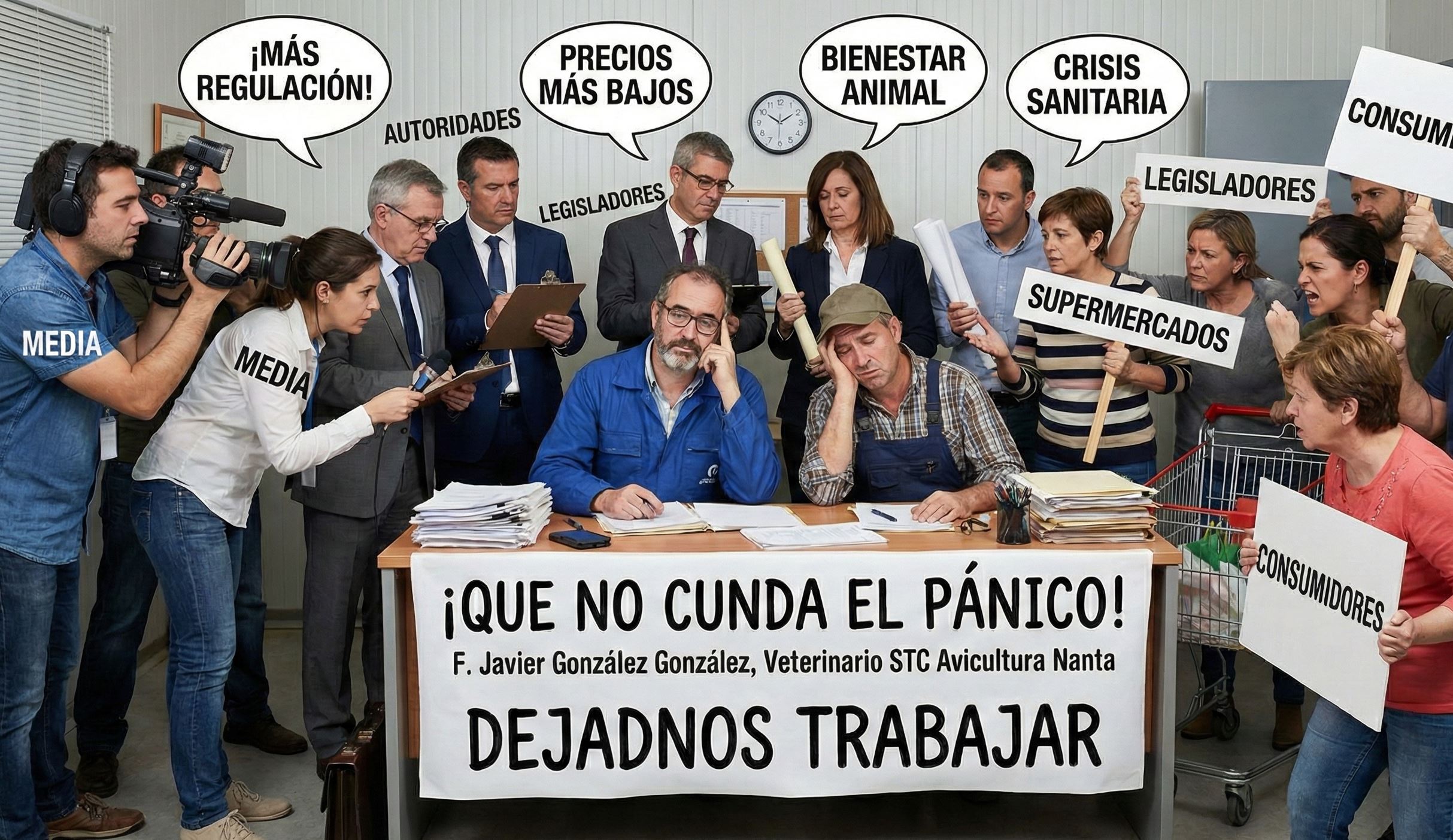
Many questions that are not easy to answer, with the added complication that the answers will undoubtedly vary substantially depending on who is giving them. My advice: talk more with the sector — they are the ones who really know.
“I want to be clear with my final message: let us get on with our work.”
I want to be clear with my final message: let us get on with our work. We know how to do it, and we have proven that we do it very well. We are not criminals and we do not want to be treated as such. I am a field veterinarian and, as such, yet another victim of the regulatory zeal surrounding everything related to prescriptions. We have a professional background in animal health; we understand public health and the importance of the concept of “One Health” and its relationship with antimicrobial resistance. All we ask is that our training and experience be respected, and that we be free to make the best decisions for the health and welfare of our animals.

Much the same can be said of livestock producers and everyone involved in the value chain from farm to fork. We are all people who know what we are doing, who do it with dedication and passion, and who also sit down to eat every day.
And don’t panic: we will not destroy the planet, we will not be to blame for the fact that deaths from bacterial resistance increase every year, and we will not be responsible for rising fresh produce prices. Even if you cannot see us, we will still be here. The only thing we ask is what has already been said: let us get on with our work.
Any opinion — for or against — will be most welcome. That goes without saying.
F. Javier González González
Veterinarian STC Nanta
View other articles by the author
Want to stay one step ahead in poultry production?
Subscribe free to our eNewsletter and receive a weekly selection
of the best information to anticipate trends, stay up to date and develop as a poultry industry professional.
NeXusAvicultura: Vision, Insight, Quality and Context.