

A Conference that has reaffirmed my optimism for the poultry sector and animal production
On 24 September I had the pleasure of attending the outstanding conference by Manuel Pimentel Siles, held in Granada before the 450 professionals who attended the “LIX Scientific Poultry Symposium” organised by the Spanish Association of Scientific Aviculture.
Although the Conference was entitled “Food and meat consumption habits in a changing society“, I have preferred to use the title “The Revenge of the Land”, as this is the title used by the author in his eponymous book — a quick read, incidentally, that I believe every professional working in poultry and livestock farming should read at least once in their lifetime.
The title “The Revenge of the Land” is a phrase with an enormous semantic weight: it suggests a settling of scores, a historical correction, and a vindication of the primary sector after decades of neglect. Manuel Pimentel, in his historic and prophetic conference, does not merely offer his opinion, but rather bears witness to a profound and unstoppable transformation that has already begun.
I summarise below the most important points for those who were unable to attend, as I believe it is important to disseminate (the primary mission of NeXusAvicultura) the message and approach put forward by Pimentel.
Federico Castelló
Conference Summary: “Food and meat consumption habits in a changing society”
In his address at the 59th WPSA-AECA Symposium, Manuel Pimentel delivered a thorough sociological analysis of the evolution of the agri-food sector over recent decades, unpacking the causes of its loss of prestige and anticipating a radical cycle change, which he terms “the revenge of the land”.

His address was structured around two major eras: the globalisation cycle that devalued food production, and the new deglobalisation cycle that is restoring the sector’s strategic importance.
The Globalisation Cycle (1989 – c. 2018): from abundance to invisibility
Pimentel dates the start of this cycle to the fall of the Berlin Wall in 1989, an event that ushered in the era of globalisation. This new paradigm, led by the West, was built on the opening of borders, the removal of tariffs, and the creation of a global free market for goods, services, and finance.

For the food sector, the consequences were drastic and defining:
- Relocation and efficiency: Production shifted to the regions of the world where it was most efficient. “Everyone knew that factories were going to move to China,” Pimentel explained, and in the same way, the production of raw materials such as soya, maize and beef became concentrated in the locations with the best conditions in terms of land, water, and costs.
- Food security guarantee and price deflation: Globalisation generated a sense of total supply security. If there was a drought in one place, imports came from another. This constant abundance triggered a “downward price impulse”. Global competition caused the grocery basket to become progressively cheaper from the 1990s onwards.
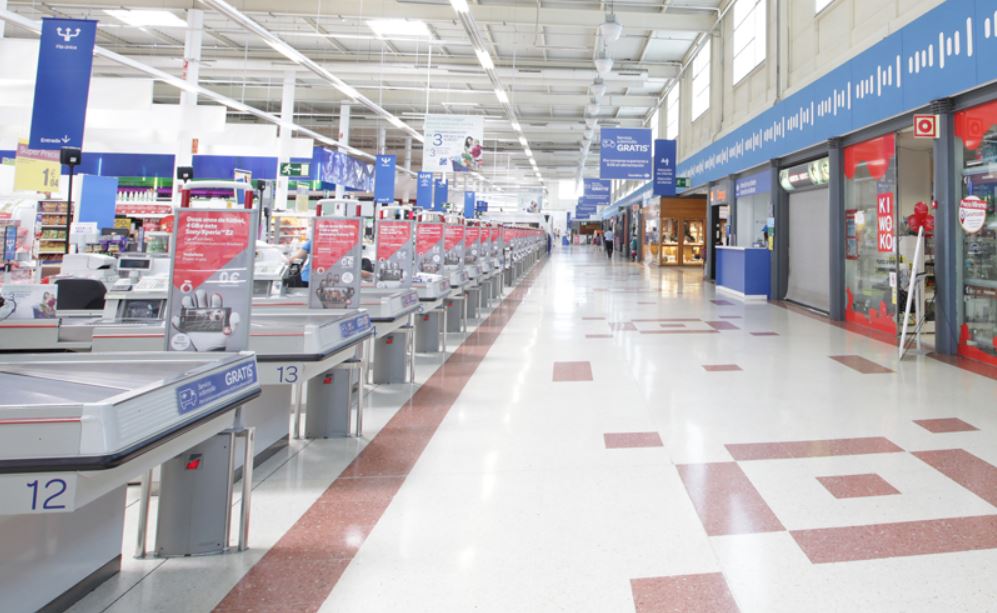
- The concentration of distribution: Simultaneously, the distribution model changed radically. The transition moved from small corner shops, with zero negotiating power, to large supermarket and hypermarket chains (Mercadona, Carrefour, Aldi, etc.). This process concentrated immense purchasing power in very few hands. Power shifted from the producer, who previously set prices through strong brands, to the distributor.
- The tyranny of the “Head Buyer”: Pimentel vividly described the figure of the “head buyer”, whose sole objective was to drive prices down. The phrase that summed up this era was: “Take it or leave it.” This combination of factors — globalisation, abundance, and distribution concentration — caused a sustained fall in the value of food.

The social consequences: from invisibility to contempt
This economic devaluation had a profound impact on the social perception of agriculture and livestock farming.
- Loss of economic and social relevance: Pimentel highlighted a telling statistic: in the 1960s, the average Spanish family spent 50% of its income on food. By 2018, that figure had fallen below 14%. Food had ceased to be a concern. “Food disappeared from the concerns of Western society,” he stated emphatically.
- From producer to invisible figure: Having lost their perceived value, farmers and livestock producers became invisible to a predominantly urban society that took for granted the food on supermarket shelves.
- The emergence of a new urban morality: With basic needs met, urban society developed new concerns: the environment, sustainability, and animal rights. Within this new framework, the primary sector went from being invisible to being perceived as an enemy: “we went from being perceived as enemies of the environment to — the ultimate moral sin — livestock farmers being branded as animal abusers.”
This dissonance explains, according to Pimentel, why “a society pays more attention to a clown dressed as a cow than to a scientist.” The value of food production had vanished from the collective consciousness.
The Cycle Change: the era of deglobalisation and “The Revenge of the Land”
Pimentel identifies the inflection point as the rise to power of Donald Trump and his tariff policy, which broke with decades of free-trade consensus. This marked the beginning of a new cycle of deglobalisation, whose characteristics are the opposite of the preceding one:
- Uncertainty and disruption: Trade barriers, wars, and geopolitical uncertainty are creating market disruptions. There may be sufficient food globally, but these disruptions mean shortages arise in some places while surpluses exist in others, causing enormous volatility and an upward price trend.
- The return of supply security concerns: The pandemic and the war in Ukraine have meant that distributors, previously focused solely on driving down prices, now have a new obsession: supply security. This is shifting the balance of power. The “head buyer” has discovered a new concept: “paying a little more” in exchange for guaranteed supply.
- The Shopping Basket as an indicator: The price of the weekly grocery shop has risen sharply and has once again become a topic of social and political debate. “At €200 we’re seen as the bad guys; when it reaches €300 we’re not quite so bad. If it hits €400, we’re the good guys; and if it reaches €500, they’ll put up a monument to us,” Pimentel quipped, illustrating how social perception is directly linked to price.

The Future: challenges, opportunities, and a new morality
For Pimentel, the sector faces a new paradigm with different rules of the game:
- The battle for protein: Demand for animal protein will continue to grow for at least 20 years due to rising global population. Supply, however, is under strain from regulations and constraints. This will inevitably push prices upward.
- Economies of scale and innovation: Only appropriately scaled and technologically advanced operations will be viable. Unskilled labour will disappear, giving way to a highly technified and professionalised sector (agronomists, veterinarians, biotechnologists).
- The moral vindication: Pimentel concluded with a firm moral defence of the sector. Producing animal protein is not a “sin”, but rather a natural and essential activity for human health. “Is a lion immoral when it hunts a gazelle? Or is it simply doing what it is meant to do?” he asked.
When asked whether a “crash” in growth could occur due to the influence of powers promoting alternative proteins, Pimentel considers mass substitution of animal protein for working-class populations unlikely except through taxes/trade barriers — a strategy that, in his view, “has failed” to date — and maintains that the genuine technical optimisation and sustainability of the sector is “unbeatable” compared to very costly alternatives. He accused lobbies funded by major technology companies — investing in artificial and synthetic meat and protein — of waging a moral war to win a market battle they cannot win on the grounds of efficiency or quality.

The key message taken away by all attendees from Manuel Pimentel’s presentation is that we are witnessing a historic turning point in which the agri-food sector, after decades of marginalisation, is poised to recover its power and prestige — not as a matter of opinion, but driven by the inexorable force of economics and human need.
About Manuel Pimentel Siles

Manuel Pimentel Siles (Seville, 1961) is a multifaceted figure with a distinguished career spanning academia, business, and politics. An Agricultural Engineer and Doctor of Law, his background combines deep knowledge of the land with a thorough understanding of the legal and business environment. He has held positions of senior responsibility, including that of Minister of Labour and Social Affairs of the Government of Spain (1999–2000).
In the business world, he is known for his work as publisher at Almuzara Libros and for his involvement in various boards of directors and advisory roles.
He is also a prolific author of novels and essays, most notably “La venganza del campo” (The Revenge of the Land), and has served as director and presenter of the archaeological documentary programme “Arqueomanía” on TVE2. His unique profile affords him a privileged perspective for analysing the complex relationship between agriculture, society, and the economy.
M. Pimentel’s book “LA VENGANZA DEL CAMPO” (Editorial Almuzara – ISBN 9788411319379) is available from La Casa del Libro or Amazon.
Synopsis: Why is the primary sector trampled upon and persecuted by the very society it feeds? The land will take its revenge, in biblical fashion — through scarcity and a brutal rise in food prices — on the society that has been scorning it for decades. The revenge of the land is already here. Food prices are rising sharply and long-forgotten food crises threaten to return. Why did food seem abundant yesterday and scarce today? Contempt for the land and the disruptions of deglobalisation are the main reasons.

About the Spanish Association of Poultry Science (AECA)
The AECA has as its primary objective the promotion of research and the scientific and technical exchange among specialists, academics, and professionals in the poultry industry. AECA is also the Spanish national section of the World’s Poultry Science Association (WPSA), and is today one of the most active and internationally recognised sections within WPSA. In 2025 it has more than 300 active members, all of them technicians, professionals, and researchers in the Spanish poultry sector. A further aim is to contribute through its activities to a better understanding and appreciation of poultry production and poultry products among Spanish society.
Further reading:
-. Social and poultry sector trends on NeXusAvicultura