
Farms are not on “islands”
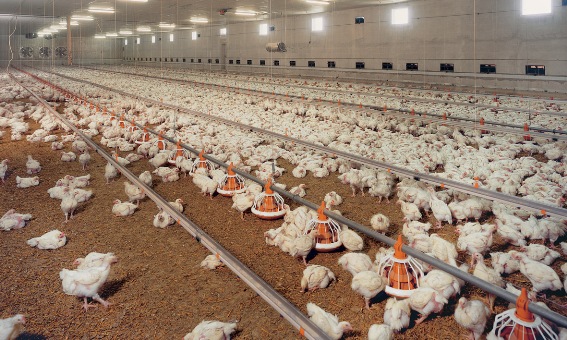
In intensive poultry farms, the risk of infectious disease transmission remains a constant challenge, particularly in areas with high poultry density. Direct or indirect interaction between wild animals and domestic poultry can act as a vehicle for pathogen transmission, generating “spillover” (pathogen transmission from wildlife to domestic animals) or “spillback” (reverse transmission from domestic animals to wildlife). In this context, biosecurity emerges as the most effective tool for reducing the risk of disease introduction and spread within and between farms.
In recent years, an unprecedented increase in highly pathogenic avian influenza (HPAI) outbreaks has been observed worldwide, affecting both wild birds and domestic mammals. This situation raises concerns about the role of mammals in the epidemiology of the disease on poultry farms, which led to the conduct of this study in northern Italy. The objective was to identify mammal species frequenting the vicinity of laying-hen farms and to analyse their visitation patterns over time in order to assess their impact on biosecurity and disease transmission.
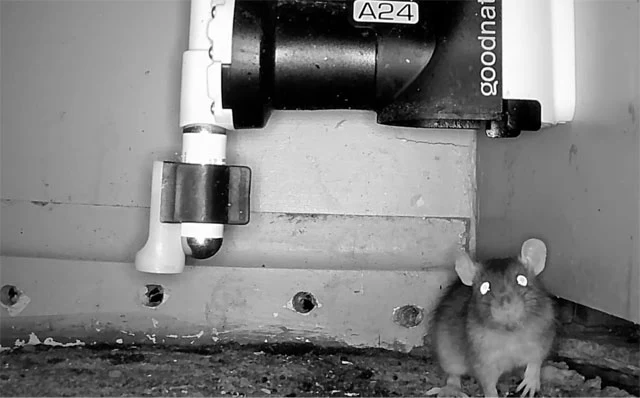
Camera traps, a system widely used for wildlife counting, employed for the first time in commercial poultry farming.
A one-year camera-trap study was conducted on three commercial poultry farms located in an Italian region with high poultry density and a high risk of HPAI introduction. The selected farms included two conventional indoor systems and one organic farm with outdoor access for the birds. Cameras were installed in strategic areas, such as manure collection points and feed silos, where signs of wildlife had previously been detected. In total, more than 1,800 camera-trap observation days were recorded, resulting in thousands of videos that were analysed to identify species and their behaviours. The camera traps are equipped with night vision and are only activated when an animal passes in front of them.
A continuous flow of wild and domestic animals
During the study period, a total of 567 wild mammal visits and 1,866 domestic mammal visits (mainly cats and dogs) were recorded. Among wild species, coypu (nutria) were the most frequent, with a total of 437 visits, followed by European hedgehogs and rats. Among domestic mammals, cats were detected more frequently than dogs, with 1,815 observations, representing 97% of domestic mammal visits.

Free-range farms recorded the highest number of visits
- Wild mammals were observed predominantly at night, consistent with the nocturnal habits of species such as hedgehogs and rats.
- Coypu, however, displayed both diurnal and nocturnal activity, taking advantage of the absence of major predators in the area and the low human presence at certain times.
- The organic farm (Farm 2) and areas near bodies of water showed a higher incidence of visits, highlighting the vulnerability of facilities with outdoor access.
There is as much nocturnal activity around the farm as on a Madrid nightlife strip in the early hours of the morning.
The results reveal a concerning scenario for poultry biosecurity. The high frequency of coypu visits — an invasive species known for its capacity to harbour zoonotic pathogens — represents a significant disease transmission risk on farms. Coypu were observed foraging in vegetated areas within the farms, suggesting that gaps in fencing and unprotected access points facilitate their entry.
Furthermore, the large number of feral cats on the farms, particularly on Farm 3, constitutes another potential risk for pathogen dissemination. The recent detection of avian influenza virus in cats in other countries underscores the importance of controlling the presence of domestic mammals in poultry facilities.
On the other hand, rodents, despite being less frequent in this study than in previous research, continue to be a known risk vector for avian influenza and other pathogens such as Salmonella. The implementation of rodent control programmes combining traps and rodenticides is essential for reducing these risks.

Biosecurity Implications and Recommendations
The study findings underscore the need for stricter biosecurity strategies to prevent mammals from entering poultry facilities. Recommended measures include:
- Fence maintenance and reinforcement: perimeter fencing must be inspected and repaired regularly to prevent medium-sized mammals, such as coypu, from gaining access to farm areas.
- Integrated rodent control: A combination of control methods is essential to avoid the selection of resistant individuals, as well as continuous monitoring to adjust strategies according to rodent population response.
- Feral cat colony management: The ethical trapping and management of feral cats could minimise the risk of pathogen spread between mammals and poultry.
Conclusion: a new methodology that broadens the biosecurity approach
This study “Potential biosecurity breaches in poultry farms: Presence of free-ranging mammals near laying-hen houses assessed through a camera-trap study” represents one of the first to characterise in detail the activity of mammals around poultry farms through the use of camera traps. The results reveal a high frequency of interactions between mammals and poultry facilities, which poses a biosecurity risk. The visualisation of these data can be a powerful tool for educating producers and health authorities on the importance of maintaining secure facilities free from fauna that may act as disease vectors.
As outbreaks of diseases such as avian influenza continue to affect both wild and domestic animals, it is crucial to integrate this knowledge into epidemiological surveillance programmes in order to design effective disease prevention and control strategies.
Key highlights:
- “Camera traps reveal an alarming level of interaction between mammals and poultry, putting poultry biosecurity at serious risk.”
- “Coypu, an invasive species in Europe, emerge as the primary farm visitors in the study area, increasing the risk of pathogen transmission.”
- “The continuous presence of feral cats in poultry facilities could be a ticking time bomb for the spread of avian influenza.”
- “Implementing stricter biosecurity measures, such as fence maintenance and effective rodent control, is crucial to curbing disease risk.”
- “Surveillance must monitor contact between wildlife and farm animals.”