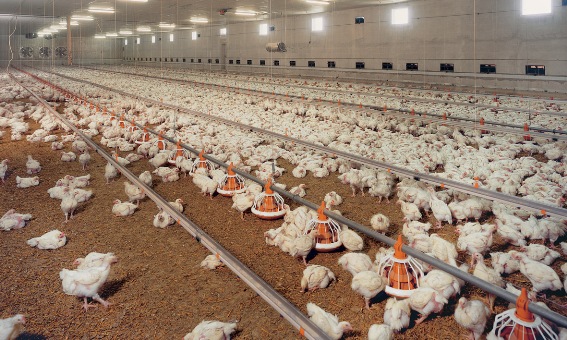


BroilerNet launches the third cycle of broiler production best practices in Europe
Barcelona, 16 July 2025. BroilerNet is an ambitious European project seeking to transform the poultry sector, particularly broiler production, towards more sustainable and resilient systems aligned with the current and future challenges of the agri-livestock industry. Funded under the Horizon Europe programme and with a network of partners in 13 European countries, the project brings together an unprecedented collaboration between scientists, producers, industry organisations, veterinarians and integrator companies.
This European network project, aimed at improving the sustainability and resilience of the broiler sector, has recently launched its third and final working cycle. This new phase, like the two preceding it, will gather and classify the most notable best practices from 13 European producing countries, with the aim of building a practical repository of use to the entire poultry sector.
In its first two cycles, BroilerNet has identified more than 90 innovative practices within the European broiler sector to address challenges across the project’s three working areas: animal welfare, environmental sustainability, and animal health. Thematic Expert Networks, comprising experts from several European countries, identify the sector’s main challenges and classify the various proposed best practices. They also select BroilerNet champions who have provided the best practices for addressing the three key challenges per topic.

Core objectives
BroilerNet focuses its efforts on three critical areas of modern poultry production:
- Environmental sustainability: Reducing the environmental footprint of production by promoting practices such as the use of local biomass and legumes for feed and energy, and optimising the management of natural resources.
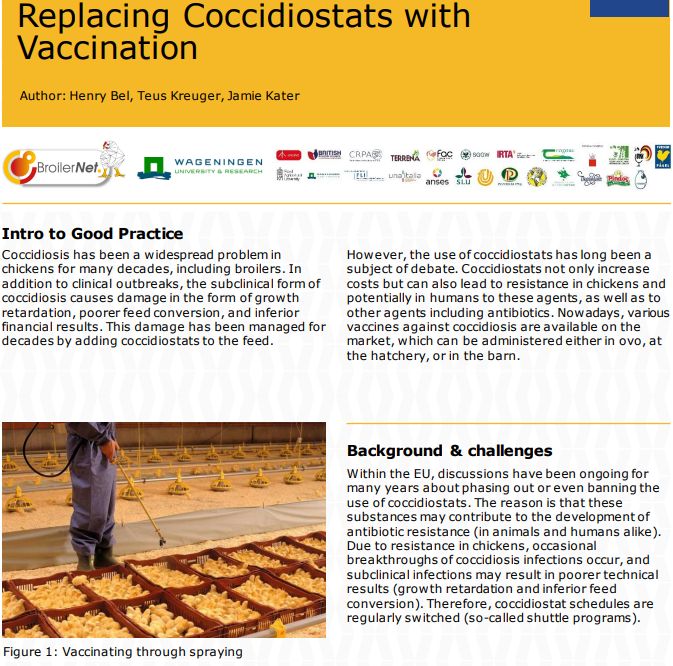
- Animal welfare: Improving the handling and living conditions of birds by promoting slower-growing genetics and alternative methods to antibiotic and coccidiostat use, such as preventive vaccination.
- Animal health management: Evaluating and promoting the adoption of best practices to reduce disease incidence and manage emerging risks, including threats such as avian influenza.

An innovative approach: innovation networks and co-creation
One of BroilerNet’s defining pillars is its innovation network approach. The project has established twelve national networks and three European networks bringing together producers, advisors, researchers and value chain representatives. These networks identify the most pressing challenges and seek effective solutions collaboratively, enabling the co-creation and adaptation of innovative practices to the realities of each region.
Active participation of the Spanish poultry sector
More than 400 individuals connected to European poultry production have already contributed to the project, providing ideas, identifying challenges and selecting best practices in areas such as energy management, precision nutrition and environmental enrichment for birds.
Spain is represented in the project by the Institute of Agrifood Research and Technology (IRTA), as a scientific partner and coordinator of the animal health management workstream, and the Catalan Poultry Federation (FAC), as the producer partner.

The third cycle was launched with a meeting of the Spanish node expert group, held at the IRTA Mas Bové research centre (Tarragona). The session was attended by professionals from IRTA and FAC, from the Catalan Poultry Health Centre (CESAC), from the Consell de Col·legis Veterinaris de Catalunya, veterinarians from integrator companies and representatives of the producer sector. Veterinarian Natalia Majó, director of IRTA-CReSA, leads the animal health group within the project. During the meeting, proposed best practices across BroilerNet’s three working areas were discussed, and a technical visit was made to IRTA’s experimental feed mill as well as to poultry facilities where experimental trials are currently being conducted.
This third and final cycle represents the culmination of a collaborative effort begun more than two years ago, which has made it possible to identify real on-farm solutions and generate a positive impact in pursuit of continuous improvement across the European poultry sector. The project is funded by the European Union’s Horizon Europe Research and Innovation Programme. With this final phase, BroilerNet concludes its journey by consolidating a solid base of shared knowledge to address the present and future challenges of broiler production.
Results and dissemination: from the farm to the European sector
BroilerNet prioritises the dissemination of its results so that innovations reach as many European poultry farmers as possible. To this end, it makes use of a variety of resources including multilingual leaflets, videos, webinars, workshops and national roadshows, ensuring effective knowledge transfer adapted to each context, all available on its website.
Recent examples include workshops on slower-growing genetics — a key factor in improving animal welfare — as well as technical sessions on sustainable practices and webinars held at international trade fairs such as EuroTier in Hanover.
Expected impact
The project aims to:
- Significantly improve the sustainability and resilience of the European poultry sector.
- Promote the adoption of practices that reduce antimicrobial use and environmental impact.
- Strengthen the position and competitiveness of producers within the European value chain.
- Promote public health, food quality and improved animal welfare.
BroilerNet represents an innovative “science to farm” collaboration model whose goal is to make European poultry production a benchmark for sustainability, innovation and social and environmental responsibility.
For further information:
-. Official website: BroilerNet.EU
-. BroilerNet news