
Broiler Housing Tips
Does placing paper under drinker lines improve chick performance?
Publication by The University of Georgia, College of Agricultural and Environmental Sciences, Cooperative Extension
The importance of a good start
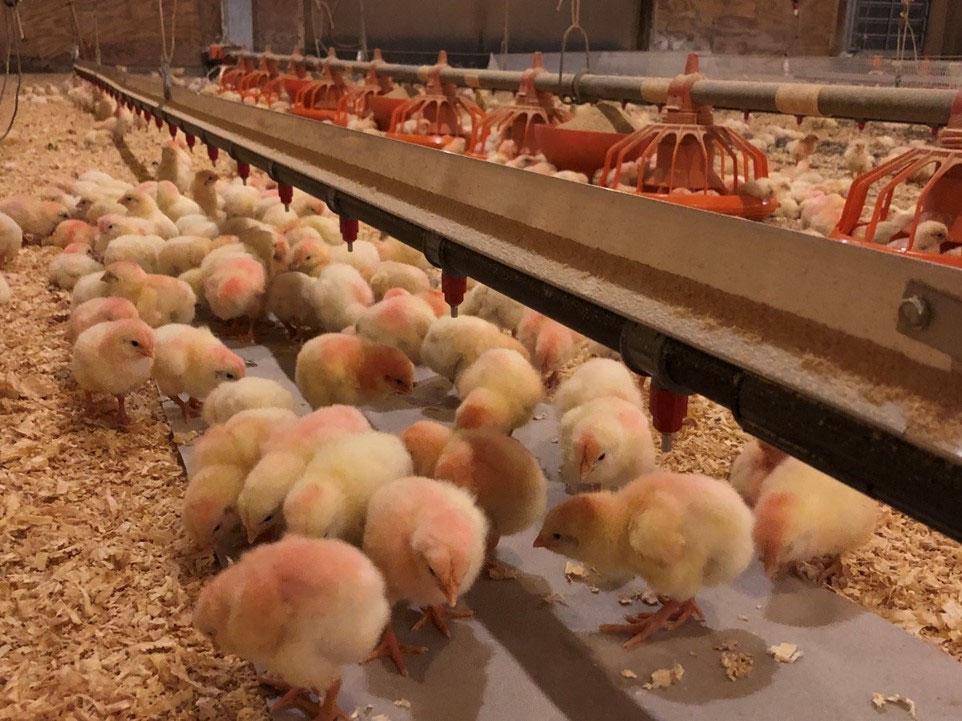
Getting chicks to access feed and water as quickly as possible after their arrival at a farm has long been recognised as the key to maximising overall performance. If ideal environmental conditions and plentiful feed and water are provided, chick weight should increase approximately 50% during the first 48 hours compared to only 2% during the last 48 hours of the flock’s life.
Simply put, the less time it takes chicks to start eating and drinking, the more rapidly their gut and immune system will mature, the faster their bodies will gain weight, and the less likely they are to become ill. Studies have shown that during these formative hours, minor problems can have a long-term impact. For example, one study found that exposing day-old chicks to 12.8°C for just 45 minutes resulted in a 10% reduction in body weight at 35 days of age (Lacy, 1994).
The use of paper under drinker lines
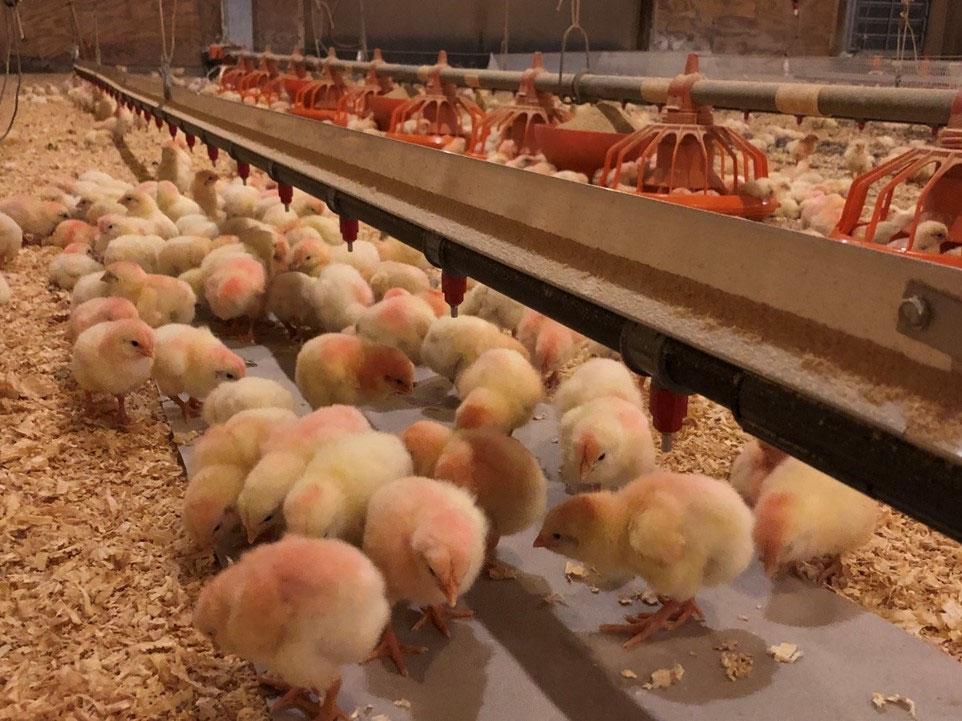
Placing paper under drinker lines has been a relatively common strategy to encourage chicks to start drinking as soon as they are housed in the broiler house. Broiler growers have theorised that the sound created by chicks walking on the paper, as well as the novelty of the paper itself, tends to attract them towards feeders and drinkers as soon as they are placed in the house (Figure 1).
Although the attraction of chicks to the sound of paper is widely recognised, there are still aspects of placing paper under drinker lines that have not been thoroughly studied. For example:
- Does placing paper under drinker lines lead to a measurable increase in drinking and feeding activity?
- How long does this attraction to the sound of paper underfoot last?
- Do chicks drink significantly more water in broiler houses with paper under drinker lines compared to those without?
- Does placing paper under drinker lines improve first-week body weights and reduce first-week mortality?
A multi-farm field study was conducted on commercial broiler farms to explore the potential benefits of placing paper under drinker lines during the first seven days. The study took place in north-east Georgia (USA) on seven contract broiler farms raising birds to approximately 2.04 kg with an average stocking density of 0.074 m² per bird.
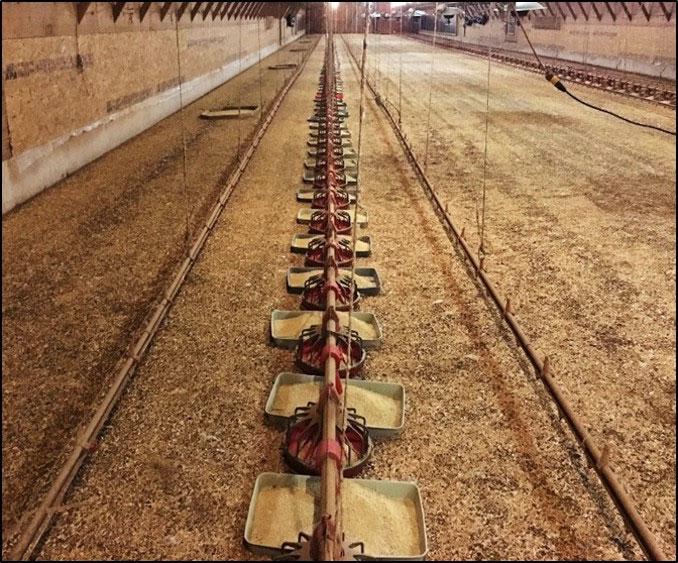
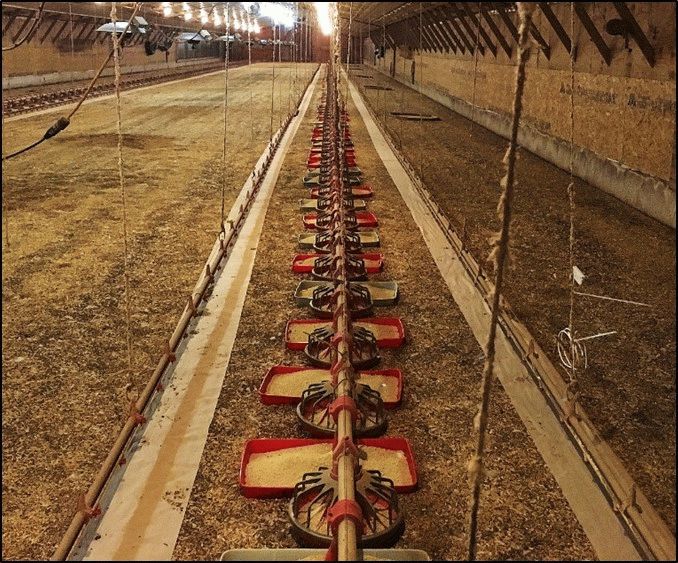
At each of the seven farms, two houses were randomly selected for the study. In one house, no paper was placed under the drinker lines (Figure 2), and in the second house, a strip of paper 45.72 cm wide was placed under each drinker line (Figure 3). The paper used was brown, thin and lightweight, similar to a heavy tissue paper.
Evaluation methodology
The effect of paper under drinker lines was evaluated through water consumption, chick body weight, first-week mortality and the use of time-lapse cameras.
Water consumption was monitored in each house using ultra-low-flow water meters, which continuously measured and recorded water use minute by minute. These meters allowed water consumption to be monitored from the very moment chicks began drinking after placement.
Results on water use
At the first farm, chicks drank approximately 30% to 50% more water in the 15 minutes following placement in the house with paper under the drinker lines compared to the house without paper (Figure 4).

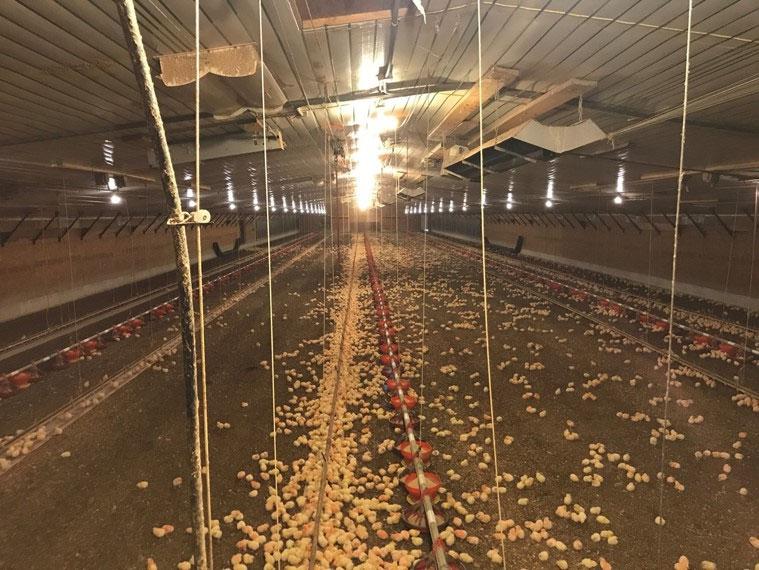
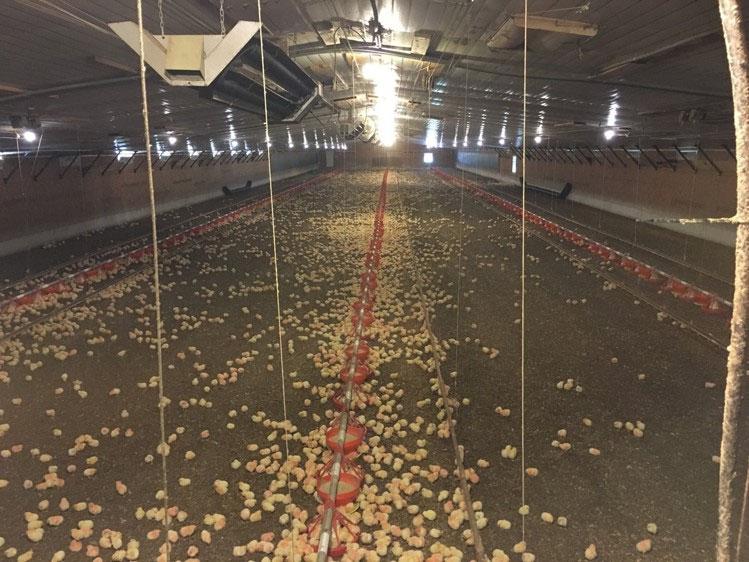
Photos taken shortly after placement demonstrate the attractiveness of the paper under the drinkers, which led to increased water consumption (Figures 5, 6).
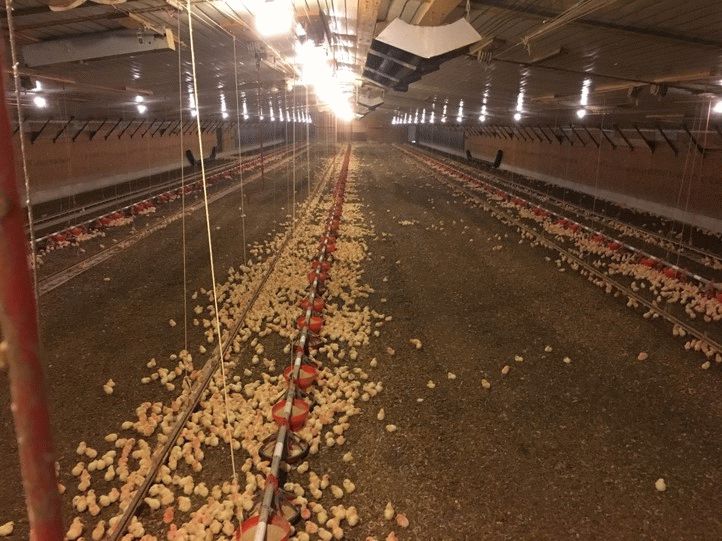
However, the peak in water use was short-lived. Data showed that after two hours, water use was relatively similar between the two houses (Figure 7). The rate of activity around the drinker lines between the houses was virtually indistinguishable (Figures 8, 9). By the end of the first day, water use in the two houses was within 37.85 litres (10 gallons) of each other.

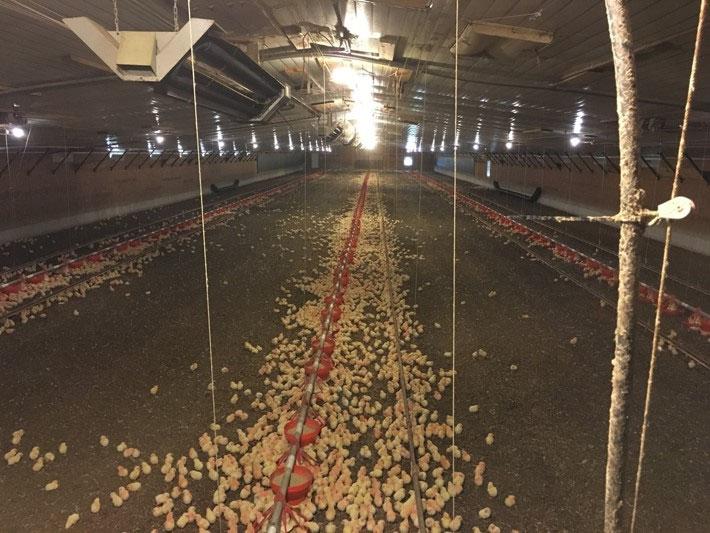
At the next farm, moments after chick placement, no initial increase in drinking activity was observed. During those first few hours, no peak in water use was observed in the house with paper under the drinkers (Figure 10). In fact, between the two houses, chicks were drinking within approximately +/- 5% of each other during the first twelve hours. By the end of the first day, drinking activity was relatively the same in both houses (< 37.85 litres difference). Unlike the first farm, placing paper under the drinkers did not appear to have any effect on water use by the chicks.

Overall effect and management factors
Based on the study, does placing paper under drinker lines have an effect on productive performance or not?
Of the farms studied, four of the seven farms (Farms 1, 3, 4 and 6 – highlighted in brown in Figures 11, 12 and 14) showed an increased drinking activity effect. At those four farms, chicks were drinking approximately 30% more water for approximately two to four hours after placement.

Figure 11. Cumulative chick water consumption (Day 1).
However, by the end of the day, only two of the four farms showed a slight increase in total daily water use for the houses with paper under the drinkers. By day seven, only one of the two houses with paper under the drinkers that had shown slightly higher water use at the end of the first day continued to show a slight increase in cumulative water use (Figures 11, 12).

Figure 12. Cumulative chick water consumption (Day 7).
Water use during the first week varied much more between farms than by treatment (paper vs. no paper). This is important for two reasons:
- First, since feed consumption follows water use, this would tend to indicate that total feed consumption was more affected by between-farm variation than by the presence of paper under the drinkers.
- Second, it tends to indicate that there are other factors affecting first-week performance to a greater extent than the presence of paper.
Any effect that placing paper under drinkers may have had on water use is generally minimal compared to the differences between farms, which would be attributable to various management practices such as air temperature, air quality, house tightness, drinker management, etc. By the end of the first week, it appears that general brooding management practices had a fivefold greater effect on cumulative water consumption by chicks, and therefore on feed consumption, than placing paper under drinker lines.
The role of overall broiler house management
The role that overall broiler house management can play in first-week performance was observed at several farms. One farm, for example, showed that the house with paper placed under the drinker lines was using noticeably less water than the other house. After walking through each house, it was found that in the house with paper, the drinker lines were set too low for the chicks to reach them easily. Once the lines were adjusted, water use between the two houses became similar (Figure 13).

At another farm, brooding temperature had likely masked the effect of paper under the drinkers. On the day the chicks were placed, the average house temperature was 28.3°C, i.e. 5.6°C below the ideal brooding temperature. Chicks were observed huddling and remaining inside feeder lids rather than moving towards the paper. The attraction towards drinker lines cannot occur if chicks are unwilling to move.
The last farm, however, was apparently the opposite of the previous two, where the lack of effect may simply have been due to proper brooding management. The grower at this farm is typically a top-tier producer. They pre-heat houses well before chick placement, thoroughly check drinkers and feeders, and generally follow a checklist before the chicks arrive. With the key factors in place, the effect of the paper may have been minimal. Chicks were placed in a comfortable environment and may not have needed the additional stimulus to move towards the drinkers or feeders.
Impact on body weight and mortality
A short-term increase in drinking activity during those formative first hours did not significantly affect first-week performance. Body weights 24 hours after placement showed no significant differences between houses across all farms studied. Weights were within +/- 5% of each other at each farm. At seven days, body weight and mortality figures showed the same trend. There was little or no effect on body weights at day seven (Figure 14) and no mortality reductions were observed across the farms.

Conclusions and recommendations
Was the sound created by the thin paper too faint, or did it disintegrate too quickly to have a lasting effect on chick performance? Analysis of these farms revealed similar results. Regardless of the type of paper, the effect was essentially the same. Placing paper under drinkers only caused a short-term effect on drinking activity and no measurable improvement in first-week performance.
What this study highlights is that, although placing paper under drinkers can sometimes result in greater water consumption during the first few hours after chick placement, it does not appear to have a long-term effect on chick performance.
Could placing paper under drinkers have a greater effect on chicks that have become dehydrated due to long transport or holding times, or possibly on weak chicks from young breeder flocks? Possibly. But at the end of the day, this study confirmed that maximising first-week performance is primarily about getting the basics right: plentiful quality feed, clean water and appropriate environmental conditions.
Authors:
-. Does placing paper under drinker lines improve chick performance?. Connie Mou Graduate Student (PhD) connie.mou25@uga.edu , Michael Czarick Extension Engineer (706) 540-9111 mczarick@uga.edu www.poultryventilation.com , Brian Fairchild Extension Poultry Scientist (706) 542-9133 brianf@uga.edu – Poultry Housing Tips- The University of Georgia
The University of Georgia College of Agricultural and Environmental Sciences Cooperative Extension Learning for life Agriculture and Natural Resources • Family and Consumer Sciences