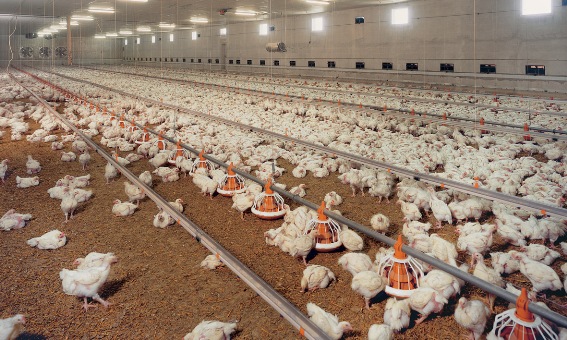

3 June 2025, PARIS – The WOAH (World Organisation for Animal Health) has just published its first report on the current state of global animal health. This comprehensive report addresses the changes occurring in disease spread that directly impact animal production, food safety, trade and ecosystems.
WOAH’s inaugural report published in May 2025 on the State of the World’s Animal Health finds several animal diseases reaching new areas, with half of them potentially transmissible to humans.
Key findings of the report common to all livestock species:
Animal diseases are migrating to previously unaffected areas, half (47%) of which have zoonotic potential, meaning transmission from animals to humans.
Highly Pathogenic Avian Influenza (HPAI), which has caused the culling or loss of more than 630 million birds over the past two decades, was one of several animal diseases that affected new areas in 2024.
Outbreaks of avian influenza in mammals more than doubled in 2024 compared to 2023, increasing the risk of further spread and transmission to humans.
Access to livestock vaccines remains unequal worldwide, with disease eradication efforts facing funding and political challenges.
Antibiotic use in animals decreased by 5% between 2020 and 2022, and expanding livestock vaccination globally would reduce the risk of antimicrobial resistance.
Infectious animal diseases are affecting new areas and species, undermining global food security, human health and biodiversity, according to the first Report on the State of the World’s Animal Health.
The new annual assessment, published by the World Organisation for Animal Health (WOAH), provides the first comprehensive review of animal disease trends, risks and challenges, from vaccine uptake and availability to antibiotic use in animals. Published ahead of the 92nd WOAH General Session and its Animal Health Forum, where leading experts gathered to discuss vaccination and innovation in disease prevention, the report lays the foundations for high-level discussions on how science-based vaccination strategies and emerging technologies can help address current and future threats to animal health through a One Health approach.
Among its findings, the report revealed that the reported number of avian influenza outbreaks in mammals more than doubled last year compared to 2023, with 1,022 outbreaks in 2024 across 55 countries compared to 459 outbreaks in 2023.
The authors highlighted that, although the risk of human infection remains low, the more mammals such as livestock, cats or dogs become infected, the greater the possibility that the virus will adapt to mammal-to-mammal transmission and, potentially, to humans.
“The spread, prevalence and impact of infectious animal diseases is changing, bringing new challenges for agriculture and food security, human health and development, and natural ecosystems,” said Dr Emmanuelle Soubeyran, Director General of WOAH. By launching a new annual assessment of the state of the world’s animal health, WOAH sheds light on our interconnected health challenges and the solutions that can improve animal health and, by extension, global health.
Dr Emmanuelle Soubeyran, Director General of WOAH:
“Avian flu, or Highly Pathogenic Avian Influenza (HPAI), which has caused the culling or loss of more than 630 million birds over the past two decades, was one of several animal diseases that affected new areas in 2024.”
Nearly half of the WOAH-listed diseases reported to WOAH between 2005 and 2023 were considered a threat to human health with zoonotic potential, meaning infection from animals to humans.
The report cited climate change and increased trade among the factors influencing the spread and prevalence of animal diseases. Many are preventable through a combination of vaccination, improved hygiene and biosecurity measures, but the report noted that access to animal vaccines remains unequal worldwide. “Together with other measures, vaccination remains one of the most powerful disease prevention tools available, saving countless lives, preventing economic losses and reducing the need for antimicrobial treatments,” added Dr Soubeyran.
“Together with other measures, vaccination remains one of the most powerful disease prevention tools available, saving countless lives, preventing economic losses and reducing the need for antimicrobial treatments,”
“To limit the spread of highly damaging diseases such as avian influenza, foot-and-mouth disease and PPR, the global community must strengthen international cooperation and ensure equitable access to animal vaccines.” “The spread, prevalence and impact of infectious animal diseases are changing, posing new challenges for agriculture and food security, human health and development, and natural ecosystems,” said Dr Emmanuelle Soubeyran, Director General of WOAH. “By launching a new annual assessment of the state of animal health in the world, WOAH sheds light on our interconnected health challenges and the solutions that can improve animal health and, by extension, global health,” added Soubeyran.
What does the WOAH 2025 report contribute regarding global poultry health priorities?
1. A global vision of poultry health
The inaugural “State of the World’s Animal Health 2025” report from the World Organisation for Animal Health (WOAH, formerly OIE) underscores the critical interconnection between animal health, public health and socioeconomic stability. For the poultry sector, one of the fundamental drivers of food security and global trade, this comprehensive analysis comes at a crucial moment. The growing demand for poultry protein, the intensification of production systems and global environmental changes demand surveillance and an unprecedented sanitary response capacity. This article summarises the main findings and recommendations of the report relevant to poultry professionals, omitting other animal species that fall outside the focus of NeXusAvicultura.
2. Poultry companies worldwide must recognise that Highly Pathogenic Avian Influenza (HPAI) is a constant and evolving threat
Highly Pathogenic Avian Influenza (HPAI) remains the primary health concern for the poultry industry worldwide. The WOAH report highlights:
- Geographical expansion and persistence: A concerning persistence of viral clades is observed, especially clade 2.3.4.4b, with incursions into previously unaffected regions and growing adaptation in wild birds, which act as transcontinental reservoirs and vectors.
- Devastating economic impact: Direct losses from mortality and mass depopulation, combined with trade restrictions and control costs, represent billions of dollars annually for the sector.
- Control challenges: While stamping out remains a key tool, its social acceptance and economic viability are declining. Vaccination is emerging as a crucial complementary strategy, although the report emphasises the need for vaccines that allow differentiation between infected and vaccinated birds (DIVA) and careful planning to avoid viral drift and covert circulation.
- Enhanced surveillance: The need for active epidemiological and genomic surveillance in both domestic and wild birds is imperative for early detection and characterisation of new viral variants.
3. Other diseases such as Newcastle Disease (ND) continue to have an ongoing impact in endemic regions
Despite the availability of effective vaccines, Newcastle Disease continues to cause significant outbreaks, particularly in regions with less technologically advanced production systems and difficulties in the cold chain for vaccine storage.
- Genotypic diversity: The circulation of multiple virulent genotypes complicates control programmes and requires constant adaptation of vaccine strains.
- Importance of biosecurity: The report reiterates that vaccination alone is insufficient without the rigorous implementation of biosecurity measures on farms and during transport.

4. The fight against Antimicrobial Resistance (AMR) in poultry has advanced considerably but with enormous variation between countries
The WOAH report devotes considerable attention to the global challenge of Antimicrobial Resistance (AMR), acknowledging the efforts of the poultry sector to optimise the use of these drugs.
- Reduction of use as growth promoters: A global trend towards eliminating the use of antimicrobials as growth promoters is confirmed, driven by regulations and consumer demand.
- Need for alternatives: The search for and validation of alternatives to antimicrobials (probiotics, prebiotics, organic acids, bacteriophages, plant extracts) is a priority. However, it is highlighted that their efficacy can be variable and context-dependent within production systems.
- Surveillance of use and resistance: The implementation of robust systems to monitor both antimicrobial consumption and the prevalence of resistant bacteria in the poultry sector is essential for evaluating the impact of interventions and guiding policy.
- Stewardship programmes: The widespread adoption of responsible antimicrobial stewardship programmes, led by veterinarians, including precise diagnostics, appropriate drug selection and compliance with withdrawal periods, is strongly encouraged.
5. Biosecurity must be the fundamental pillar of poultry health
Biosecurity is consistently identified by WOAH as the most cost-effective measure for the prevention and control of most poultry diseases.
- Key principles reinforced:
- Isolation (access control).
- Rigorous cleaning and disinfection of facilities, vehicles and equipment.
- Vector control (rodents, insects, wild birds).
- Proper carcass and waste management.
- Water and feed quality.
- Implementation challenges: Lack of training, insufficient investment and complacency are major barriers, especially in small and medium-sized operations.
- Contextual adaptation: The report suggests the need to adapt biosecurity protocols to different production systems (from commercial industrial to backyard flocks) and to the specific epidemiological risks of each region.
Table 1: Main poultry diseases highlighted and control approaches (WOAH 2025)
| Disease | Main global challenge | Key control approaches (according to WOAH) |
| Highly Pathogenic Avian Influenza (HPAI) | Geographical expansion, viral evolution, economic impact | Intensive surveillance (domestic and wild birds), strict biosecurity, stamping out, strategic vaccination (with DIVA). |
| Newcastle Disease (ND) | Persistence in endemic areas, genotypic diversity | Systematic vaccination, biosecurity, movement control. |
| Infectious Bronchitis (IB) | High viral variability, impact on production and quality | Vaccination programmes adapted to circulating variants, biosecurity, environmental improvement in houses. |
| Gumboro Disease (IBD) | Immunosuppression, very virulent strains | Vaccination (including next-generation vaccines), biosecurity, hygiene. |
| Avian Salmonellosis (S. Enteritidis, S. Typhimurium) | Public health implications, AMR | Comprehensive control programmes (from breeder to processing farms), biosecurity, vaccination, prudent antimicrobial use. |
| Mycoplasmosis (M. gallisepticum, M. synoviae) | Production losses, vertical transmission | Eradication in breeders, biosecurity, strategic medication (with AMR caution), vaccination. |
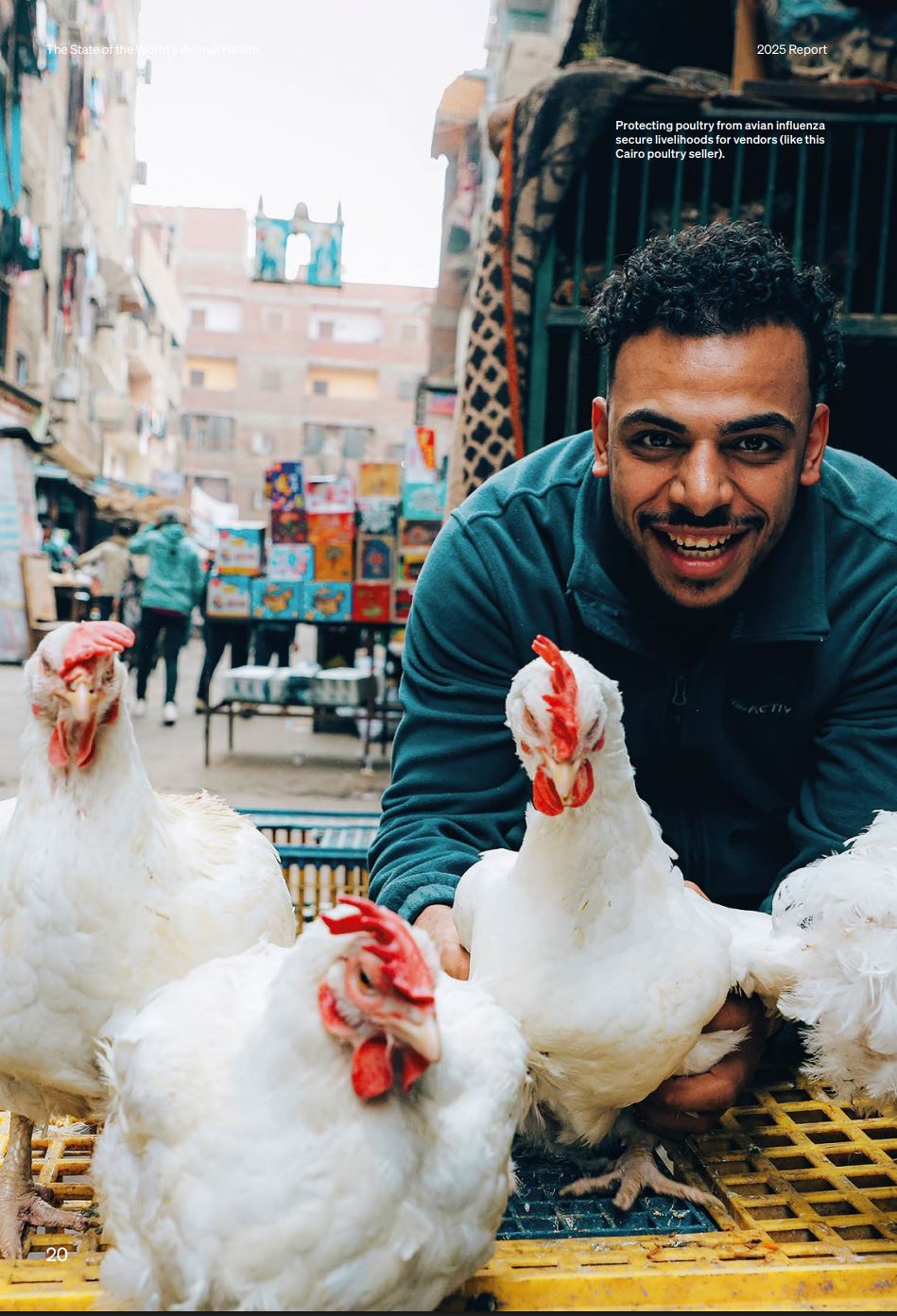
6. The crucial importance of epidemiological surveillance and early warning systems: the contribution of WAHIS
WOAH’s WAHIS platform (World Animal Health Information System) is fundamental for transparency and the rapid dissemination of information on animal disease outbreaks, including those affecting poultry.
- Mandatory notification: The report reminds Member Countries of their obligation to notify WOAH-listed disease outbreaks in a timely manner, enabling global risk assessment and the implementation of preventive measures in other countries.
- Strengthening veterinary services: It is emphasised that the quality and reliability of WAHIS data depends directly on the strength and capacity of national veterinary services, including competent diagnostic laboratories.
- Towards integrated surveillance: The integration of epidemiological data with genomic information, environmental factors and production data is promoted to improve predictive models and outbreak anticipation.
7. The “One Health” approach in poultry production
The “One Health” concept, which recognises the interdependence of human health, animal health and ecosystem health, is a cross-cutting theme throughout the report.
- Zoonoses of avian origin: HPAI and certain Salmonella strains are prime examples of zoonoses requiring close collaboration between public health and animal health authorities.
- Environmental impact of production: Challenges related to manure management and resource use (water, land) in intensive production are indirectly mentioned, along with how these can influence disease dynamics.
- Animal welfare and health: The report also recognises the growing importance of animal welfare, not only for ethical reasons, but also for its correlation with better bird health and productivity, and a reduced need for pharmacological interventions.
8. Future challenges and key recommendations for the poultry sector
The WOAH 2025 report concludes with a look to the future, identifying emerging challenges and priority areas for action to safeguard poultry health:
- Climate change: Alterations in migratory patterns of wild birds, heat stress in poultry and the possible emergence of new disease vectors.
- Globalisation and trade: Increased risk of pathogen introduction through the international movement of live birds, poultry products and people.
- Need for innovation: Continued investment in research and development of new diagnostic tools, more effective and safer vaccines (e.g. mRNA, vectored vaccines), and alternatives to antimicrobials.
- Capacity building: Support for developing countries to improve their veterinary services, diagnostic laboratories and surveillance systems.
- Public-private collaboration: Fostering partnerships between governments, industry, academia and international organisations to address health challenges in a coordinated manner.
“The State of the World’s Animal Health 2025” serves as a forceful reminder that poultry health is an essential component of global health and food security. Poultry sector professionals, from veterinarians to producers, play a crucial role in implementing WOAH’s recommendations. Investment in biosecurity, responsible antimicrobial use, proactive surveillance and the adoption of technological innovations are imperatives for ensuring a sustainable and healthy future for the global poultry industry. Collaboration and knowledge sharing — between countries, between animal species, and between human health and animal health experts — the pillars of WOAH, are more necessary than ever.
For further information:
-. The State of the World’s Animal Health 2025. (120 pages). World Organisation for Animal Health (May 2025).
https://doi.org/10.20506/woah.3586. Licence: CC BY-SA 3.0 IGO.
-. Biosecurity on NeXusAvicultura