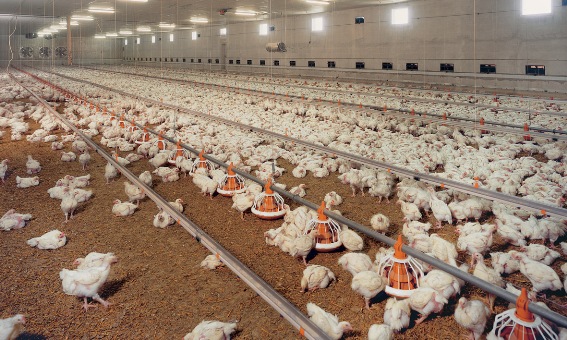


The Government of Castilla-La Mancha is set to invest 4.5 million euros in the Egg Technology Centre, in Marchamalo (Guadalajara), to drive innovation, competitiveness and profitability in the poultry sector “and to remain at the forefront of a highly important productive sector in our region, namely egg production”.
Castilla-La Mancha is home to almost one third of the total hen flock and of Spain’s egg production, and is the leading region in egg production. The Government of Castilla-La Mancha supports the transition to cage-free systems by supporting the conversion from cage housing to organic, free-range or barn production systems, with two funding calls totalling 16 million euros, which will enable the adaptation of nearly 3.4 million hen places across 19 farms.
A new centre to keep the egg sector at the cutting edge
The Government of Castilla-La Mancha is set to invest 4.5 million euros in the Egg Technology Centre, in Marchamalo (Guadalajara), to drive innovation, competitiveness and profitability in the poultry sector “and to remain at the forefront of a highly important productive sector in our region, namely egg production”.
The first step towards establishing this infrastructure was taken on Tuesday 25 March 2025, when the collaboration agreement between the regional Government and the Asociación de Avicultores de Castilla-La Mancha (AVICAM) was brought before the Council of Government meeting, with the expectation that “before summer, President García-Page will present it in Marchamalo”, as announced by the Regional Minister for Agriculture, Livestock and Rural Development, Julián Martínez Lizán.
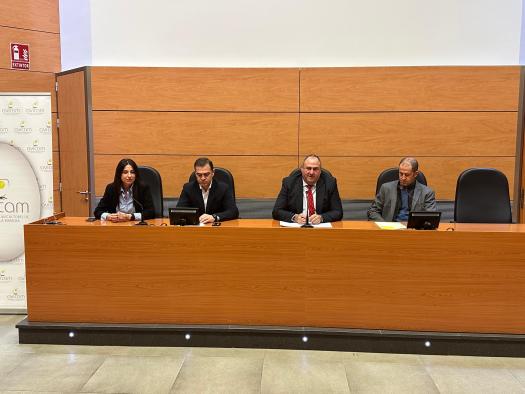
At the event held in Tomelloso, where AVICAM’s General Assembly took place, the Regional Minister stated that, from now on, thanks to this collaboration “the sector will have access to a state-of-the-art infrastructure”. Furthermore, it will have guaranteed participation in the decisions made at a centre funded by ERDF funds, which aims to improve animal health, poultry product quality and technological innovation through R&D&I projects.
Under the terms of this agreement, the Regional Ministry will refurbish a building adjacent to the Marchamalo Centre for Beekeeping and Agri-environmental Research and will equip it with laboratory equipment, furniture and specialist materials. In turn, AVICAM will commit to recruiting and maintaining specialist technical staff, maintaining the facilities, supplying consumable materials, and renewing and servicing laboratory equipment.
In summary, this future Egg Technology Centre will provide the capacity to harness innovation, and above all the knowledge that the technicians working there can contribute, in order to implement R&D&I measures that may prove beneficial to all producers in the region, and specifically to AVICAM’s poultry farmers.
All of this takes place in a context of “clear regional leadership”, with the region accounting for almost one third of the total national hen flock and egg output, making it the most important egg-producing region in the country.
€16 M to adapt laying systems
With regard to the laying sector, Julián Martínez Lizán explained that the Government of Castilla-La Mancha is supporting the conversion from cage housing to organic, free-range or barn production systems through two funding calls totalling 16 million euros, enabling the adaptation of nearly 3.4 million hen places across 19 farms.

“In this way, we want to continue supporting and guaranteeing the viability and profitability of poultry farmers because, regardless of the specific challenges each sector may face at any given time, our obligation is to safeguard such an important sector as the laying hen industry in our region”, concluded the Regional Minister.
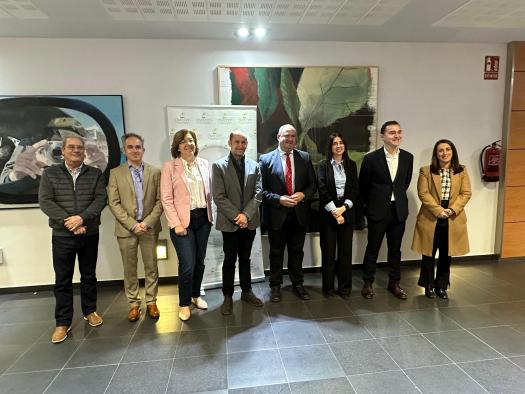
At this event, Julián Martínez Lizán was accompanied by the President of AVICAM, Vicente Arriscado; the Director General of Agri-livestock Management, Lidia Benítez; and the Agriculture, Livestock and Rural Development delegates for Ciudad Real, Toledo, Guadalajara and Cuenca.
It is worth noting that in 2024 the grants awarded for the same purpose amounted to €7.5 million in Castilla-La Mancha