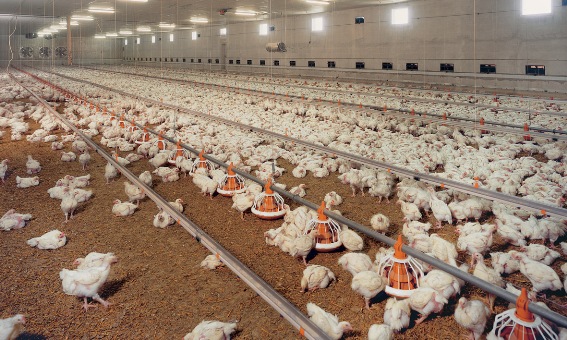


This study is highly relevant for poultry farmers, as it provides crucial information on how highly pathogenic avian influenza (HPAI) could be entering farms, even with strict biosecurity measures implemented. Understanding possible transmission routes is fundamental to protect their birds, reduce the risk of outbreaks and, ultimately, ensure the viability of their broiler or layer operations.
Study Background and Motivation
HPAI is a devastating disease that primarily affects poultry and wild birds, but can also be transmitted to humans. In recent years, Europe has experienced recurring HPAI outbreaks in poultry farms, resulting in significant economic losses and serious public health concerns. Current prevention and control measures focus on biosecurity and culling of all birds in affected farms. While these measures are essential, the persistence of outbreaks suggests that the transmission routes of HPAI are not fully understood.
Just as we monitor Temperature and Humidity 24/7, and as technology becomes increasingly accessible, should we monitor 24/7 the air quality entering farms?
One possible transmission route that has received less attention is wind as a factor in pathogen transmission. It has been suggested that HPAI virus, present in airborne particles from infected wild birds, could enter poultry farms through air inlets. This transmission route could explain why some farms with high biosecurity standards still become infected.
However, investigating airborne transmission is extremely complicated. Detecting HPAI virus directly in the air requires sampling during the presence of wild birds spreading the virus near the farm, resulting in a limited time window with low probability of viral detection due to relatively low viral loads.
Given the COMPLEXITY OF DETECTING THE VIRUS IN THE AIR, THE APPROACH WAS CHANGED BY SEARCHING IN AIR SAMPLES FOR DNA OF BIRDS THAT ARE KNOWN TO BE CARRIERS OF HPAI VIRUS
The Study’s Innovative Approach: Environmental DNA Metabarcoding
To overcome these limitations, researchers adopted an innovative approach: instead of searching for HPAI virus directly, they searched for genetic material (DNA) from wild waterfowl, which are known carriers of HPAI virus, in the air entering farms. The hypothesis is that if waterfowl DNA is detected in air entering farms, it is likely that HPAI virus could also enter by the same route.
To detect waterfowl DNA, researchers used a technique called environmental DNA metabarcoding (eDNA). eDNA metabarcoding is a powerful tool that allows identification of multiple species from a single environmental sample through DNA sequence analysis. In this case, researchers collected airborne particles and then extracted DNA from those particles. They then used high-throughput sequencing technique to identify the bird species to which the DNA belonged.
Ultraviolet irradiation of incoming air to farms would help reduce the possible viral load thereof
Detailed Study Methodology
The study was conducted at three poultry farms in the Netherlands: two broiler chicken farms (B1 and B2) and one layer hen farm (L). The farms were selected based on willingness of poultry farmers to participate and recent HPAI outbreak. At the time of sampling, the farms had been cleaned and disinfected following an HPAI outbreak.
Researchers collected air samples both indoors (at air inlets) and outdoors from the farms. Air samples were collected over several days using air sampling equipment. Control samples were also collected at a bird rehabilitation centre to ensure method accuracy.
After collecting air samples, researchers extracted the DNA and analysed it using eDNA metabarcoding. Sequencing data were analysed using bioinformatics tools to identify the bird species to which the DNA belonged. Additional analyses were performed to rule out sample contamination.

What Was Found in the Collected Air Samples?
Study results revealed that waterfowl DNA was detected in air entering all three poultry farms. Species such as swans and ducks were identified. Waterfowl DNA was also detected in air around two of the three farms. Furthermore, waterfowl DNA was found in all air samples collected at the bird rehabilitation centre, validating method accuracy.
These findings suggest that particles containing waterfowl DNA can enter poultry farms through air inlets. Since waterfowl are known carriers of HPAI virus, these results imply that HPAI virus could also enter farms through the same route.
However, it is important to note that the study did not directly detect HPAI virus in air samples. This could be due to the virus being present in quantities too low to be detected or the virus having degraded before sample collection.
No single measure is sufficient on its own, but the combination and strict application of multiple biosecurity measures will certainly provide much better protection for our birds against possible diseases.
Results Interpretation and Limitations
Despite not directly detecting HPAI virus, study findings provide solid evidence that airborne transmission could be an important route for HPAI virus entry into poultry farms. Detection of waterfowl DNA in air entering farms suggests that airborne particles from infected wild birds can travel long distances and enter poultry facilities.
The study has three important limitations:
-. First, the study was conducted in only three poultry farms in the Netherlands. Results may not be generalizable to other poultry farms in other regions.
-. Second, the study did not quantify the amount of waterfowl DNA detected in air samples. Therefore, it is not possible to determine whether the amount of waterfowl DNA detected was sufficient to cause HPAI infection.
-. Third, the study did not investigate factors that could influence airborne transmission of HPAI virus, such as climatic conditions or proximity of farms to wild bird populations.
Before implementing any new biosecurity measures, it must be verified that the biosecurity plans for my farm are being applied strictly.
Practical Implications for Poultry Farmers
Despite these limitations, the study has important implications for the poultry industry in general. Results suggest that current biosecurity measures may not be sufficient to prevent airborne transmission of HPAI virus. Therefore, it is important that poultry farmers consider additional measures to reduce the risk of airborne transmission, which may include:
- Improved air filtration: Install air filters at farm air inlets to remove airborne particles that could contain HPAI virus.
- Air disinfection: Use air disinfection systems, such as ultraviolet (UV) irradiation, to inactivate HPAI virus in air entering farms.
- Wild bird control: Implement measures to deter wild birds from approaching farms, such as use of netting or repellents.
- Air quality monitoring: Monitor air quality around farms to detect presence of waterfowl DNA or HPAI virus.
In addition to these measures, it is important that poultry farmers strictly follow existing biosecurity measures, such as access control to farms, disinfection of equipment and vehicles, and use of protective clothing and footwear. It is also important that farmers immediately report any signs of disease in their birds to veterinary authorities.
In any case, what is clear is that current biosecurity measures fall short against some virus transmission routes, such as the airborne route.
Future Research and Conclusions
Further research is needed to fully understand airborne transmission of HPAI virus and develop more effective prevention and control strategies. Future research could focus on:
- Quantifying the amount of HPAI virus present in air around poultry farms.
- Identifying factors that influence airborne transmission of HPAI virus.
- Evaluating effectiveness of different prevention and control measures for airborne transmission.
- Developing risk models to predict probability of HPAI outbreaks based on presence of waterfowl DNA or HPAI virus in air.
- Expanding use of eDNA metabarcoding to monitor presence of other pathogens that could be transmitted airborne.
Cost reduction of technology should prompt us to reconsider every 5 years how we can improve current biosecurity. Some new elements that can be added to biosecurity plans and are now much more economical than a decade ago would include: laser bird scarers, incoming air disinfection systems by UV rays, air quality measurement sensors, etc.
In conclusion, this study provides important evidence that airborne transmission could be a significant route for HPAI virus entry into poultry farms. Results suggest that poultry farmers should consider additional measures to reduce the risk of airborne transmission, such as improved air filtration, air disinfection, wild bird control and air quality monitoring. Further research is needed to fully understand airborne transmission of HPAI virus and develop more effective prevention and control strategies. By taking measures to reduce the risk of airborne transmission, farmers can better protect their birds, reduce outbreak risk and ensure business viability.
This study highlights the importance of a comprehensive biosecurity approach in the poultry industry. By combining traditional biosecurity measures with new strategies to reduce airborne transmission risk, poultry farmers can better protect their birds and contribute to animal and human health as better control of infectious diseases in livestock decreases risk to humans.
Source:
-. Bossers Alex, de Rooij Myrna MT, van Schothorst Isabella, Velkers Francisca C, Smit Lidwien AM. Detection of airborne wild waterbird-derived DNA demonstrates potential for transmission of avian influenza virus via air inlets into poultry houses, the Netherlands, 2021 to 2022. Euro Surveill. 2024;29(40):pii=2400350.
https://doi.org/10.2807/1560-7917.ES.2024.29.40.2400350
For more information:
-. Wind as a factor in pathogen transmission on NeXusAvicultura.com