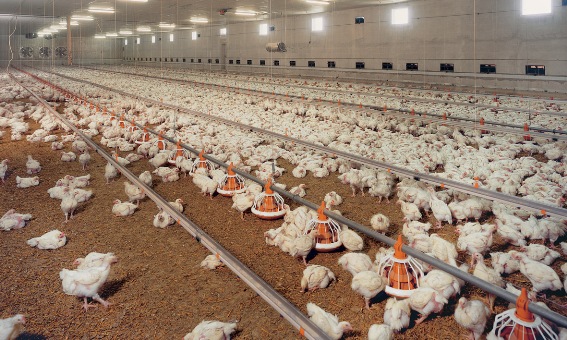


Emergence of H5N1 in the United States
When the deadly H5N1 avian influenza virus made its first appearance on a US poultry farm in February 2022, approximately 29,000 turkeys were culled at an Indiana facility in an attempt to prevent a larger outbreak.
It did not work. Three years later, highly pathogenic avian influenza has spread to all 50 states. The number of commercial birds that have died or been culled exceeds 166 million, and egg prices are at their highest point.
Poultry producers, infectious disease experts, and government officials are now acknowledging that H5N1 has likely come to stay. That recognition is leading some of them to question whether the long-standing practice of culling all birds on an infected farm is sustainable in the long term.

Mass culling versus alternatives
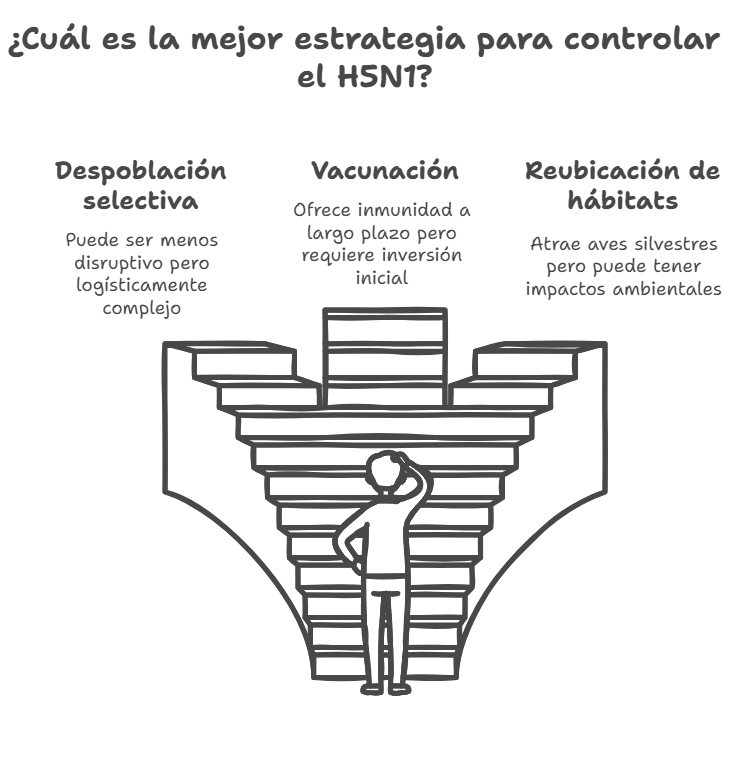
Instead, they are discussing strategies such as selective depopulation, vaccination, and even the relocation of wetlands and waterways to attract wild birds carrying the virus away from poultry farms.
But each of these alternatives carries a range of logistical, economic, and environmental costs that may overshadow the anticipated savings.
“People talk about common-sense solutions to avian influenza,” said Dr. Maurice Pitesky, a veterinarian and commercial poultry expert at UC Davis. “But that is what mass culling is. There is a reason we have been doing it: it is common sense.”
Lethality of H5N1 and the rationale for culling
The current strain of avian influenza, known as H5N1 2.3.4.4b, is highly contagious and highly lethal. It has swept through the country’s commercial chickens, turkeys, and ducks with a mortality rate of nearly 100%.
“There is a reason they call it ‘highly pathogenic avian influenza’,” said Angela Rasmussen, a virologist at the Vaccine and Infectious Disease Organization at the University of Saskatchewan. “It simply tears through a flock like a hot knife through butter.”
And that is why most researchers and veterinarians advocate mass culling, describing it as both humane and cost-effective.
A natural death from H5N1 is not pleasant for a bird, said Rasmussen. The virus causes a gastrointestinal infection, so birds end up dying from diarrhoea along with respiratory distress. “It is like Ebola without the haemorrhaging,” she said.
Sparing birds that do not appear sick is a gamble. They may be infected and capable of spreading the virus through their faeces before showing any external signs of disease. The only way to know for certain is to test each bird individually — a costly and time-consuming prospect. And if even a single infected bird is missed, it can spread the virus to an entire replacement flock, said Rasmussen.

Furthermore, she said, all the additional work required to ensure that some hens can be kept alive would only increase labour costs and ultimately make eggs more expensive. It also has the potential to increase the total amount of virus on farms, which is dangerous for poultry farm workers, said Dr. Ashish Jha, Dean of the School of Public Health at Brown University.
“One of the reasons for early culling is that you do not want extensive bird-to-human exposure,” he said. “The more infections we introduce into humans, the more mutations we will see that will increase the risk of a broader epidemic or pandemic.”
For all these reasons, international trade agreements require mass culling — also known as “sanitary slaughter” — so that importers do not have their domestic flocks exposed to H5N1, said Dr. Carol Cardona, a veterinarian and avian influenza researcher at the University of Minnesota.
That is not the only financial incentive for mass culling. The United States Department of Agriculture (USDA), and its counterparts in many other countries, reimburses poultry producers for eggs and birds that must be culled to contain an outbreak, but not for birds that die from influenza.
However, at times this has meant killing more than 4.2 million birds, the majority of which may have been healthy.

Debates on selective depopulation
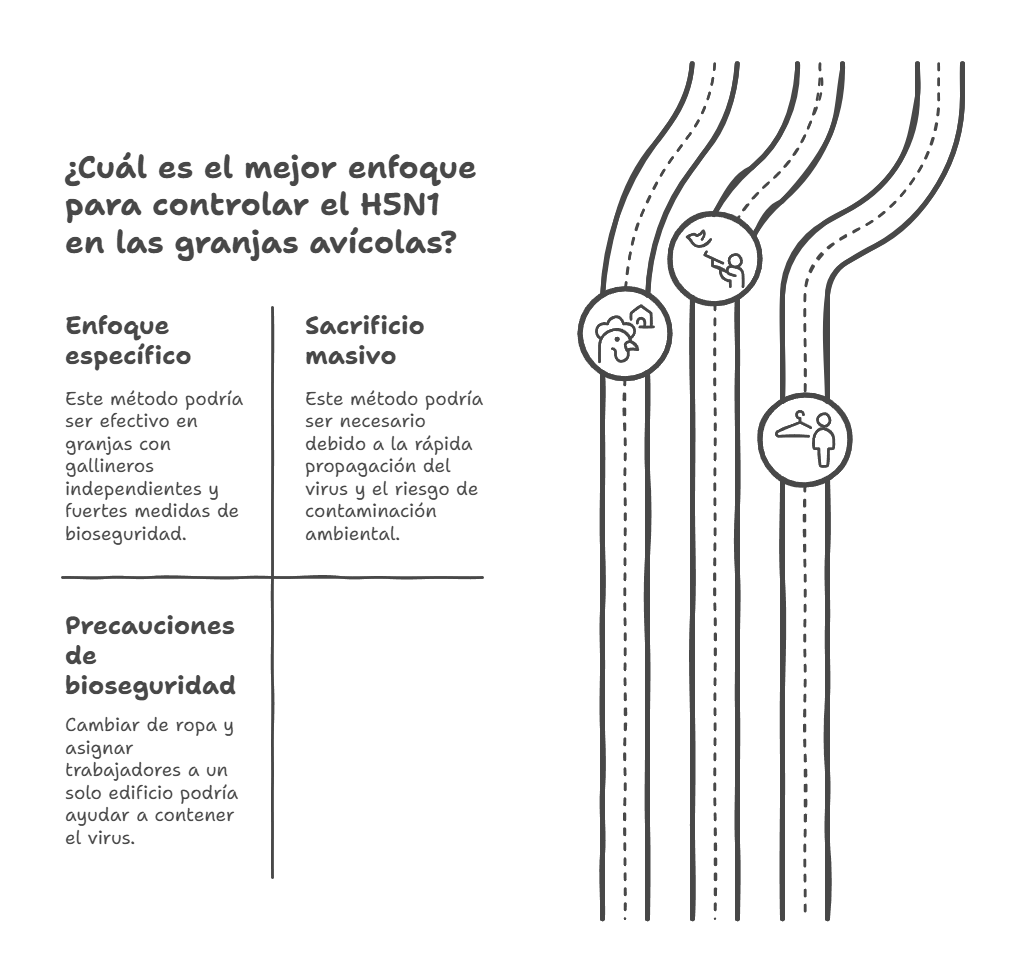
Bill Mattos, President of the California Poultry Federation, has said that a more targeted approach could be feasible when not all birds live under the same roof. In California, for example, broiler farms typically operate several independent houses with separate ventilation systems, entrances, and exits.
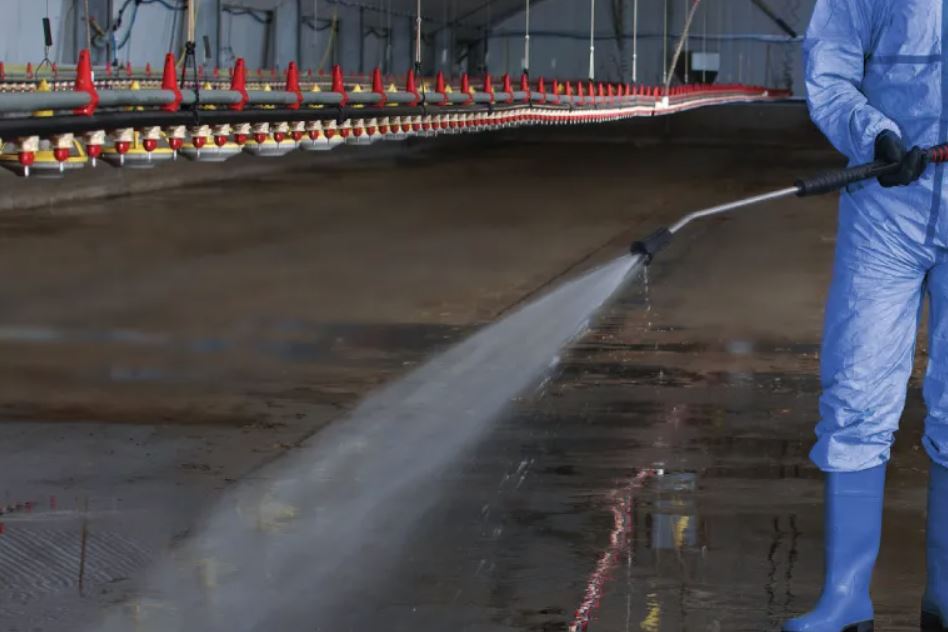
Biosecurity measures such as these can prevent pathogens from spreading between houses, said Cardona. Risks could be further reduced by requiring workers to change clothing and boots when moving from one house to another, or by assigning workers to a single house, she said.
But others, such as Dr. John Korslund, a veterinarian and former USDA researcher, are sceptical that such a practice can work, given the virulence of H5N1.
“Birds become infected and shed the virus very early, often before any visible evidence of clinical disease,” said Korslund. “The ‘healthy’ houses in infected facilities could very likely already be in the early stages of incubating infections,” he said.
Although it is possible that some houses might remain virus-free, and that some birds could be saved, the drawbacks of this approach are enormous, said Korslund. “A large quantity of additional virus will be introduced into the environment,” he said.
Indeed, influenza particles from a facility can be expelled through exhaust fans and travel long distances, said Michael Osterholm, Director of the Center for Infectious Disease Research and Policy at the University of Minnesota. Studies have shown that “the movement of virus from one farm to another was associated with wind direction and speed,” he said.
The role of vaccines and the future of control
Avian influenza vaccines may offer some protection. Both China and France use them, and the USDA granted a conditional licence this month for an H5N2 vaccine designed for chickens, according to Zoetis, the company that developed it.
While some herald vaccines as a potential tool for protecting the country’s poultry farms, others say the costs could be too great.
Most of the US’s trading partners are unwilling to import poultry products from countries that vaccinate their birds due to concerns that vaccination may mask the presence of the virus. And most will exclude an entire nation’s poultry portfolio, even if only one region or type of domestic bird is infected.
The United States is the world’s second largest exporter of poultry meat, surpassed only by Brazil, according to the National Chicken Council. Therefore, as long as foreign buyers resist vaccination, vaccines are unlikely to be deployed even as laying hens are being decimated by the virus.

As members of the US Congressional and Senate Poultry Caucuses wrote in a letter this month to the USDA, “if a laying hen in Michigan is vaccinated against HPAI, it is likely that the US would at this time be unable to export an unvaccinated broiler from Mississippi.”
The new H5N2 vaccine could allay those concerns. Although it would offer protection against H5N1, it would trigger antibodies that appear distinct from those arising from an actual infection, said Cardona.
Pitesky said that none of these measures will work if we do not do a better job of influenza surveillance and farm-level monitoring.
Wildlife and agriculture officials must increase their testing of wild birds to determine where the virus is moving and how it is evolving, he said. That will require global coordination because infected birds can travel back and forth between the United States, Canada, Russia, East Asia, and Europe.
Susanne Rust and Karen Kaplan
For further reading:
-. 2020-2024 Highlights in the History of Avian Influenza (Bird Flu) Timeline
-. DOGE Cuts Efficiency Programs in the Name of ‘Efficiency’. When you mistake indiscriminately cutting programs for actually improving things.
-. Avian Influenza at NeXusAvicultura.com