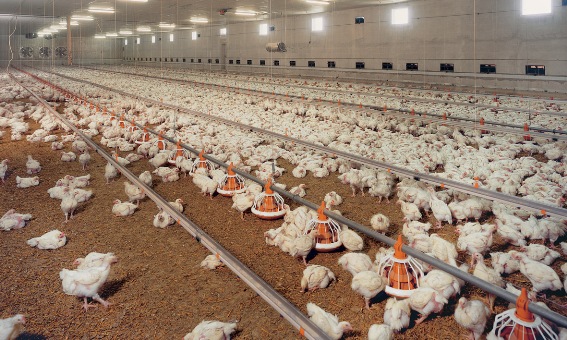

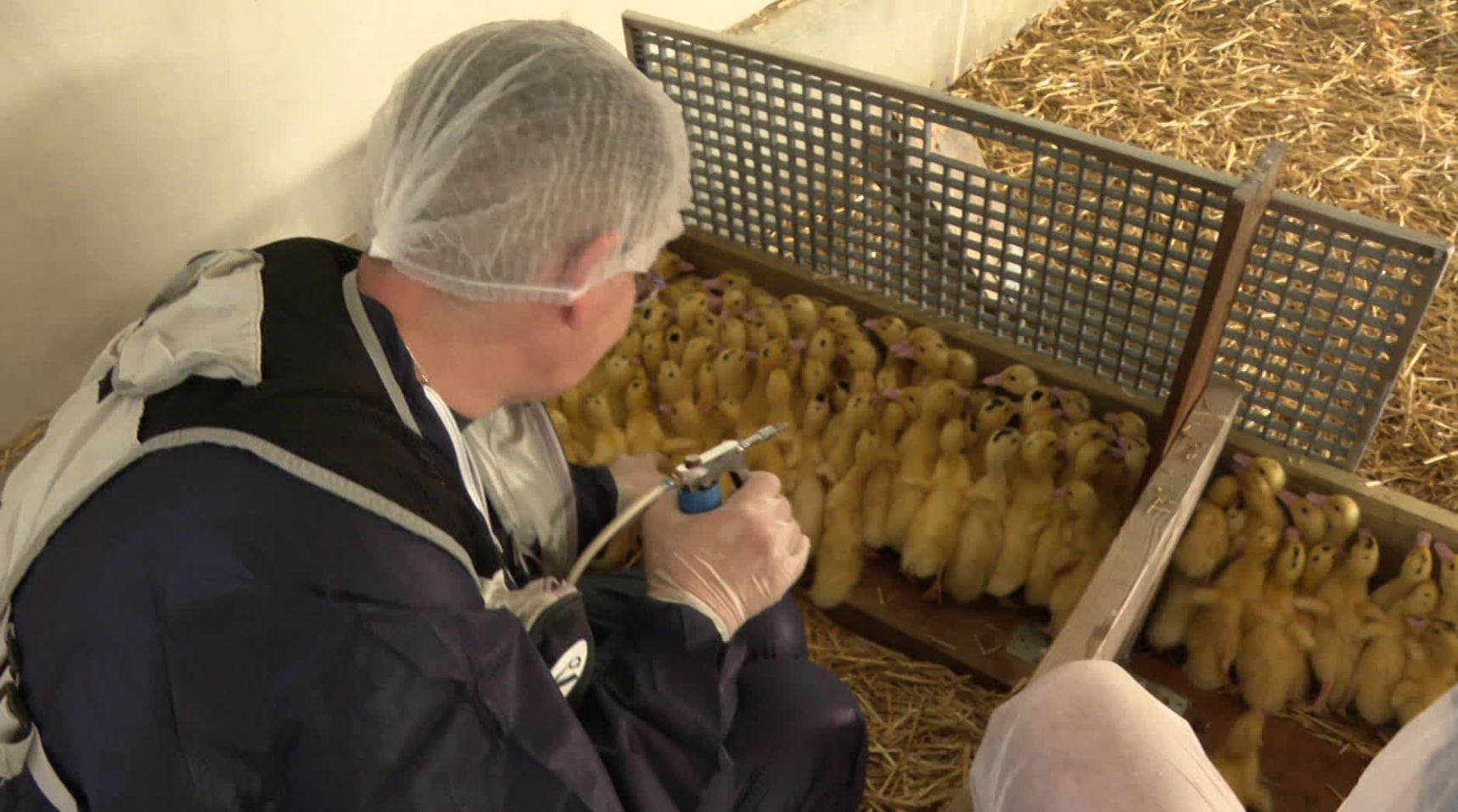
The two years prior to vaccination (which began in autumn 2023) were tragic: 1,800 outbreaks of highly pathogenic avian influenza (HPAI) were detected and 32 million poultry were culled in France. Since then, the situation has improved: only around thirty outbreaks have been recorded over two seasons and the poultry sector has recovered its pre-crisis production levels.
“It was a bold decision” that paid off, as “our studies showed that 700 outbreaks were prevented thanks to vaccination”, co-funded by the government, explains Muriel Vayssier-Taussat, head of the animal health department at the National Research Institute for Agriculture, Food and the Environment (INRAE), at the 61st Paris International Agricultural Show.
Meanwhile, in the United States, the epizootic is decimating poultry flocks by the tens of millions, which has driven egg prices sharply upward. This has led the sector, previously resistant to vaccination, to change its stance, citing the French example.
However, chicken producers in the country, the world’s second-largest exporter, are putting the brakes on the initiative, arguing that some countries could close their borders to US poultry products for fear that vaccination might mask the presence of the virus.
On the first day of vaccination in France, the United States and Canada imposed an embargo on French poultry products, which they lifted in January, having been convinced by France of the safety of the vaccination programme, according to the Ministry.
The French exception
In the United Kingdom, where around thirty outbreaks were detected, several agricultural organisations have called on the government to lift the ban on vaccinating poultry.
The European Union permits vaccination, but only France has rolled it out on a widespread basis, and exclusively for ducks, which are the source of many of the infections.
In January, French health authorities — both human and animal — and all livestock sectors called for better anticipation at the European level, as the migration of wild birds, which spread the virus, knows no borders.

The H5N1 virus
Avian influenza A (H5N1) first emerged in 1996 in China, a country that communicates little regarding its epizootic surveillance, according to INRAE. China, like other Asian countries, has been vaccinating for years, but barely exports, as it consumes the vast majority of its production.
From 2020 onwards, the number of outbreaks surged worldwide, affecting both birds and mammals, and spreading to areas previously unaffected, such as Antarctica.
In the United States, for nearly a year now, the virus has been attacking bovine herds, with cases of transmission to humans. One death has been recorded and close to 70 people have been infected, a figure that may be underestimated due to limited testing.
A constantly mutating virus
“The virus mutates very rapidly and has a broad host species spectrum,” explains Muriel Vayssier-Taussat. Its adaptation to the mammary gland of cattle was “a surprise”, as it normally affects the respiratory tract.
Researchers from INRAE and the Université du Québec have developed a new vaccine formulation effective against different strains of the virus. Trials in chickens demonstrated complete protection against infection as well as against viral transmission.
This “universal” vaccine has been patented and negotiations are under way with companies to conduct trials in other animal species and launch its production, with particular interest in North America, according to Muriel Vayssier-Taussat.
Bewildered by the health measures being taken by the United States
In recent weeks, there has been confusion over the United States strategy, following its withdrawal from the WHO, which is now only receiving “limited information” on avian influenza in the country, and the appointment of Robert Kennedy Jr. as head of the Department of Health, known for his anti-vaccine positions.
“The entire international health regulatory framework is built on transparency. Normally, North America is at the forefront. That is why we are frankly bewildered by the situation of our American partners,” declared Benoît Vallet, Director General of ANSES, at the Agricultural Show.
Last week, the United States Department of Agriculture, which had dismissed some employees as part of the staffing cuts requested by the Trump administration, rehired some of them to work on the avian influenza control plan promised by the new minister.
“Very worrying ‘forward-reverse’ effects,” according to Benoît Vallet.
Find out more:
-. Avian influenza and vaccination policies against avian influenza in farmed birds
-. Poultry industry in France