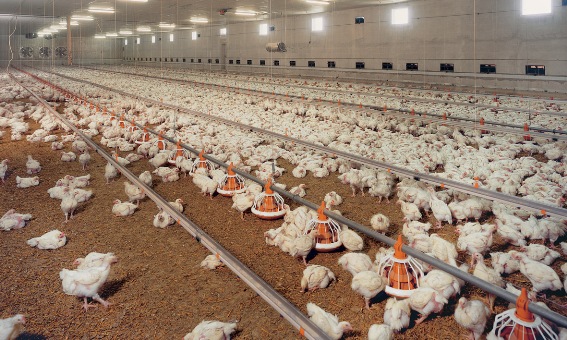

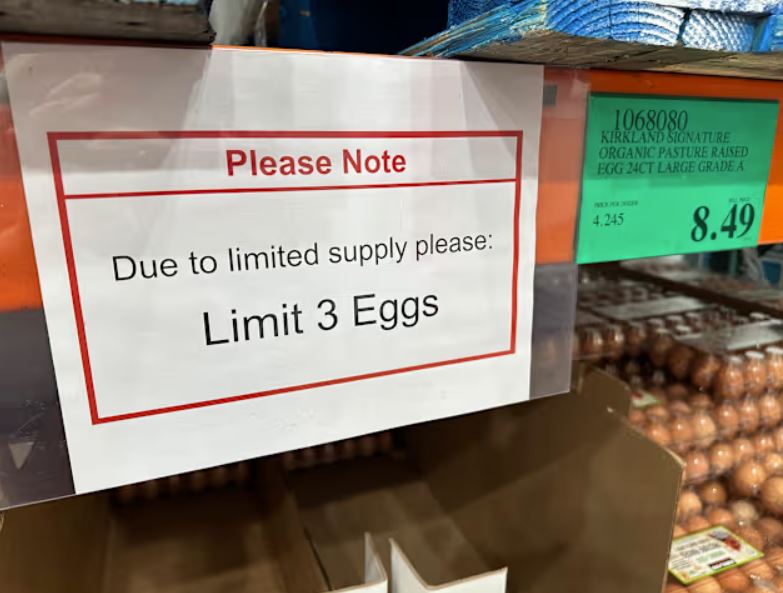
The US Government will invest $1 billion USD to combat avian influenza and attempt to curb the meteoric rise in egg prices. Half of this investment will be allocated to biosecurity.
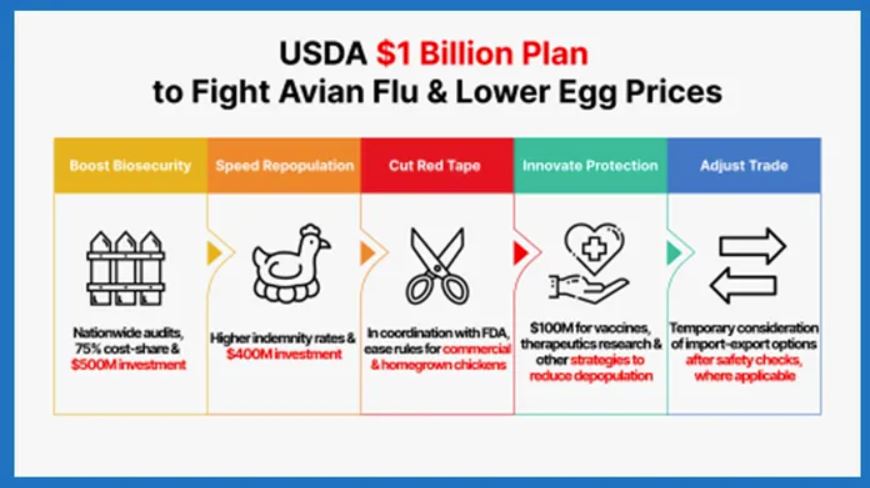
The Trump administration, through the United States Department of Agriculture (USDA), has announced an investment of $1 billion aimed at combating highly pathogenic avian influenza (HPAI), protecting the country’s poultry industry, and reducing egg prices. Secretary of Agriculture Brooke Rollins presented on 26 February 2025 a comprehensive strategy seeking to address the causes and consequences of avian influenza outbreaks.
The 5 pillars of the USDA strategy
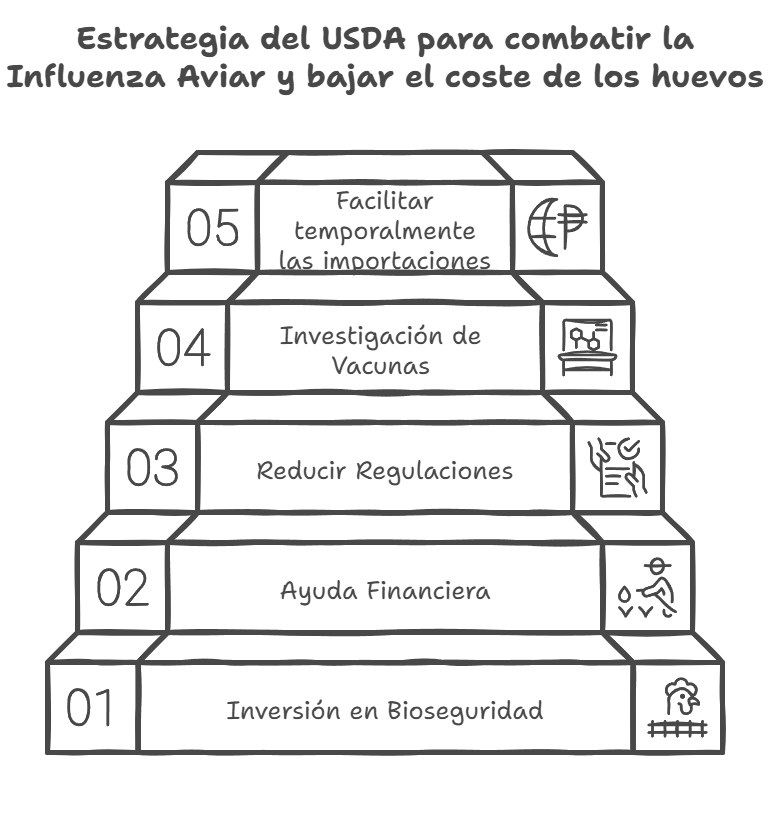
The new Secretary of the United States Department of Agriculture has outlined the five fundamental pillars of the plan:

- Investment in biosecurity measures: $500 million will be allocated to improve biosecurity measures across all poultry farms and associated industries in the USA, starting with layer farms. This includes the expansion of Wildlife Biosecurity Assessments, with the aim of protecting farms from virus transmission by wild birds, which is considered the cause of 83% of HPAI cases. The USDA will share up to 75% of costs to address the highest-risk biosecurity gaps identified by assessments and audits. Twenty trained epidemiologists will be deployed to advise producers on how to reduce HPAI risk at their facilities.
- Financial assistance and accelerated restocking: Up to $400 million in financial assistance will be provided for affected poultry producers and to accelerate flock restocking (understood as the reintroduction of production birds into a farm following the application of total depopulation measures, cleaning, and post-outbreak controls). APHIS (Animal and Plant Health Inspection Service) will continue to indemnify producers whose flocks must be culled to control the spread of HPAI. New programmes will be explored to help poultry producers accelerate the restocking rate, including streamlining the approval process to speed up recovery.
- Reduction of regulatory burdens: The USDA, in collaboration with the FDA (US Food and Drug Administration), is examining strategies to safely expand the supply of eggs in the commercial market. The aim is to minimise burdens on individual poultry keepers and consumers who collect backyard eggs. In addition, the USDA will work with poultry producers and scientists to develop innovative strategies to limit the scope of depopulations in HPAI outbreaks. The USDA will educate consumers and Congress on the need to address the problem of geographical egg price disparities.
- Vaccine research and therapeutics: Up to $100 million will be invested in research and development of next-generation vaccines, therapies, and other innovative solutions to minimise depopulation of laying hens, alongside enhanced biosurveillance. The USDA will work with trade partners to limit the impacts on export trade markets of potential vaccination. Trade-offs between public health and infectious disease strategy will be taken into account. The USDA will seek public input on solutions and will engage governors, state departments of agriculture, state veterinarians, poultry producers, and dairy cattle farmers in the strategy, logistics, and surveillance of vaccines and therapeutics.
- Temporary imports and international best practices: Options will be explored to temporarily increase egg imports and reduce exports, where appropriate, to supplement domestic supply, subject to safety reviews. The USDA will evaluate international best practices in egg production and safety to identify any opportunities to increase domestic supply.
Temporary suspension of tariffs for countries wishing to export eggs to the USA
The possibility of temporarily suspending tariffs on egg imports from third countries is being considered as a measure to supplement domestic supply and reduce prices for consumers. However, this option is subject to strict food safety reviews to ensure that imported eggs meet US standards. Secretary Rollins has indicated that the Trump administration is in discussions with several countries about the possibility of exporting eggs to the USA.
Even if the measures work, egg prices will take months to come down
Despite these measures, Secretary Rollins warns that egg prices will likely remain elevated for some time while the new efforts are implemented. The USDA predicts that egg prices will continue to rise in 2025, ending the year 41.1% higher than at the end of 2024.

The USDA strategy represents a significant effort to address the avian influenza crisis and stabilise egg prices. However, in the last week of February, another all-time egg price record was broken in the USA, with 100 kg of US eggs reaching €1,154.54 — a cost light years ahead of any other country in the world.
Source:
-. Wall Street Journal: Agriculture Secretary Brooke Rollins: My Plan to Lower Egg Prices
For further reading:
-. Poultry industry in the USA
-. Avian Influenza at NeXusAvicultura.com