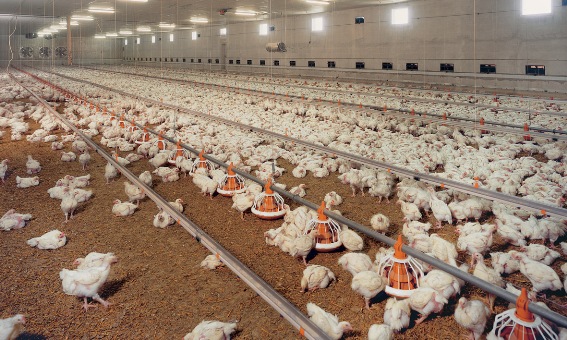


SWOT analyses are a quick way to obtain a concise, summarised overview of a productive sector.
Evolution and Trends in Poultry Meat Consumption and Production in Europe
The European poultry meat market has experienced significant growth in recent years, driven by strong domestic demand and consumer preferences. Chicken has become the animal protein of choice for many consumers due to its lower price compared to other meats and its convenience.
As we approach the close of the 2024 financial year, NeXusAvicultura.com presents a concise analysis of production and consumption trends, key market tendencies, a SWOT analysis of the sector, and country-specific highlights for each EU member state.
The article “Growth in 2024 and 2025 of the European broiler industry” provides a comprehensive study of the poultry meat industry in the EU.
Production Trends
Chicken meat production in the EU has been on an upward trajectory and this trend is expected to continue in 2024 and 2025.
● Poland is positioned as the leading chicken meat producer in the EU, accounting for more than 22% of total production. Its output continues to grow thanks to strong domestic and export demand, lower feed costs and reduced competition from Ukraine. Polish production is estimated to grow by 7% in 2024 and 2% in 2025.
● Other countries such as France and Spain are also experiencing production growth, driven primarily by domestic demand.
● On the other hand, countries such as the Netherlands are showing a slight decline in production, as producers are focusing on slower-growing birds and higher quality output.
● In Germany, production is growing marginally due to stricter animal welfare regulations.
● Romania is also showing steady growth driven by demand and low feed prices.
● Ukrainian companies are also investing in production within the EU, specifically in Croatia, which may have an impact on the market.
Consumption Trends
Chicken meat consumption in the EU continues on an upward trend.
● Chicken is regarded as a more affordable and convenient animal protein option.
● Consumption is increasing both in line with demographic growth and on a per capita basis.
● While there is growing interest in premium chicken products, such as organic or free-range, consumption of more economical cuts continues to grow at a much faster rate.
● Chicken is popular in institutional catering services due to fewer religious dietary restrictions.
● The perception of chicken as a healthier and easier-to-prepare meat also contributes to its consumption.
● Furthermore, the arrival of Ukrainian refugees and migrants from the southern hemisphere is also influencing the rise in consumption.
SWOT Analysis of the Poultry Meat Sector in the EU
| ●Weaknesses: | ●Threats: |
| ○ Vulnerability to highly pathogenic avian influenza (HPAI) outbreaks. ○Dependence on imports of poultry feed ingredients, such as non-genetically modified soya. ○Growing community resistance to the expansion of poultry farms. ○Rising production costs. ○Increasingly stringent animal welfare regulations that may constrain production. | ○Potential trade restrictions due to HPAI outbreaks. ○Volatility in feed and energy prices. ○Potential disruptions to feed supply chains, including issues arising from the new EU deforestation regulation. ○Increased import restrictions from Ukraine. ○Competition from third countries, such as Brazil. |
| ● Strengths: | ●Opportunities: |
| ○Strong domestic and export demand. ○Short production cycle allowing high responsiveness to market conditions. ○Competitive pricing relative to other animal proteins. ○ Adaptability of producers to animal welfare requirements, albeit at a higher cost. | ○Growing consumption in non-traditional markets. ○Lifting or modification of HPAI-related trade bans, boosting EU export growth. ○Growing demand for higher-quality and differentiated poultry products. ○Potential export expansion to markets such as China. ○Adaptation to new animal welfare regulations to gain market share. |
●Weaknesses:
○ Vulnerability to highly pathogenic avian influenza (HPAI) outbreaks.
○Dependence on imports of poultry feed ingredients, such as non-genetically modified soya.
○Growing community resistance to the expansion of poultry farms.
○Rising production costs.
○Increasingly stringent animal welfare regulations that may constrain production.
●Threats:
○Potential trade restrictions due to HPAI outbreaks.
○Volatility in feed and energy prices.
○Potential disruptions to feed supply chains, including issues arising from the new EU deforestation regulation.
○Increased import restrictions from Ukraine.
○Competition from third countries, such as Brazil.
● Strengths:
○Strong domestic and export demand.
○Short production cycle allowing high responsiveness to market conditions.
○Competitive pricing relative to other animal proteins.
○ Adaptability of producers to animal welfare requirements, albeit at a higher cost.
●Opportunities:
○Growing consumption in non-traditional markets.
○Lifting or modification of HPAI-related trade bans, boosting EU export growth.
○Growing demand for higher-quality and differentiated poultry products.
○Potential export expansion to markets such as China.
○Adaptation to new animal welfare regulations to gain market share.
Country-by-Country Analysis within the EU
●Poland: The EU’s leading producer, with strong export-driven growth. Benefiting from lower feed costs and reduced competition.
●France: Production increasing on the back of domestic demand; preference for locally produced goods.
●Netherlands: Production declining as quality and animal welfare are prioritised through the “Better Life” programme.
●Germany: Marginal production growth due to animal welfare regulations limiting expansion.
●Italy: Production recovery following HPAI outbreaks.
●Spain: Expansion driven by price competitiveness and demand, but with significant concerns over HPAI and supply.
●Hungary: Stable production, but with consolidation due to farm closures.
●Romania: Steady growth driven by demand and low feed prices.
●Belgium: Growing production despite a declining number of farms.
Conclusion
The EU poultry meat sector presents a dynamic landscape with continued growth in both production and consumption. Shifts in consumer preferences, animal welfare policies and biosecurity concerns are significantly influencing the industry. While challenges such as HPAI outbreaks and new regulations exist, there are also opportunities for growth and product differentiation. Producers who adapt to these trends and challenges will be best placed to thrive in the European poultry meat market.
It is important to note that this analysis is based on information available up to September 2024 and that market conditions may change rapidly due to economic, political and other factors.
For further information:
-. Analysis of the European broiler sector at NeXusAvicultura.com
-. Poultry sector analyses from NeXusAvicultura.com