

Huevos Guillén, supplier to Mercadona, closed the 2023 financial year with a turnover of €273.4 million, representing a 17.6% increase on the previous year, when it posted revenues of €233 million, according to its annual accounts filed with the Mercantile Registry.
The company also recorded a profit of €30 million, up 63%, driven by improved sector margins throughout 2023 — “the highest in the last 10 years“, as the Valencia-based firm states in its management report.
In this regard, the company details that the factors enabling such a favourable outcome were “the sustained high egg selling prices throughout the year and a reduction in production costs, primarily due to the fall in the price of raw materials used in feed production“. This was made possible by strong market demand, as the egg has been “one of the cheapest animal-protein sources when compared with those derived from meat and fish”.
The company operates predominantly in the domestic market, which accounts for 99% of its business volume, with only 1% destined for export to other European markets. Notably, 77% of total business volume is supplied to Juan Roig‘s company, the sole retail chain to which Huevos Guillén distributes its products in Spain.
Transition to alternative housing systems
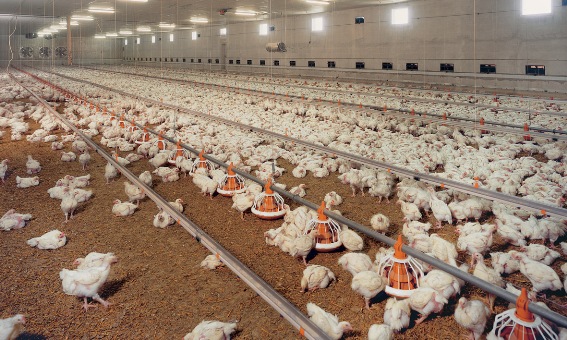
For several years the company has been making a major commitment to converting its facilities to alternative laying and rearing systems. Last year it invested a total of €25 million in tangible and intangible fixed assets, of which 65% was allocated to increasing production capacity in barn, free-range and organic systems. As a result, by the end of the financial year the group had 45% of its hens housed in cages and 55% in alternative systems.
For 2024, the company planned investments totalling €35 million, of which 60% has been dedicated to continuing this transition. Its aim is to close 2024 with 64% of the laying hen flock in alternative housing systems.
Looking ahead to the close of 2024, the company forecasts improved sales of up to €274.85 million, anticipating a roughly 10% fall in selling prices due to “the easing of inflation” alongside a further reduction in production costs.
Source: Diario Valencia Plaza [12-Dec-2024]