
Güner Gövenç, Arda Sözcü (*)
The aim of this study was to determine changes in crude protein and crude oil values of imported soybeans according to their origin, and to explore alternatives to soybean in poultry nutrition. A total of 227 soybean samples obtained from six countries of origin (Ukraine, Argentina, Brazil, USA, Paraguay and Uruguay) were analysed to measure crude protein and fat content. The crude protein and fat content of soybeans showed differences ranging from 30.7% to 38.8% for crude protein, and from 17.7% to 23.0% for fat, depending on the country of origin. The lowest crude protein content was observed in soybeans imported from Ukraine (33.9%), while the highest content was recorded in soybeans imported from the USA (35.6%). Regarding fat content, the highest and lowest values were observed in soybeans imported from Paraguay (21.3%) and the USA (19.2%, P<0.05), respectively.
The findings clearly indicate that the nutritional value of soybeans varies according to country of origin and depends on the climatic conditions and soil characteristics of each country. At this point, it is important to emphasise that the cost of soybeans must be considered in relation to their nutritional content. On the other hand, soybean meal is the main protein source added to poultry diets, with an inclusion rate of approximately 30% to meet the protein and amino acid requirements of broilers. In recent years, interest has grown in alternative protein sources, such as oilseed by-products, dried distillers’ grains with solubles, microalgae, insects and single-cell organisms, to replace soybean in poultry nutrition.
In conclusion, it is important to consider certain criteria when selecting soybeans and other protein alternatives, such as the nutritional requirements of broilers, the amino acid balance in the diet, avoiding antinutritional or toxic compounds in alternative protein sources, as well as the cost and availability of ingredients according to geographical areas.
Introduction
The world population is increasing day by day, resulting in a significant rise in global demand for food and feed (Parrini et al., 2023). By 2050, the world population is estimated to exceed 9 billion people; consequently, agricultural production is expected to increase by 50% (Lombardi et al., 2021). In poultry nutrition, protein feedstuffs are one of the most costly and limiting ingredients in diet formulation (Parisi et al., 2020), and soybean is one of the most important protein sources for poultry.
For this reason, the need for soybean is constantly increasing and its production is becoming increasingly important, especially in animal nutrition, with usage representing 67% of the animal feed market (Pettigrew et al., 2002). Soybean (Glycine max L.) is a high-quality protein source owing to favourable attributes such as its high protein content, an adequate amino acid profile (except methionine), minimal variation in nutrient content, year-round availability and the relative absence of antinutritional factors when properly processed.
The most important quality criteria for soybeans are crude protein content, moisture, KOH and crude fat. These criteria vary considerably according to soybean origin. In addition to these analyses, physical analyses such as seed size, colour and shape are also important. It has been reported that the geographical location of soybean production, the soybean variety and processing methods affect the protein and amino acid composition of soybean meal (Parsons et al., 1991, 2000; de Coca-Sinova, 2008, 2010; Baker et al., 2011).
In poultry nutrition, soybeans are not used directly in feed formulation due to their higher oil and hull cellulose content. Therefore, soybean by-products, such as soybean meal and soybean oil, are used in poultry nutrition, with an average inclusion of 30% in the diet.
The leading soybean-producing countries in the world are Brazil and the USA. Globally, soybean production in 2023 was reported at 398,210 thousand metric tonnes according to the USDA (USDA Reports, 2023, available at: https://ipad.fas.usda.gov/cropexplorer/cropview/commodityView.aspx?cropid=2222000).
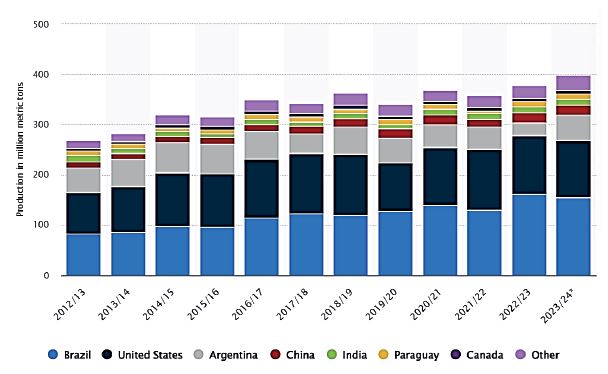
Figure 1. Major soybean-producing countries in the world (in million metric tonnes, Statista, 2004; available at: https://www.statista.com/statistics/263926/soybean-production-in-selected-countries-since-1980/)
The aim of this study was to compare the crude protein, crude fat and moisture content of soybeans according to their origins, and to provide information on protein alternatives to soybean in poultry nutrition.
Materials and Methods
A total of 227 soybean samples obtained from six countries of origin (Ukraine, Argentina, Brazil, USA, Paraguay and Uruguay) were analysed to determine crude protein and fat content. The crude protein and crude fat contents of the soybean samples were determined according to the AACC method (46-11.02, 30-25.01, International, 2010a, 2010b). The data obtained were analysed using the GLM procedure of statistical software (Minitab, 2013). Significant differences between means were compared using Tukey’s test and were considered statistically different at a level of P <0.05.
Results and Discussion
The crude protein content of soybeans by country is shown in Figure 2. As can be observed, protein content was lower in soybeans from Argentina (34.3%) and Ukraine (33.9%) compared to other countries (P<0.001).
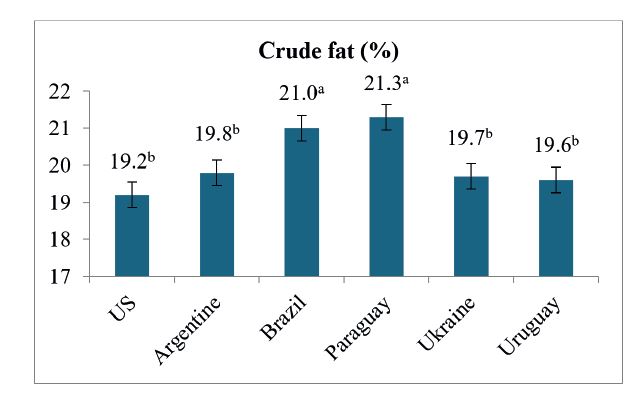
Figure 2. Crude protein content of soybeans by country
The crude fat content of soybeans by country is shown in Figure 3. As observed in the figure, the highest average fat content value was found in soybeans produced in Brazil (21.0%) and Paraguay (21.3%, P<0.001).
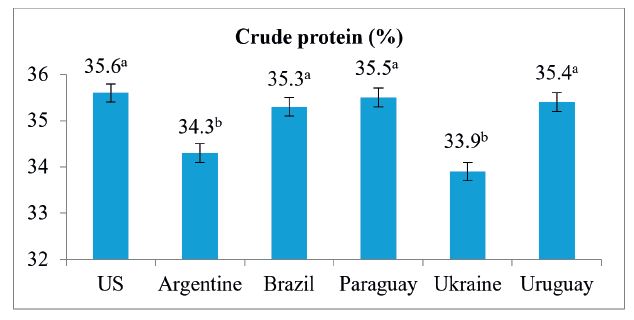
Figure 3. Crude fat content of soybeans by country
Soybean meal is a primary protein source in diets; therefore, any factor affecting the protein content of soybeans could be of great interest to the compound feed industry. On the other hand, the fat content of soybeans is also crucial for the industry due to its high economic value.
It is known that soybeans cultivated under different environmental conditions and farming practices exhibit large variations in quality parameters. Furthermore, processing conditions, such as processing temperature, moisture and drying time, cause differences in the chemical composition and quality of soybean meal (Thakur and Hurburgh, 2007). According to Zhang et al. (2024), soybeans with a moisture content below 13% and a fat content above 20% are considered high-oil soybeans.
Although the high nutritional value of soybean as a plant protein source provides efficient utilisation in poultry nutrition, both the social and environmental impact of the soybean industry and the production of genetically modified soybeans have led to increased demand for more sustainable alternative protein sources (Gkarane et al., 2020).
In this context, recent studies have explored the possibilities of using larvae of Hermetia illucens (black soldier fly) and the microalga spirulina (Arthrospira platensis) in poultry nutrition (Schiavone et al., 2017; Park et al., 2018; Kawasaki et al., 2019; Smetana et al., 2019).
-. Source:
International Poultry Congress 2024 – Bursa, Turkey
The Quality Parameters of Soybean and Alternative Protein Feedstuffs in Poultry Nutrition
Güner Gövenç, Arda Sözcü (*)
Uludag University, Faculty of Agriculture, Department of Animal Science, Bursa, Turkey
Corresponding email: guner.govenc@hotmail.com