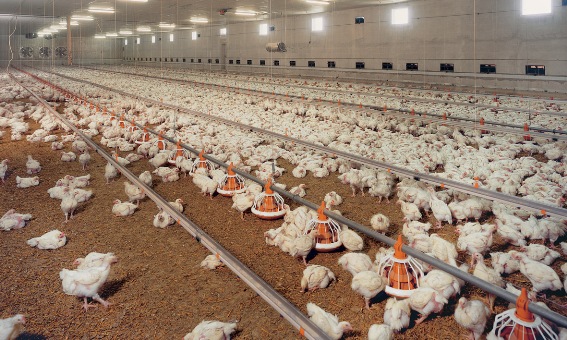


The poultry sector loses up to $6 billion per year due to necrotic enteritis, a common intestinal disease in broiler chickens.
A poultry scientist researcher at the Arkansas Agricultural Experiment Station, USA, is evaluating a new possible solution using a novel vaccine combined with a bile acid regimen. This is Xiaolun “Jack” Sun, who has received a 4-year grant of $650,000 from the U.S. Department of Agriculture (USDA) to advance his research.
According to Sun, concerns about antimicrobial resistance from consumers, the poultry sector, and regulatory agencies have led to restrictions on the use of antimicrobials in the poultry industry, and these have likely contributed to an increase in necrotic enteritis cases.
Sun aims to develop a “multi-epitope fusion antigen vaccine,” or MEFA vaccine, to target the growth of Clostridium perfringens in the intestine, the bacterium causing the problem, associated with the coccidian Eimeria maxima.
A multi-epitope fusion antigen is a type of recombinant protein, produced by genetically modified cells. What makes MEFA vaccines (“multi epitope fusion antigen“) unique is the combination of multiple “antibody-generating sites,” called epitopes, in one protein—the parts of it that trigger an immune response.
By having multiple epitopes in one molecule, MEFA vaccines can simultaneously target multiple characteristics of the disease-causing pathogen, known as virulence points. According to Sun, this theoretically makes the vaccine more effective by triggering a stronger and broader immune response. In simple terms, a MEFA vaccine is like a multi-tool that can attack different weaknesses in a pathogen, providing better protection.
Sun will also explore how bile acids can inhibit pathogen growth and necrotic enteritis in chickens, which aid in fat emulsification and nutrient absorption in the intestine and for which there is growing evidence of effectiveness against bacterial pathogens.
Although vaccines against C. perfringens already exist in the field with limited protection, Sun says his will be the first MEFA vaccine developed specifically against it at multiple virulence sites and necrotic enteritis.
The central hypothesis of this research is based on preliminary findings by researchers that a C. perfringens sporulation vaccine and dietary deoxycholic acid have reduced necrotic enteritis in chickens. The team will evaluate MEFA vaccines in the laboratory and in live chickens, orally, while investigating the efficacy of bile acid administration and its benefits for intestinal health in poultry.
For more information:
-. Arkansas Agricultural Experiment Station