
The increase in H5N1 avian influenza cases in the USA has led the Centers for Disease Control and Prevention (CDC) to study the virus in ferrets, observing its potential to spread and cause severe symptoms in other mammals.
H5N1 is improving in its spread among these animals, but does not yet spread as easily as seasonal influenza, suggests a CDC study. However, in the USA it has already been detected in 2024 in at least 46 people, causing only mild illness so far. This still represents a small risk to the general public, but as a precaution, scientists have explored whether the avian virus has adapted to infect mammals.
The H5N1 virus has been detected in around 50 mammalian species, including dairy cattle. The question is: what underlies the virus’s ability to infect mammals and its ease of spread when it jumps to a new species, such as humans? In the ongoing outbreak, researchers have not found any instances of person-to-person transmission, but they are closely monitoring for signs.
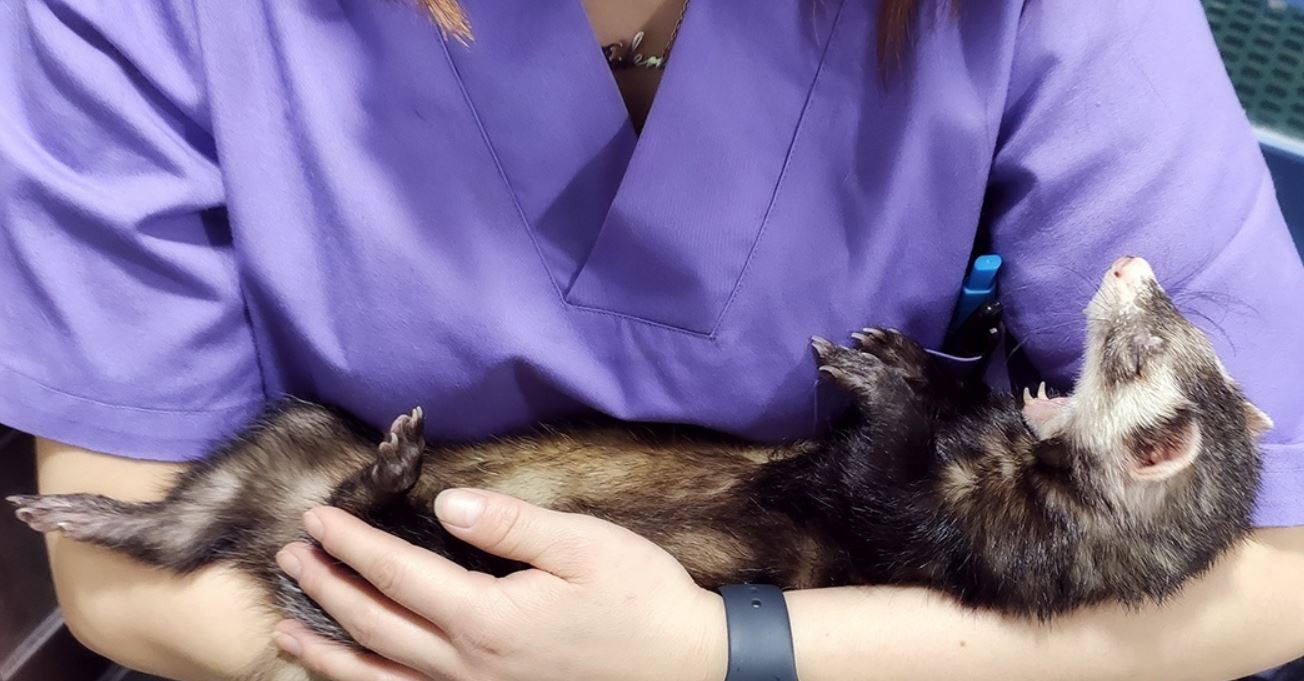
In the new study, published in the journal Nature, the CDC used ferrets because these animals are susceptible to human influenza and display similar symptoms. “Because they shed the virus into the air, they have been used as a model system to study airborne transmission,” according to Seema Lakdawala, a virologist at Emory University who did not participate in the study but collaborates with the CDC on other projects. “The lungs of humans and ferrets have a similar distribution of receptors that the virus can use to enter cells,” Lakdawala adds.
The study shows that H5N1 spreads readily among ferrets under certain circumstances, suggesting it could spread among other mammals. “And although this does not mean that because the virus transmits in ferrets it will also do so in humans, it indicates that it may be gaining capacity to spread among mammals,” clarifies Troy Sutton, a veterinarian at Penn State.
Scientists are not certain how farm workers contract the virus. It may be through direct handling of animals, airborne transmission, or contact with contaminated surfaces, such as milking equipment. The CDC studied all three possibilities in ferrets.
By pairing an infected ferret with a healthy ferret in the same cage, they studied direct contact. “Ferrets are very social animals. They groom each other and cuddle,” said Lakdawala. They tested direct contact in three ferret pairs and found that in each case transmission and severe disease occurred.
By moving a healthy ferret into a cage previously occupied by an infected one, the researchers explored transmission via contaminated surfaces, such as cage walls, bedding, food, and water. To test airborne spread, they placed infected and healthy ferrets in adjacent cages separated by a perforated wall that allowed airborne viruses to pass through. Neither of these transmission routes was as efficient as direct contact, as a proportion of the ferrets remained uninfected.
This study provides insights into the potential severity and transmission of H5N1. However, Lakdawala notes that it does not account for the complexities of the human immune system or human behaviour, nor do these types of cage experiments evaluate the possibility of spread over both long and short distances.
She concludes by stating that it will be important to study H5N1 viruses collected from other human patients to determine whether viral behaviour changes according to its genetics.
To learn more:
-. Avian Influenza on NeXusAvicultura.com