

IN-OVO Sexing Takes Off in the USA
2025 has been the year in which in-ovo sexing went global: in addition to steady expansion across Europe, the technology has demonstrated its viability in several major markets, including the United States and Brazil, where leading egg producers and retailers are adopting it — a clear sign of its widespread recognition as a viable technology for both the present and the future of egg production.
nnnn• NestFresh’s “Humanely Hatched” eggs reach supermarket shelves. In 2025, the US market began to adopt in-ovo sexing with NestFresh, through the first eggs produced in this way appearing on commercial shelves, alongside several other major producers announcing their intention to join the scheme and accelerating their adoption as the year drew to a close.
nnnnIn July 2025, NestFresh Eggs launched its “Humanely Hatched” product line and became the first egg producer in the US to sell eggs from in-ovo sexed hens, which are currently available at Whole Foods and several Albertsons chains nationwide. In doing so, it not only adopted this technology but led the effort to bring it to the US market.
nnn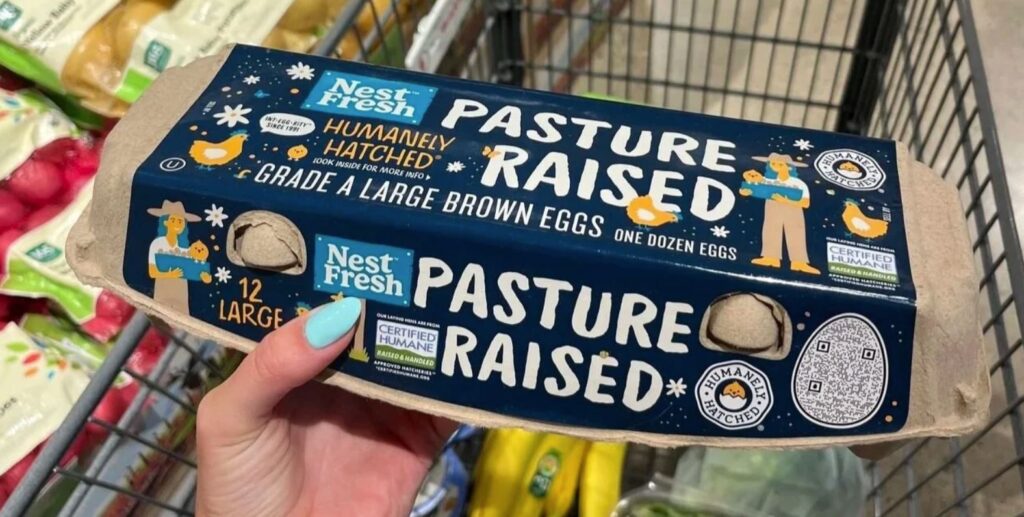
NestFresh Humanely Hatched eggs at a local Whole Foods store (photo: Innovate Animal Ag)
nnnnOther competitors in the USA:
nnnn• Vital Farms has also announced in December its plans to adopt in-ovo sexing during 2026 and expects the majority of its hens to be raised in this way by 2027. Vital Farms is the country’s largest specialty egg producer, with more than 10 million hens within its supplier network. The technology they will use is Cheggy, developed by the German company AAT.
nnnn• Walmart, the world’s largest egg retailer, has also announced in-ovo sexing as a requirement for its suppliers after updating its animal welfare policies in February 2025 as a key objective. Given Walmart’s enormous scale (more than 30 million hens supplying low-cost eggs to discount supermarkets), this move has signalled the expansion of the technology beyond specialist markets and into the broader US egg sector.
nnn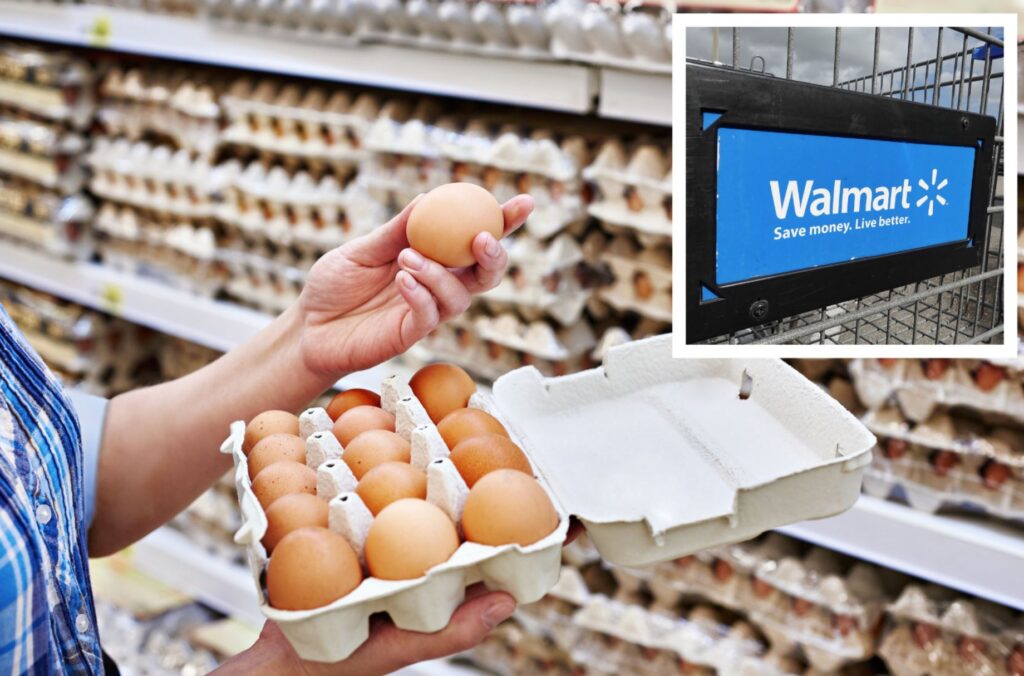
• Dutch company Kipster, now fully established in the USA, became the second company in the country to produce eggs from in-ovo sexed hens after receiving its first batch of pullets of this type in June 2025, hatched at its Nebraska hatchery using Respeggt technology. This was the first US company capable of sexing both white and brown eggs, which is significant in this market. According to their statements, these were the first eggs of this kind to reach retail shelves towards the end of 2025. Those wishing to support this innovation can now find Kipster eggs bearing the “Humane Approved®” certification at affiliated stores and outlets in 28 states, following the rearing of their pullets through to laying age.
nnn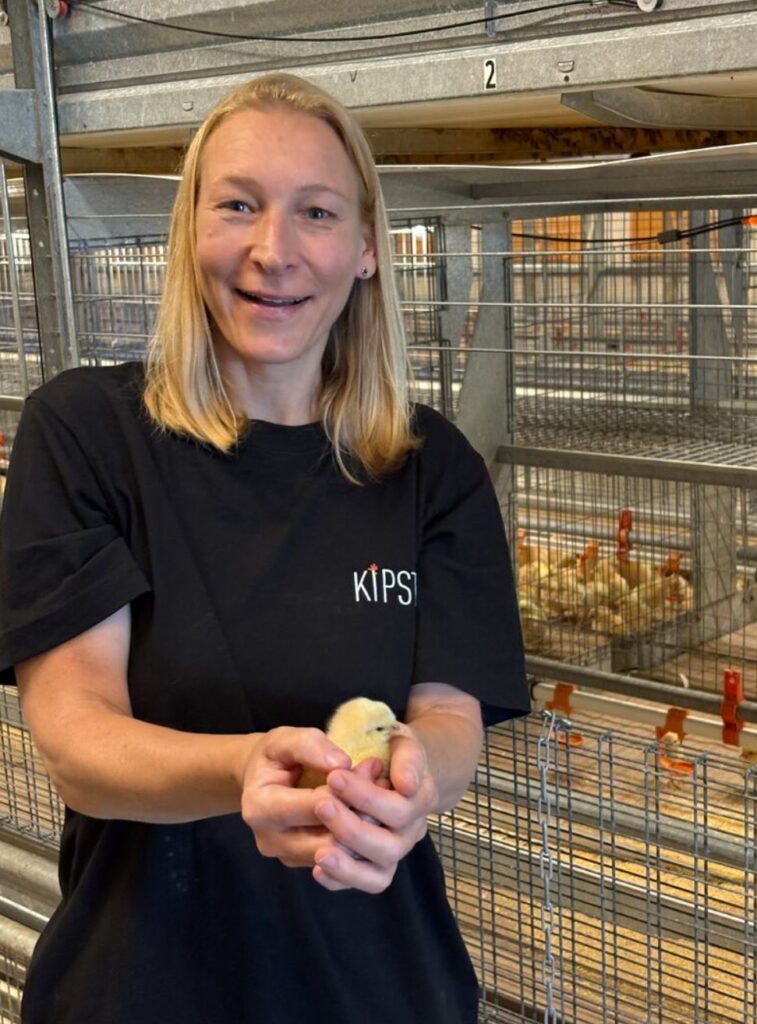
• Finally, in January 2025, United Egg Producers launched its in-ovo sexing certification, called “Certified Hatch Check”, which verifies that eggs come from hens sexed in this way and that farms and packing centres have adequate procedures in place to keep them separate from conventional eggs. Producers now have two certification options for in-ovo sexed hens, given the existence of an earlier scheme launched in 2024 by Humane Farm Animal Care, which administers the “Certified Humane” programme.
nnn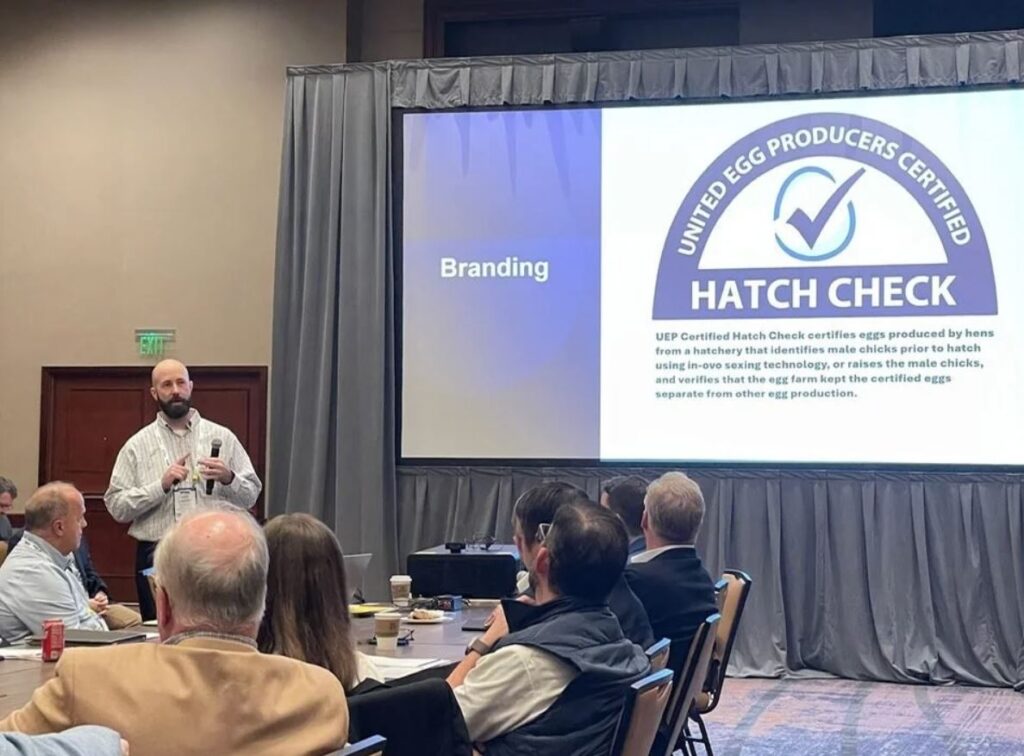
In-Ovo Sexing Arrives in Brazil
nnnn• In-ovo sexing also entered the Brazilian market in 2025. In July, Agri Advanced Technologies announced the installation of Cheggy technology, marking the first in-ovo sexing machine in the Southern Hemisphere. It was installed at a Hy-line do Brasil hatchery and is being used by egg producer Raiar Orgânicos, a premium market producer that places animal welfare at the core of its business and is committed to the highest standards of transparency, management, and animal welfare. According to the company, “the in-ovo sexing technology provided by Cheggy is the most effective, non-invasive and viable solution available,” and their decision was based on prior market research by Innovate Animal Agriculture showing that 76% of Brazilian consumers said they would pay a premium price for eggs produced in this way.
nnn
Brazilian logo of Raiar Orgânicos: “Care from the very beginning. Technology in favour of animal welfare.”
nnnnnnnnnnnnContinued Expansion in the European Market
nnnnnnnnEuropean poultry production has continued to show the highest global demand for in-ovo sexing, with the technology continuing to grow throughout 2025 as new countries adopted it and several new machines were installed.
nnnn• Steinsland & Co., Norway’s largest hatchery, announced its one-millionth chick processed through its Respeggt circuit. Innovate Animal Ag implemented this technology at its hatchery after the company made the forward-thinking decision to invest in it in 2023. After just 18 months in the Norwegian market, its in-ovo sexed eggs had already achieved a 22% market penetration in the country.
nnn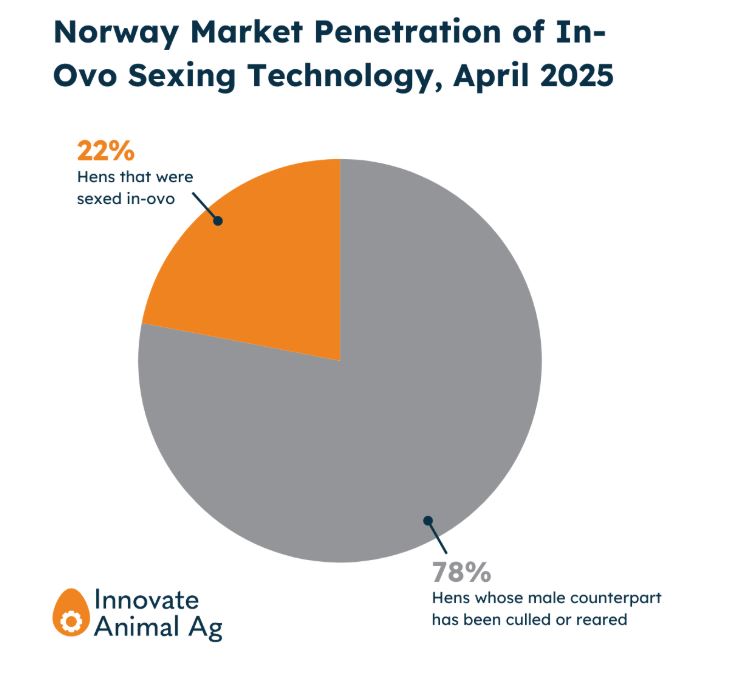
• Last February, the Ministry of Agriculture, Fisheries, Food Safety and Nature of the Netherlands published a roadmap to end the culling of day-old male chicks by 2026. The plan introduced the “ZED” certification (No Day-Old Chick Culling) as the Dutch equivalent of the German “OKT” standard. The majority of Dutch hatcheries are already equipped with an in-ovo sexing technology accepted on the German market, leaving them well positioned for this transition.
nnn
• Respeggt (the new name for Respeggt following its acquisition by HatchTech in 2022), a provider of in-ovo sexing technology based on amniotic fluid analysis, announced the installation of two new machines in Europe: the first at the Het Anker hatchery in Ochten, the Netherlands, and the second at Ab Ovo Bio in Ahlen, Germany. The latter is the first in-ovo sexing installation in an organic hatchery in the country since the update of EU Organic Regulation 2018/848, which now permits it as an alternative to the less economically viable practice of rearing male chicks.
nnnn• In March 2025, in-ovo sexing was deemed compliant with European organic production regulations. According to Lohmann Deutschland, in-ovo sexing procedures are now permitted in their hatcheries under EU Organic Regulation 2018/848. When Germany’s ban on chick culling came into force in 2022, egg producers responded primarily by rearing male chicks for meat — a costly and unsustainable practice.
nnnn
In early 2024, in-ovo sexing had reached 70% of the German market, but since up to 20% of the market was organic, the technology had limited room for further penetration. But since some, though not all, organic producers in Germany apply even stricter standards than the rest of the EU, in-ovo sexing will not yet be able to reach 100% penetration.
nnn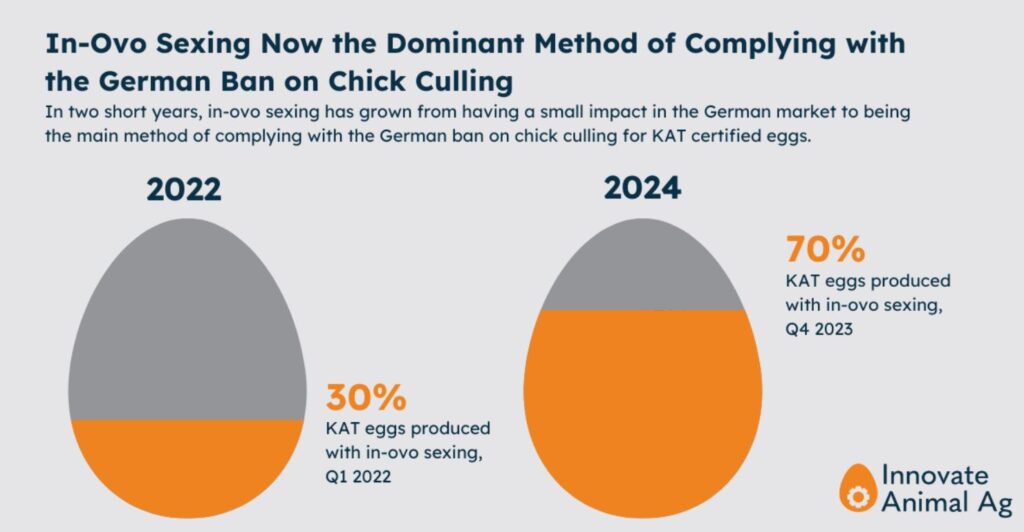
However, with the update of EU regulations, more sectors of the organic market can adopt this technology, paving the way for further expansion throughout Europe.
nnnnnnnnnnnnOther milestones achieved by In-Ovo Sexing technologies in 2025
nnnn• Last May, Orbem, an MRI-based in-ovo sexing technology provider, announced that its machines had already scanned a total of 100 million hatching eggs (more than 38 million females) since they began production two years ago. They also announced the first hatch of in-ovo sexed chicks with their new machine at Sirevåg Rugeri, one of the two main hatcheries in Norway.
nnn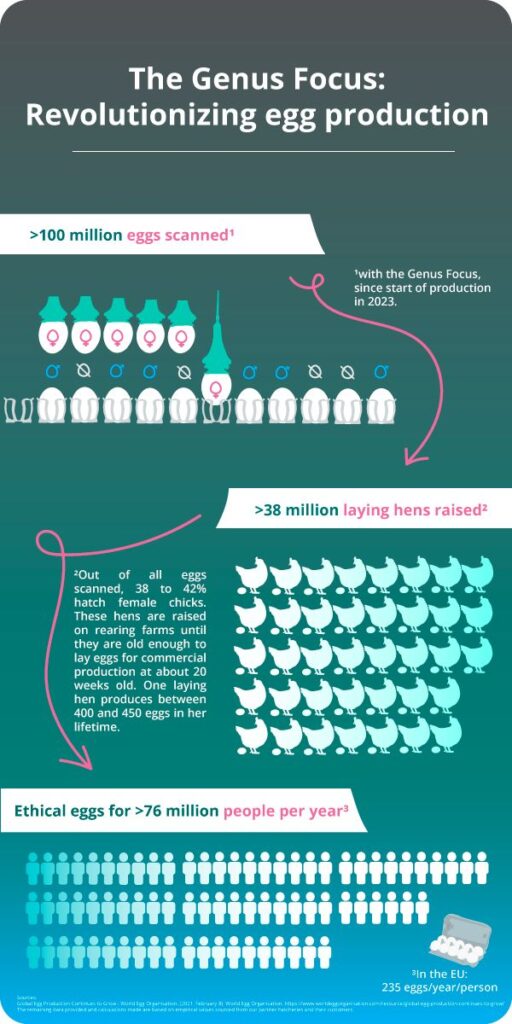
• Omegga, a German in-ovo sexing startup, announced its new machine, the OmeggaOne. This is installed directly inside the incubator (a new paradigm for in-ovo sexing) and uses specialised cameras and artificial intelligence to determine the sex of the developing embryo before the seventh day of incubation. Omegga deployed its technology at the Gut Averfeld hatchery in Germany.
nnnnFurthermore, Innovate Animal Ag published last May the In-Ovo Sexing Global Market Penetration Report, indicating that 28% of the EU’s 393 million laying hens were being sexed with this technology by the end of the first quarter of 2025 and that since it was adopted on a large scale in 2022, some 175 million male embryos had been identified and separated before hatching.
nnn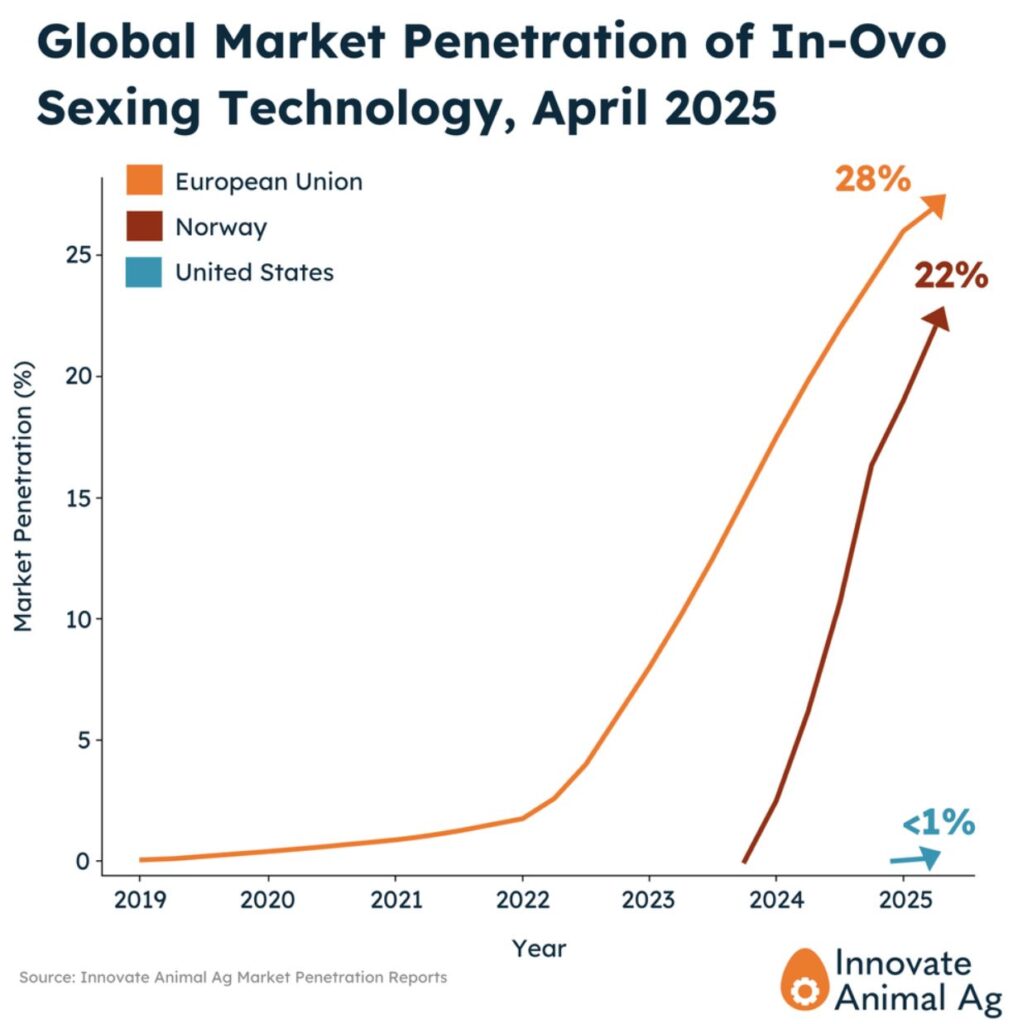
Finally, according to the results of the Innovate Animal Ag Survey of Australian consumers on in-ovo sexing conducted in summer 2025, the third carried out to better understand their attitudes towards this technology, respondents said they were willing to pay an average premium of approximately USD $0.93 per dozen for eggs produced in this way. This suggests a strong commercial opportunity for producers and indicates that early adopters will be well positioned to capture consumer loyalty and achieve premium prices in a competitive market.
nnn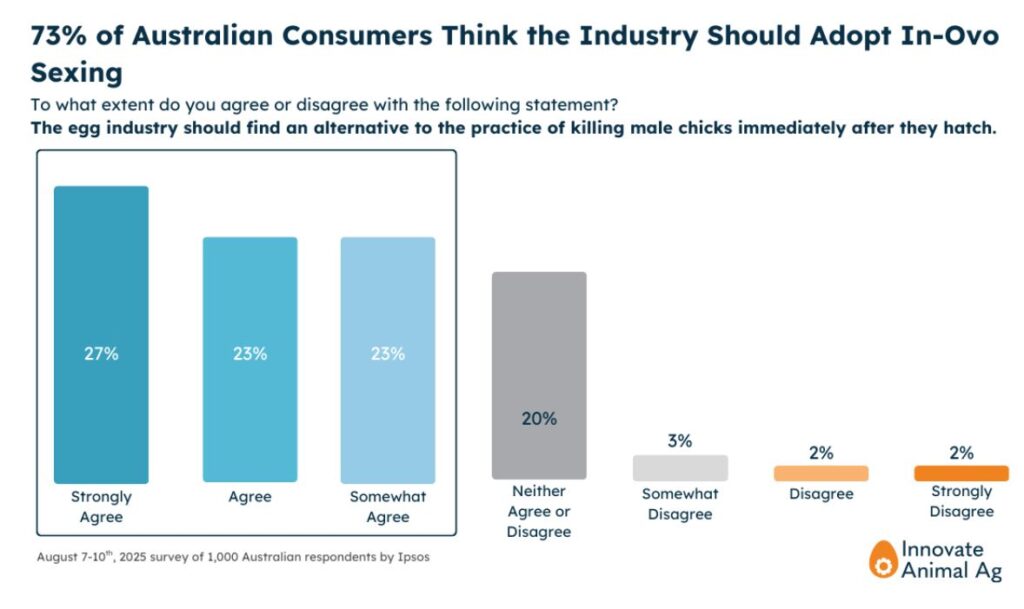
Source: Origin: Innovate Animal Ag, 5-1-2026
To learn more:
-. Note that the “in-ovo sexing” mentioned here is part of all the new “automated sexing technologies” which include sexing both in the egg and chick sexing immediately after hatching, a technology recently introduced in Spain by UVESA.
nnnn
Do you want to stay one step ahead in poultry farming?
Subscribe for free to our eNewsletter and receive a weekly selection
of the best information to anticipate trends, stay up to date and grow as a poultry industry professional.
NeXusAvicultura: Vision, Criteria, Quality and Context.