
We knew about the positive impact of the veranda on laying hens, but… what about broilers?
Does it improve broiler chicken welfare?
Could it be of interest as a potential differentiating element?
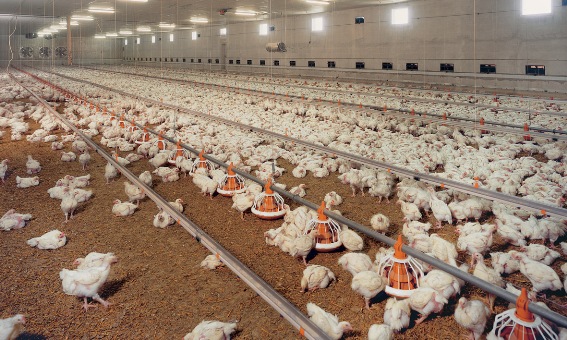
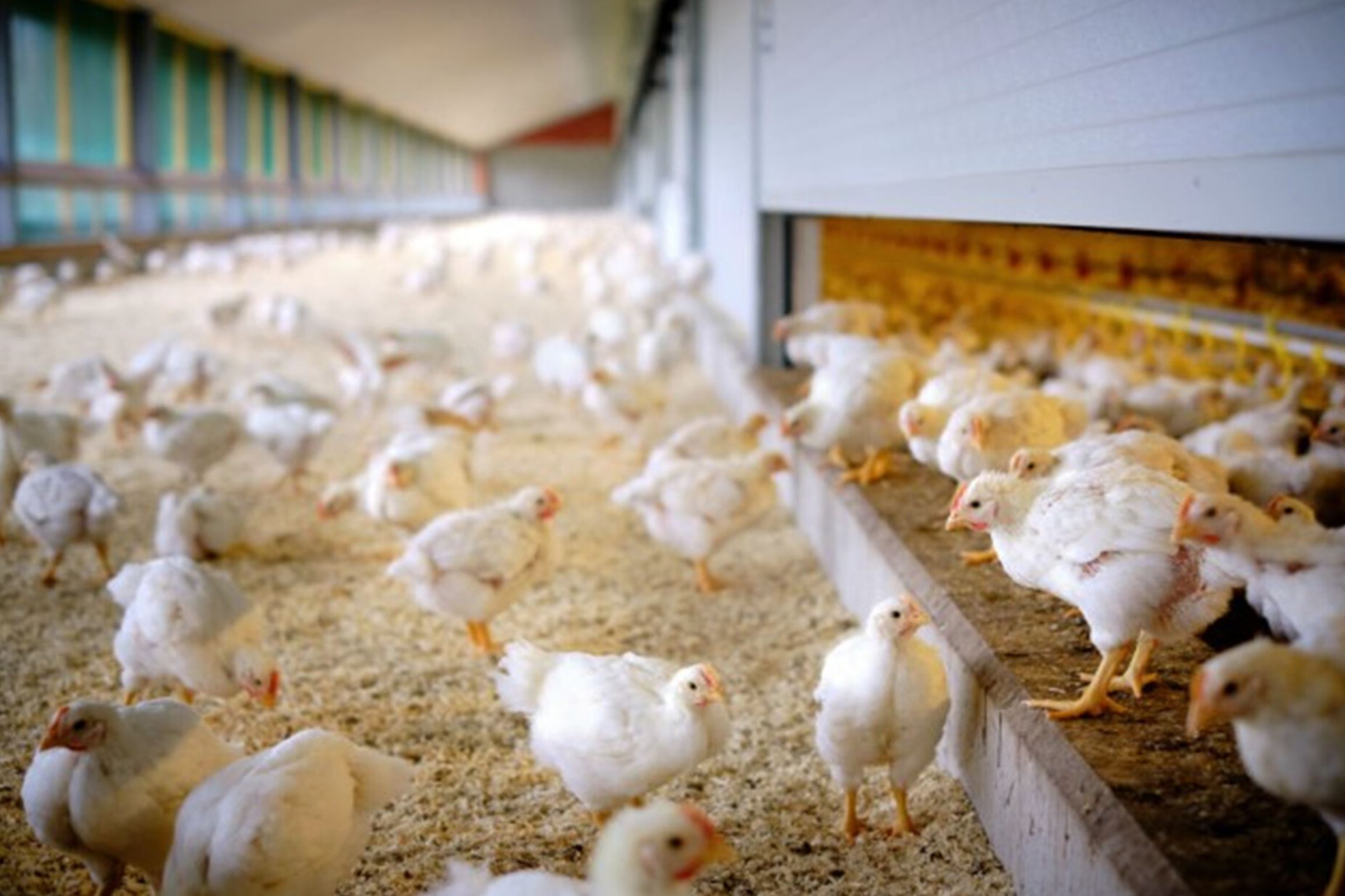
In standard broiler production systems, birds are housed inside a controlled-environment building, which may or may not have windows, but it is common practice in broiler production for birds to have no access to the outdoors. A covered veranda offers a solution, allowing access to different environments and areas with variations in space availability, as well as sensory stimulation from the outside, while protecting birds from predators and disease risks.
The study “Positive impacts of a covered veranda on broiler chicken welfare“, recently published by researchers from the prestigious French institutes ANSES and ITAVI, aimed to evaluate the welfare and health of broiler chickens with access to a covered veranda.
For this research, Redbro chickens were used, randomly assigned to six identical enriched rooms. Three rooms had access to a covered veranda (CV group) from 22 days of age (D22), while the other three did not (C group, control). The results showed that access to the covered veranda did not negatively affect zootechnical indicators such as mortality, body weight, litter quality, or feed and water consumption. However, the prevalence of hock burns was significantly lower in the group with access to the veranda. In addition, more active behaviours were observed in these birds. The verandas were frequently used, with usage increasing with the age of the birds and being most notable in the morning.
A covered veranda can improve the living conditions of broiler chickens by providing access to different environments and areas with varying space availability.
1. Introduction
Conventional broiler rearing systems, which generally keep birds indoors, may limit the expression of natural behaviours such as foraging, perching, dustbathing, exploration, and sunbathing. While access to an outdoor area can satisfy these behavioural needs and improve welfare, it also carries risks such as predator attacks or an increased incidence of diseases, such as avian influenza.
A covered veranda offers a promising alternative by combining the benefits of an outdoor environment with protection against these risks. A covered veranda is defined as an unheated area adjacent to the poultry house, accessible to the birds and partially exposed to outdoor environmental conditions. It is roofed, separated from the outside by wire mesh (and possibly windbreak netting), and its floor is covered with litter. This additional space allows birds to access daylight, fresh air, and different temperatures, which can have a positive impact on their welfare by enabling them to exercise control and choice over their environment.
Access to a covered veranda did not affect mortality, body weight, litter quality, or feed and water consumption
Although some laying hen poultry farms use covered verandas, their specific impact on broiler chicken welfare had not been thoroughly investigated. This study set out to address that gap, evaluating the use of covered verandas by Redbro chickens, their locomotor activity in these areas, and the effects on bird health and welfare. The assessment focused on both animal-based measures (such as footpad dermatitis, hock burns, lameness, and behaviours) and zootechnical indicators (mortality, feed and water consumption, body weight) as well as litter quality.
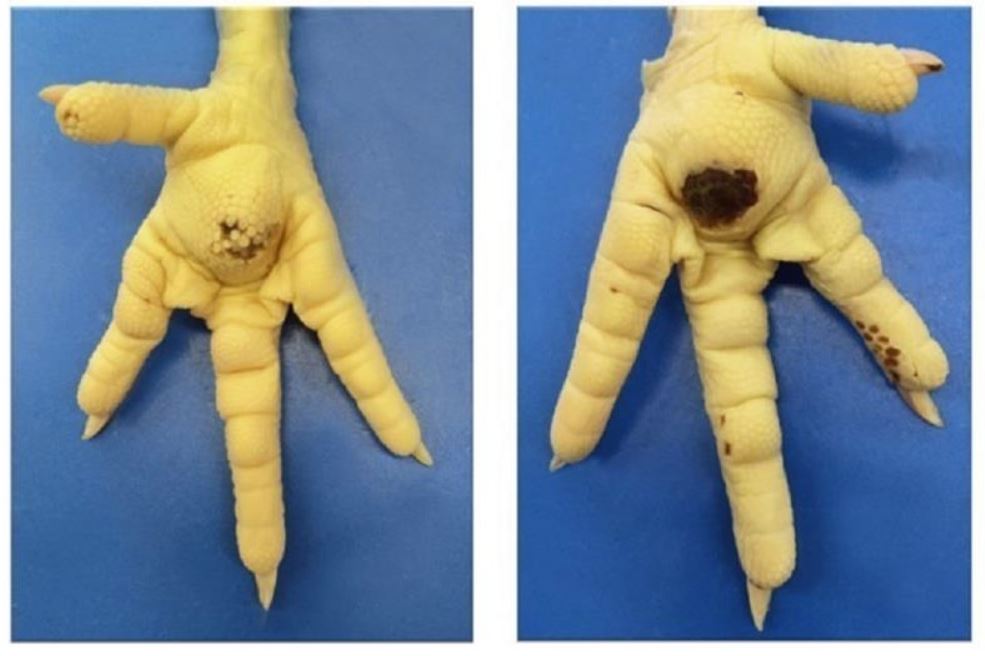
The increased activity observed in chickens with access to covered verandas appears to be the main contributing factor to the reduction in hock burns.
2. Materials and methods
The study was conducted with the approval of the ANSES ethics committee, ensuring compliance with European legislation on animal protection.
2.1. Housing and experimental design A total of 14,872 one-day-old Redbro chickens were randomly divided into six identical rooms of 162 m². Each room housed 2,478 chickens, reaching a final stocking density of 26 kg/m² at slaughter at 38 days of age (the surface area of the covered veranda was not included in the density calculation). All rooms featured natural light through windows and supplementary artificial lighting at 30 lux for 18 hours per day from 6 days of age. In addition, all birds had access to a 4 m² raised platform and three alfalfa bales, considered as environmental enrichment.
Three of the rooms (CV group) had four openings (popholes) providing 24-hour access to a 72 m² covered veranda from 22 days of age. The other three rooms (C group) had no veranda access, with the openings kept closed. The covered verandas had a concrete floor with straw pellets, were surrounded by wire mesh, and protected by a roof with anti-drip film and windbreak netting. Outdoor temperatures recorded during the veranda access period ranged between 1.8°C and 18.6°C.
2.2. Data collection Various variables were monitored to assess welfare and zootechnical indicators:
- Body weight and mortality: 150 birds per treatment group were individually weighed on days 8, 15, 22, 29, and 36. Mortality was recorded daily.
- Leg health and lameness scoring: On day 36, gait scoring, the presence and severity of footpad dermatitis, and hock burns were assessed in 150 selected birds per group. A scale of 0 to 2 was used for each criterion (Table 1).
Table 1. Scoring of footpad dermatitis, hock burns, and gait score
| Criterion | Score 0 (mild/normal) | Score 1 (moderate) | Score 2 (severe) |
|---|---|---|---|
| Footpad dermatitis | No lesions or very mild lesions. | Moderate to severe discolouration, superficial lesion, darkened papillae | Severe dermatitis, ulcers or scabs of significant size, signs of bleeding or severely swollen footpads |
| Hock burns | Absent or minimal lesions | Moderate lesions | Severe lesions |
| Gait score | Normal, agile gait, with or without imbalance | Difficulty walking, lameness. | Bird walks less than 1.50 m, and/or is severely lame, impeding movement |
- Litter quality: Assessed on days 34 and 37 in three areas per room, using the Welfare Quality® protocol (scale of 0 to 4).
- Activity level and resting behaviours: Walking, running, and lying behaviours were recorded on days 34 and 37, in a 2 m² observation area within the rooms and in the covered veranda of the CV group. Standardised occurrence rates were calculated.
- Use of covered verandas: Video recordings were analysed to count the number of chickens in the veranda (36 m² of the total surface area) seven times per day (08:00 to 20:00) between days 22 and 37.
The prevalence of hock burns was lower in chickens with access to a covered veranda.
2.3. Statistical analysis Data were analysed using R software v.4.0.3. Linear models were used for body weight, generalised negative binomial regression models for mortality, and generalised linear mixed models (GLMM) for veranda use. Activity behaviours were analysed with linear models, considering location, age, and their interaction. For feed and water consumption and litter quality, non-parametric Mann-Whitney tests were used, and Chi-square tests for leg health. Differences with a p-value ≤ 0.05 were considered significant.

The opportunity to choose between an indoor and outdoor environment can positively impact broiler chicken welfare.
3. Results
3.1. Mortality and body weight No significant effect of treatment was found on total mortality (p = 0.15) or on specific mortality after day 22 (p = 0.58). Total mortality was 3.90% for the CV group and 7.12% for the C group. There were also no significant differences in body weight between groups, regardless of age (p = 0.88).
Table 2. Mean body weights (g) (± standard deviations) of broiler chickens in both treatment groups
| Group | D8 | D15 | D22 | D29 | D36 |
|---|---|---|---|---|---|
| C Group | 166.7 | 414.4 | 816.3 | 1270.0 | 1815.9 |
| CV Group | 164.4 | 408.9 | 805.1 | 1269.6 | 1825.0 |
3.2. Leg health and gait scoring No lameness problems or signs of footpad dermatitis (score 0) were observed in either group. However, the prevalence of moderate hock lesions (score 1) was significantly lower in the CV group (1.3%) compared to the C group (15.3%) (p < 0.001). No bird showed the worst score (score 2) for hock burns.
3.3. Litter quality, water and feed consumption No treatment effect was found on litter quality on day 34 (p = 0.53) or day 37 (p = 1). Similarly, access to the covered veranda had no impact on final feed consumption (p = 0.50) or water consumption (p = 0.88).
3.4. Activity level and resting behaviour Location (inside CV rooms, inside C rooms, or in the covered verandas) was the only significant factor for running, walking, and lying behaviours (p < 0.001). Birds in the CV group (considering the average of veranda and indoor areas) showed more walking and running behaviours than those in the C group. More birds were also counted lying down in the C group than in the CV group. No significant differences in behaviour were observed between the indoor rooms of both groups (CV vs. C, indoor activity). Nevertheless, more walking and running behaviours were recorded in the outdoor covered verandas than in the indoor rooms of the CV group.
Furthermore, more active behaviours were observed among birds in the covered veranda group compared to the control group.
Table 3. Mean standardised occurrence rates (± standard deviation) for walking and running behaviours, and percentages of birds lying down
| Behaviour | Covered verandas | CV rooms (Indoor) | CV group (veranda and indoor average) | C rooms | Significance of effects (p) |
|---|---|---|---|---|---|
| Indoor vs. outdoor (CV) | |||||
| Standardised occurrence rate of walking (per 100 birds) | 69.75 | 16.02 | 43.65 | 8.91 | <0.001 |
| Standardised occurrence rate of running (per 100 birds) | 88.66 | 0.87 | 44.88 | 0.64 | <0.001 |
| Birds lying down, % | 75.99% | 97.16 | 86.62% | 95.47% | <0.001 |
3.5. Use of covered verandas The use of covered verandas by the chickens increased significantly with age (p < 0.001). Within the day, usage was most frequent in the morning and declined as the day progressed (p < 0.001), peaking at around 10:00 and reaching a minimum at 18:00, with a slight increase towards 20:00.

4. Discussion
The results of this study demonstrate that access to a covered veranda improves broiler chicken welfare without negatively affecting key zootechnical indicators, such as body weight, mortality, or feed and water consumption.
The increased activity observed in the covered verandas and, in general, in the CV group, is consistent with previous studies on access to outdoor areas. This difference in activity was particularly notable in the veranda, with no substantial differences between the indoor rooms of both groups.

Several hypotheses are proposed to explain this increase in activity:
– greater space availability in the veranda (estimated stocking density of 13.2 kg/m² compared to 22 kg/m² indoors in the CV group), allowing freer movement;
– higher natural light intensity in the verandas, which is a well-known stimulant of avian activity;
– and the presence of other external sensory stimuli such as fresh air and variations in odour and temperature.
Furthermore, the opportunity to choose between an indoor and outdoor environment could contribute positively to welfare, a principle observed in other species, although this study does not provide data to draw conclusions about the direct impact on the affective states of the chickens.
Covered verandas were frequently used, and their use increased as the chickens aged.
The increase in veranda use with the age of the chickens is consistent with previous research and could be attributed to habituation and a decrease in the birds’ initial wariness. Environmental factors, such as weather conditions (temperature and humidity), likely influenced the variability in veranda use, although they could not be directly analysed in this study. The daily usage pattern, with greatest frequency in the morning, aligns with the biphasic activity pattern of chickens and possibly with solar light exposure.
The lower prevalence of hock burns in the CV group is an important welfare finding. It is primarily attributed to the higher activity level of the chickens, which reduces the prolonged contact time of the hocks with the litter. Litter quality, which was good and similar in both groups, was not a differentiating factor. Although stocking density can influence leg lesions, in this study densities were relatively low and increased activity was the main factor contributing to the reduction in hock burns.
Providing access to a covered veranda yielded welfare benefits such as improved hock condition and more active behaviours.

5. Conclusion
This study concludes that providing access to a covered veranda delivers significant welfare benefits for broiler chickens, manifested in improved hock condition and more active behaviours. It is crucial to highlight that these benefits were achieved without a negative impact on key zootechnical indicators, such as body weight, feed and water consumption, mortality, or litter quality.
Although the construction of a covered veranda represents a substantial investment for poultry farmers, the findings suggest that it can generate significant improvements in bird welfare. However, it is important to consider these improvements in the context of the medium-growth broiler strain used, the relatively early slaughter age, and the controlled experimental conditions. Further research is required to better understand how access to a covered veranda influences broiler chicken welfare under diverse conditions and to explore the effects of factors such as season, temperature, and humidity.
Although the construction of a covered veranda represents a substantial investment for poultry farmers, this study suggests that access to such structures can generate significant improvements in bird welfare.
Source:
-. Positive impacts of a covered veranda on broiler chicken welfare. Poultry Science, Volume 104, Issue 8, 2025, 105347, ISSN 0032-5791,
https://doi.org/10.1016/j.psj.2025.105347.
Authors: F. Mocz a, J-. Moysan c, L. Warin b, A. Keita c, V. Michel d, M. Guinebretière aaEpidemiology, Health and Welfare Unit, Ploufragan-Plouzané-Niort Laboratory, French Agency for Food, Environmental and Occupational Health & Safety (ANSES), Anses, BP 53 Route de Beaucemaine, Ploufragan, 22440, FrancebTechnical Institute for Poultry (ITAVI), Nouzilly, 37380, FrancecAvian Experimental Unit, Ploufragan-Plouzané-Niort Laboratory, French Agency for Food, Environmental and Occupational Health & Safety (ANSES), Ploufragan, FrancedDirection of Strategy and Programmes, French Agency for Food, Environmental and Occupational Health & Safety (ANSES), Maisons-Alfort, France
For further information:
-. Broiler chicken welfare at NeXusAvicultura