
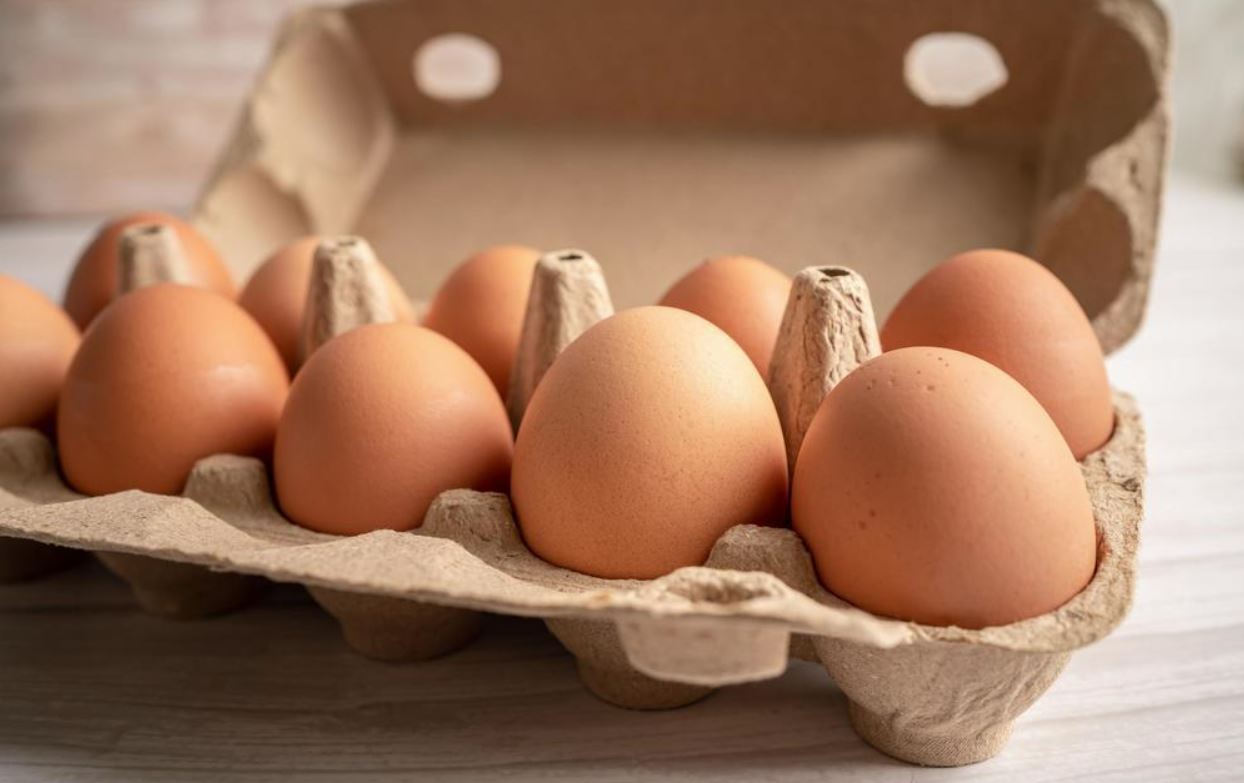
Eggs are trending. Demand for eggs continues to rise in 2024; the question is no longer about consolidating demand, but whether the EU will ultimately impose a new regulatory framework that would drive costs sharply higher.
The sector’s interprofessional organisation, INPROVO, addresses questions about a product that has seen significant growth in consumption.
Against a backdrop of inflation that is directly affecting household shopping baskets, there is one product that is not only withstanding the decline in consumption, but actually growing. And that product is the egg.
Since 2022, there has been an 8.2% increase in consumption of a product recognised for providing high-quality protein. In response to this growing demand, some voices have warned of a potential supply shortage in the European Union, but the Interprofessional Organisation for Eggs and Egg Products (INPROVO) assures that this will not happen.
“In Spain we produce between 115 and 120% of our domestic demand; we have sufficient volume to meet whatever the market requires,” says Mar Fernández, Deputy Director of INPROVO, offering reassurance. Average consumption has risen to 240 eggs per person per year.
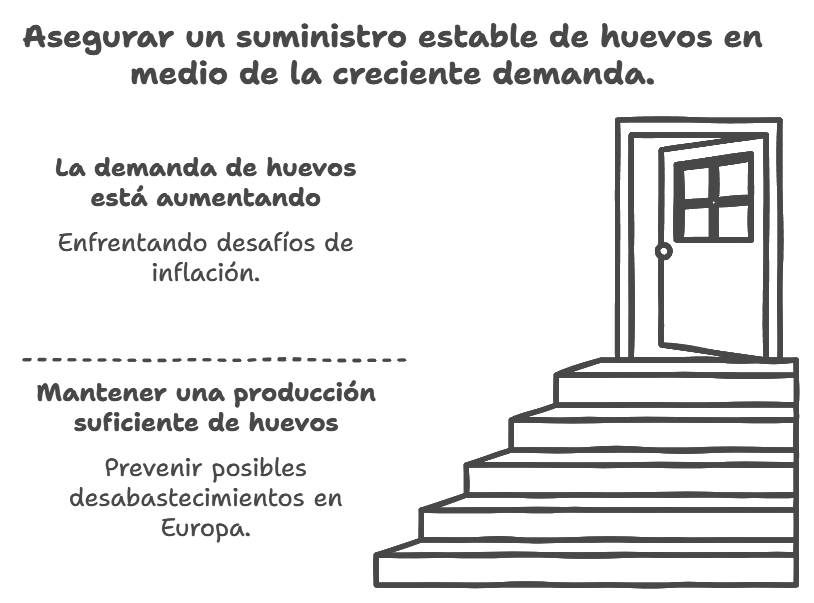
Nevertheless, the interprofessional organisation has several concerns on the table, including increasing regulatory requirements at European level and rising production costs. Regarding the latter, Fernández confirms that the sharp cost increases experienced particularly in 2022 have been passed through the entire supply chain, despite some reservations. “It took some effort because the increase was very steep, but as far as we know, producers are receiving a fair price — if they weren’t, the number of eggs produced would have fallen, and that has not happened.”
According to Ministry data, the latest recorded farm-gate price for caged eggs stands at €168.9/100kg, representing a 0.14% decrease from the previous week. This price reflects a 23.5% change compared with the same week of the previous year, but a 38.4% increase relative to the five-year average price for week 24.
Meanwhile, the recorded price for barn eggs stands at €188.3/100kg, representing a 0.3% decrease from the previous week; and the price for free-range eggs stands at €227.4/100kg, representing a 0.99% decrease from the previous week.
“We cannot demand something and then refuse to pay for it”
Regarding the increasing legislative constraints being imposed by the EU, the egg interprofessional organisation agrees with all the producers’ grievances. “We believe there is a lack of sensitivity; controls are already in place and they are very strict — we need the public to understand this,” states Mar Fernández.
INPROVO’s Deputy Director believes it is necessary to educate consumers, because if they demand more, that will translate into higher costs. “We cannot demand something and then refuse to pay for it.” According to INPROVO, “the economic impact of converting farms to cage-free systems will require Spanish egg producers to make total investments of more than €2.3 billion.”

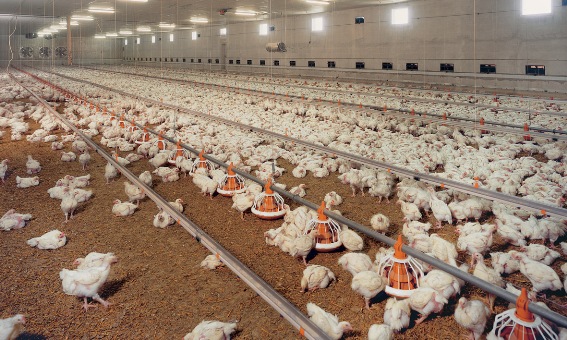
Another proposal under consideration by the European Commission is a reduction in stocking density, from 9 to 5 hens per m2 in indoor housing, and to 7 hens per m2 where outdoor access is provided. According to COPA-COGECA, this new measure could result in the number of laying hens falling by 13% across the European Union, dropping from the current 379 million birds to a flock of 330 million. This would shift the EU from being a net exporter to having to import eggs. In this regard, the relaxation of requirements applied to Ukraine to support the country following the Russian invasion has somewhat destabilised the market, and INPROVO had feared “irreversible damage,” which it hopes will be averted by the reintroduction of tariffs. “We were competing with products that do not carry the same costs — it was unfair competition,” argues Mar Fernández.