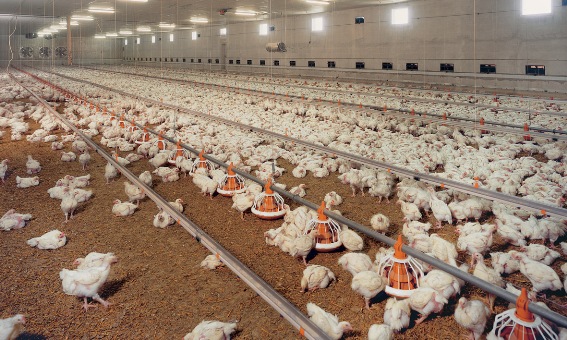

In the USA there are approximately 2,000 organic poultry farms, according to the 2021 Organic Livestock Census from the Department of Agriculture (USDA), which face numerous obstacles, including disease management, feed availability, production efficiency, food safety and product marketing.
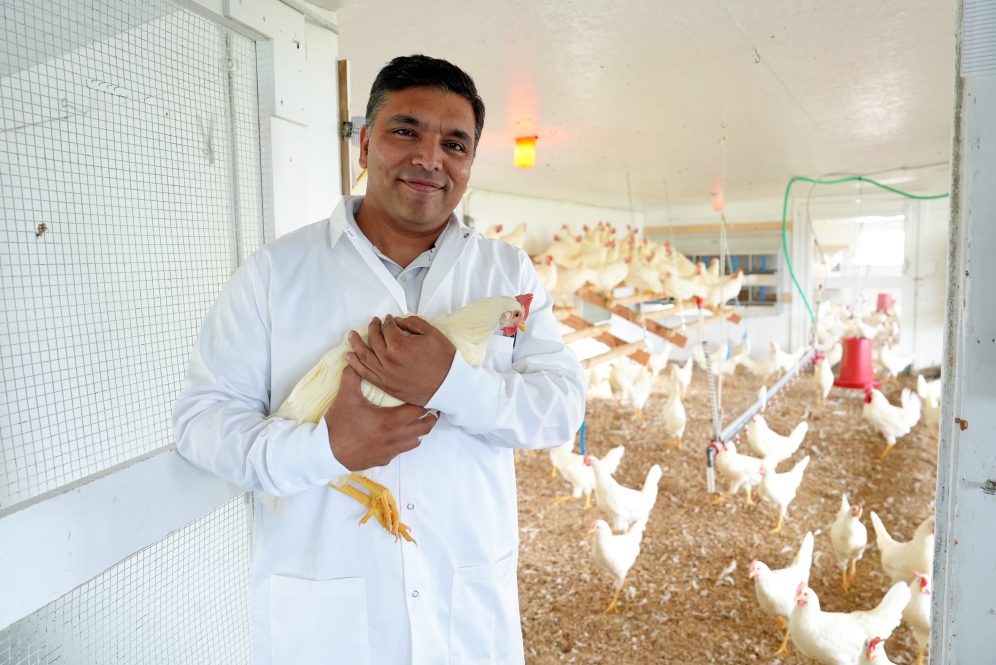
This new funding stream will include a $3.34 million USDA grant for Organic Agriculture Research and Extension. Led by Abhinav Upadhyay, researcher at the University of Connecticut, College of Agriculture, Health and Natural Resources (CAHNR), it will harness cutting-edge scientific expertise to address some of the most pressing challenges. The other collaborating institutions are the Universities of Minnesota, Arkansas, Kentucky and Tennessee, as well as the Arkansas Agricultural Research Service.
The project will focus on 4 main research areas:
-. microbial safety: to ensure that organic poultry products are safe for consumption,
-. improving the overall health and productivity of birds through gut health management practices,
-. enhancing product quality to meet consumer expectations and consumer perception in order to address cost dynamics, and
-. improving marketability and acceptance.
“The goal of this project is not only to address the existing challenges in organic poultry production, but also to provide sustainable solutions that can be adopted globally,” said Upadhyay.
Microbial safety in poultry farming
There are two pathogens of major concern to all poultry producers: Salmonella and Campylobacter jejuni. Combined, they are responsible for 2 million human foodborne infections every year in the USA alone.
“Our drive to include microbiological safety as our number one objective was to ensure that products reaching the market through organic poultry are safe for human consumption,” says Upadhyay.
The team will use active ingredients from the essential oils of cinnamon, oregano and clove as organic antimicrobials. Kumar Venkitanarayanan, Associate Dean for Research and Education at CAHNR and co-investigator on the grant, has worked on this subject for years, establishing that essential oils are an effective organic antimicrobial.
Because essential oils are just that — oils — they must be modified to integrate seamlessly into chickens’ drinking water. Upadhyay and Yangchao Luo, Associate Professor in the Department of Nutritional Sciences and another co-investigator, will develop emulsions to be used as drinking water supplements for laying hens.
“Our team is composed of young, high-calibre scientists with extensive experience in various aspects of poultry production and safety, which makes us well equipped to tackle these problems from multiple angles.”
“Essential oils are remarkable, except for having low water solubility,” explained Upadhyay. “So, to overcome that, in this project we are developing water-soluble emulsions.”
This method is not only appropriate for organic producers, but since antibiotic growth promoters are banned, all poultry producers could benefit from the technology.
Anup Kollanoor Johny ’11 (CAHNR) from the University of Minnesota will test the efficacy of anti-Salmonella phytochemical emulsions in turkeys.
Mary Anne Amalaradjou, grant co-investigator and Associate Professor at UConn, has demonstrated the efficacy of probiotics in improving the health and growth of chickens.
This project will explore the potential of encapsulated probiotics to control the aforementioned pathogens in broilers and laying hens. The team will also test a novel vaccine that protects birds against both pathogens using “killed” versions of the bacteria in ovo.
Collaborators Palmy Jesudhasan, Komala Arsi and Annie Donoghue from the USDA will lead this initiative, injecting hatching eggs and then analysing chicks to determine whether the vaccine’s antibody response indicates that it has effectively stimulated the immune system.

Gut health and production efficiency
In addition to testing the antimicrobial potential of phytochemical emulsions and encapsulated probiotics, the team will investigate the potential of these interventions on overall health and production efficiency in organic poultry through laboratory and field trials.
Pramir Maharjan from the University of Tennessee will lead the field study efforts together with researchers from other participating institutions. “Stakeholders from other locations across the USA are willing to test our emulsion and probiotic treatments through field trials,” Upadhyay said. “This will generate critical data for us for future industry applications.”
Zhenlei Xiao, professor at the University of Connecticut, and Casey Owens from the University of Arkansas, will investigate the impact of supplementing birds with phytochemical emulsions and probiotics on egg and meat quality.
“Through our various grant interventions, we are focusing on how we can improve the quality of organic eggs and meat,” Upadhyay said.
Furthermore, the project’s economists, led by Jeda Thompson from the University of Arkansas, will help organic producers develop a marketing strategy to make their products more appealing to consumers, and will carry out a cost-benefit analysis of the various approaches being developed within the project.
Extending research to stakeholders, consumers and students
In collaboration with extension faculty from the University of Kentucky (Jacqueline Jacob), the University of Minnesota (Anup Kollanoor Johny) and the University of Tennessee (Pramir Maharjan), the project will disseminate its findings through conferences, workshops, social media and webinars, targeting scientific communities, organic producers and the general public.
“This initiative aligns with the objectives of organic research and extension,” said Indu Upadhyaya, co-investigator and UConn Extension food safety professor on the project. “We are focusing on carrying out on-farm extension projects and developing educational tools that will bring end users together with the project team.”
In addition, the project will develop teaching materials and a novel online certification programme to train the next generation in organic production, ensuring the lasting impact of the project’s outcomes beyond the grant period.