
Joan Anton Rafecas, re-elected president of the FAC, warns of the risks posed by legislative and trade changes in the EU to the European production model
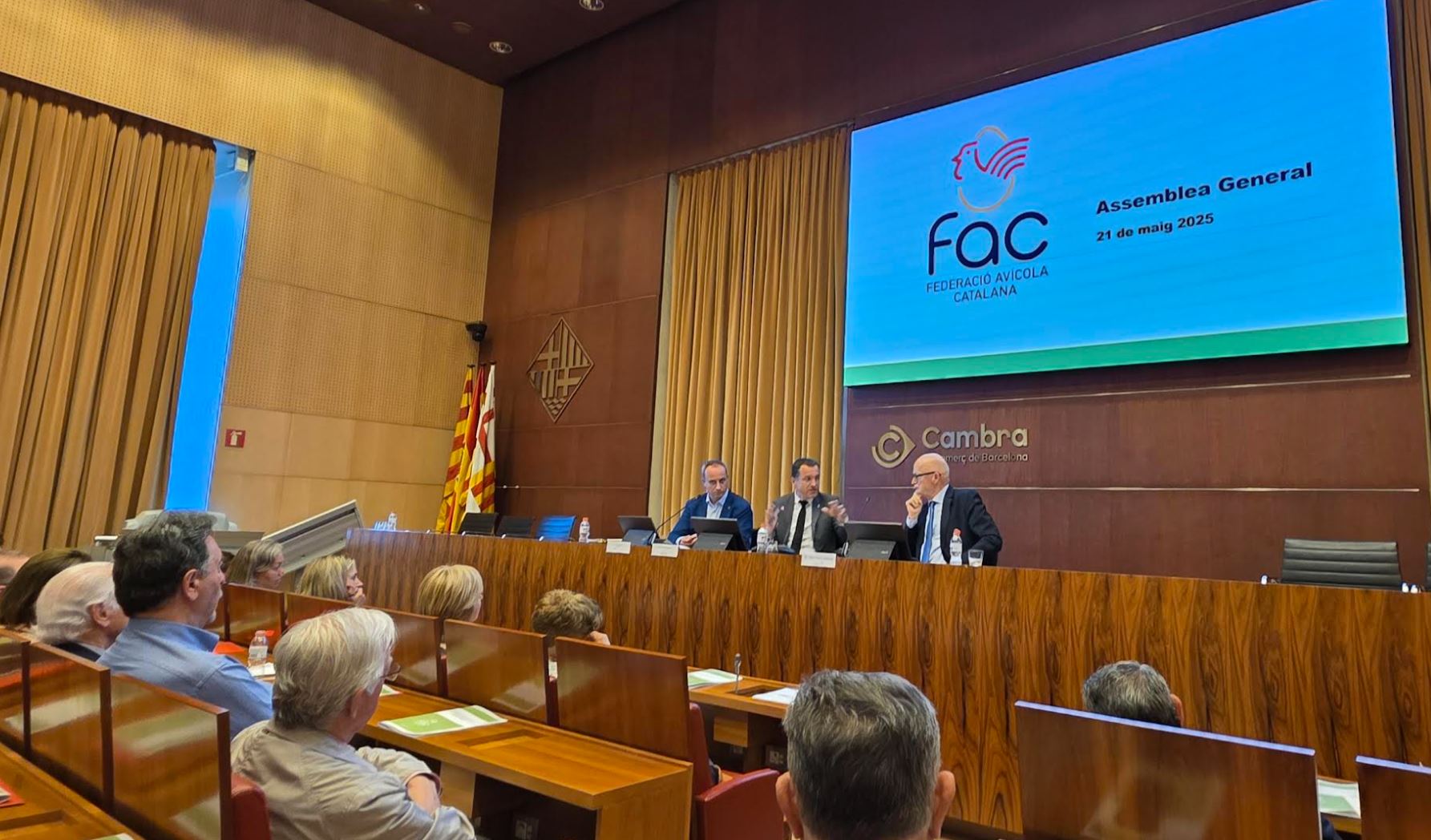
Barcelona, 26 May 2025 – The Catalan poultry sector is enjoying a period of prosperity, but clouds are gathering on the horizon. Despite having consolidated its recovery after years of instability, producers are looking with concern at the immediate future, shaped by geopolitical tensions, tariffs and new European regulations. This was made evident during the General Assembly of the Federació Avícola Catalana (FAC), held on 21 May at the iconic Llotja de Mar in Barcelona.
The event brought together the leading players in egg and poultry meat production in Catalonia, with the institutional participation of the Minister of Agriculture, Livestock, Fisheries and Food, Òscar Ordeig, and the president of ASFAC, Joan Ramon Albareda.
Rafecas renews his mandate and sends a clear message: greater influence to defend the sector
During the Assembly, the continuation of Joan Anton Rafecas as president of the FAC was ratified. With more than 50 years in poultry farming and at the helm of the Federation since 2017, Rafecas reaffirmed his commitment to actively defending the Catalan production model in the face of legislative changes driven from Brussels.
“We must increase our capacity to influence decisions that affect the sector. We cannot allow European regulations to jeopardise the viability of our farms,” he stated.
The president also highlighted the sector’s favourable health status — with no recent avian influenza outbreaks in Catalonia — and the growing and sustained demand for poultry products as signs of resilience. However, he warned of the risks arising from international trade instability and regulatory uncertainty, which threaten to drive up production costs.
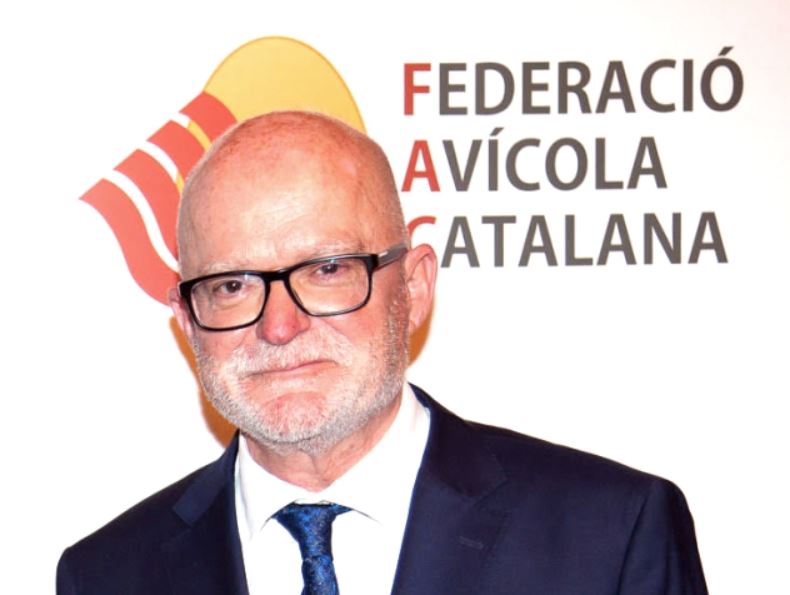
“We need to recover our pride in being livestock farmers. Supporting local produce also means defending the rural economy and food security,” Rafecas concluded.

Concern over uncertainty in raw material prices
One of the most debated points at the Assembly was the rise in feed costs. As Joan Ramon Albareda set out, Catalonia remains dependent on imports of key raw materials such as maize and soya, sourced from countries including the United States, Brazil and Ukraine. Global instability, compounded by Donald Trump’s return to the US presidency and his erratic tariff policy, could push feed costs up by between 10% and 12%.

Added to this is the uncertainty surrounding the implementation of the European Union Deforestation-Free Products Regulation (EUDR), which could impose new traceability obligations on companies that are not yet prepared. Originally scheduled for 2025 but postponed until later in the year, it was noted that the sector currently lacks the tools needed to comply, which is why stakeholders expect its application to be deferred further.
As Joan Ramon Albareda stated during his presentation at the FAC Assembly: “Despite having slightly reduced its dependence on imports, Catalonia is a major importer of raw materials for feed production, such as maize and soya, sourced from countries including the United States, Brazil and Ukraine. Donald Trump’s arrival at the White House and his trade war against the EU and China has caused a global disruption that undermines market stability. On top of this, Brussels is considering reintroducing tariffs on cereal imports from certain third countries. Should all of this come into effect, feed production costs could increase by between 10% and 12%, affecting both feed manufacturers and poultry producers alike.”

The sector calls for a voice, agility and administrative simplification in the face of regulatory changes
The FAC conveyed to Minister Ordeig the need to participate actively in the design of European legislation on animal welfare, transport and production. Rafecas was unambiguous:
“Regulatory compliance must be compatible with the sector’s survival. We cannot accept legislation that, however well-intentioned, ends up dismantling Catalan poultry farming.”
A call was also made for administrative simplification to reduce the bureaucratic burden that is stifling many small and medium-sized poultry producers. In his closing address, Òscar Ordeig expressed his support for the poultry sector and underscored its strategic role in the economy. He advocated for a strong public-private partnership, greater representation in Brussels and a generational renewal to secure the future of livestock production within the framework of the Mediterranean diet.
Catalonia, World Gastronomy Region 2025: an opportunity for poultry farming
Alongside the regulatory and commercial challenges, the FAC announced its involvement in promoting local food products following Catalonia’s designation as the World Gastronomy Region 2025. The autonomous community is the first European region to have achieved this distinction. Together with other livestock sector organisations, the Federation will spearhead campaigns to raise the profile of locally produced poultry, highlighting its quality, sustainability and territorial roots.
Rafecas wished to stress that restoring the competitiveness of poultry companies must go hand in hand with improving the image of the livestock farming profession and of animal-origin products.
For further information:
-. About the FAC: With almost five decades of history, the Federació Avícola Catalana brings together more than 260 egg and poultry meat producers from across Catalonia. It acts as the sector’s representative body before public authorities and society at large, defending a production model aligned with the high standards of quality and animal welfare required in the European Union.
-. News about the FAC on NeXusAvicultura
-. The impact of raw material costs on poultry production