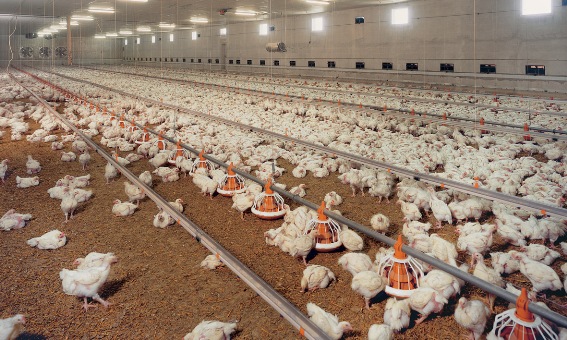

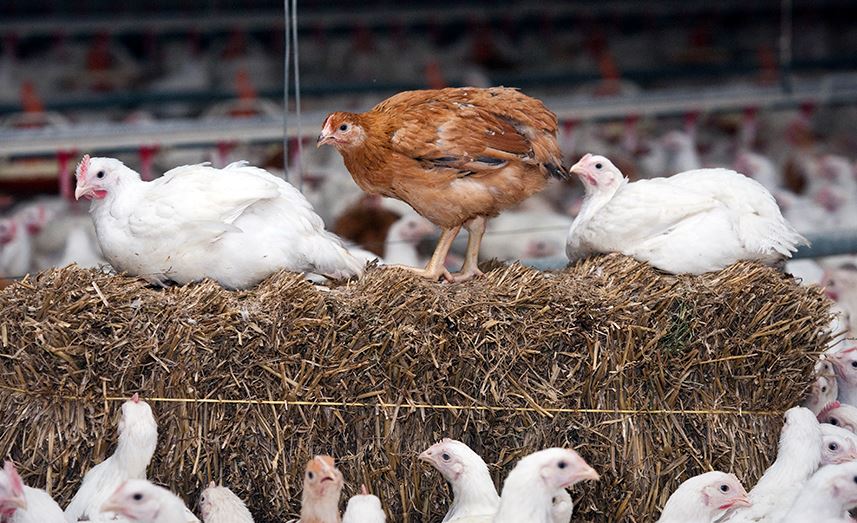
Sainsbury’s, the well-known British supermarket, has published the details of a study highlighting welfare outcome improvements in chickens when raised at less than 30 kg/m2.
Gavin Hodgson, Director of Agriculture at Sainsbury’s, described the shift to lower stocking density as “one of the most significant decisions they have made in a decade since it began sourcing 100% cage-free eggs in 2012“. With regard to chicken, the retailer took this step in March 2023, becoming the first major supermarket chain to do so, as a result of research conducted with the University of Bristol.
Sainsbury’s is thus seeking to differentiate itself from competitors and satisfy animal welfare organisations. Its animal welfare and sustainability policy, timeline and the milestones it claims to have achieved can be found in its annual “Sainsbury’s Animal Health and Welfare Report“.
That work suggested that birds “appear more active and display more positive behaviours when given more space, being nine times more likely to be observed resting and almost four times more likely to be observed preening“.
Data from the retailer’s supply chain found that footpad scores, hock scores and cleanliness scores all improved, with an average 29% reduction in “common ailments”.
“Due to the reduction in stocking density, we have much healthier chickens throughout our supply chain, leading to an overall reduction in feed wastage,” says Sainsbury’s.
“With healthier birds in the food chain, this has also had a positive effect on supply chain efficiency and associated carbon emissions, with savings of over 4,000 tonnes of carbon per year since we initiated the change in 2023“.
24/7 chicken monitoring with Artificial Intelligence
Furthermore, Sainsbury’s is also participating in other projects, together with supplier Moy Park, such as 365-day real-time monitoring of welfare on Sainsbury’s chicken farms using artificial intelligence (AI). “We are currently trialling this technology in order to obtain a comparison of bird behaviour and welfare before and after the improvement of our welfare standards. To this end, we use thermal imaging as a welfare indicator to establish the effectiveness of feather coverage and to help develop a methodology for its rapid assessment.”
The press release “Sainsbury’s reports chicken welfare improvements following stocking density change” concludes without disclosing the price increase passed on to consumers. It is worth noting that the animal welfare lobby group “Compassion in World Farming” and others are exerting very strong social and political pressure on the EU and the United Kingdom to make lower stocking densities for broiler production mandatory. Indeed, in April 2018 this animal welfare lobby had levelled very harsh accusations against Sainsbury’s: “Sainsbury’s accused of breaking pledge on chicken welfare”