
Impact of On-Farm Hatching (HOF) vs. Hatchery Hatching (HH) on gut development and intestinal health in broiler chickens: implications to consider
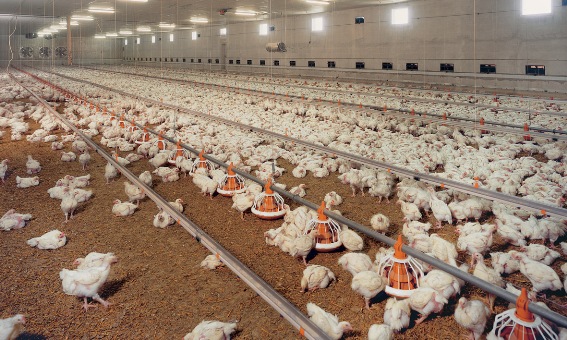
In contemporary broiler production, the early-life conditions of day-old chicks are fundamental to achieving efficient and healthy production. A significant challenge is the delayed access to feed and water for newly hatched chicks due to incubation processes and transport logistics, which can extend between 48 and 72 hours post-hatch. This prolonged fasting period can have negative effects on growth trajectories, compromising bird health and performance. A 36- to 48-hour delay in feed access has been associated with increased mortality, impaired growth, and an unfavourable feed-to-gain conversion ratio. Furthermore, it negatively affects gastrointestinal development, delaying the structural and functional maturation of the intestine, reducing nutrient absorption, and impairing intestinal health by disrupting intestinal barrier function and immune system development.
To mitigate these challenges, hatching practices have been implemented that seek to reduce delays in feeding and transport. Two notable approaches in commercial poultry production are in-ovo feeding and on-farm hatching (HOF) systems.
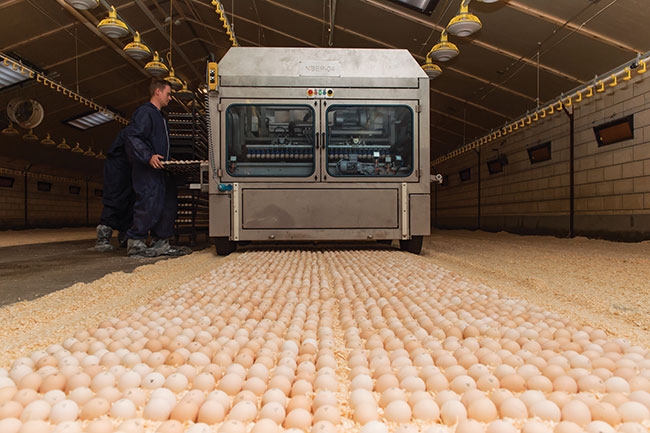
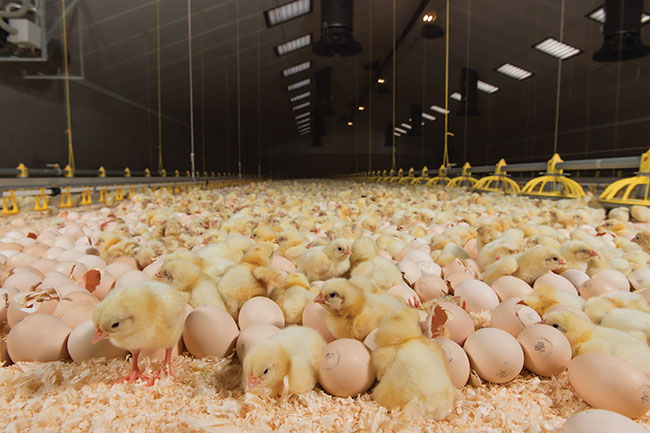
In-ovo feeding involves chicks hatching in the hatchery with immediate access to feed, although it does not eliminate the need for transport to farms. In contrast, the HOF system allows 18-day incubated, fertile eggs to be transported directly to the farm, facilitating hatching on the farm itself with immediate access to feed and water. The HOF system has demonstrated several welfare and performance benefits, including a lower incidence of footpad dermatitis and improved litter quality. It has also been associated with transient advantages in body weight and intestinal development up to 21 days of age, although compensatory growth has been observed in hatchery-hatched (HH) chicks, enabling them to reach similar weights at slaughter age. It is important to note that birds from young breeder flocks appear to benefit more from the HOF system due to their smaller size and greater sensitivity to suboptimal conditions. However, the implementation of the HOF system requires careful consideration of potential limitations, including logistical complexities, costs, and the need for specialised equipment and training.
“On-farm hatching offers an advantageous start to chick development, boosting intestinal morphology and the immune system, thanks to early feed access.”
Despite extensive research on the effects of HOF systems on broiler welfare and performance, there remains a significant gap in understanding their comprehensive impact on intestinal health and related physiological processes.
Early feeding is crucial for immune system development and increased disease resistance. The timing of first feed intake significantly impacts intestinal microbiota colonisation, which directly influences the enteric immune system. Differences in intestinal microbiota have been reported between HOF and HH chicks, which could result in different immune responses in early-fed versus late-fed birds. Immediate post-hatch feeding accelerates the development of immune organs and may prevent the reduction in bursa of Fabricius weight, poor vaccination responses, and decreased disease resistance associated with delayed feeding. Feed intake stimulates the digestive system, including the stomach, liver, pancreas, and small intestine, to secrete compounds that support intestinal mucosal growth. Early luminal stimulation by feed can positively affect intestinal morphology and nutrient absorption. Luminal nutrients also stimulate structural and functional regulations in the intestine through a process involving different intestinal hormones. These hormonal responses are crucial for appetite regulation, metabolic efficiency, and overall growth performance. Furthermore, the timing of feed intake impacts the integrity of tight junctions in the intestinal epithelium, which is essential for maintaining intestinal barrier function and preventing pathogen invasion. Conversely, the delay between egg hatching and the newly hatched chick’s access to feed has been shown to impair intestinal structure, reduce nutrient absorption, and compromise intestinal integrity.
“While hatchery hatching may lead to compensatory growth, the regulation of key genes demonstrates the adaptability of the intestine in response to delayed feeding.”
Comparative Study: Hatchery Hatching (HH) vs. On-Farm Hatching (HOF)
To shed light on this strategic decision that poultry integrators worldwide are beginning to consider, we summarise here a comprehensive study recently published in January 2025 by two Belgian research centres — the country that has studied on-farm hatching most extensively — the Precision Livestock and Nutrition Unit and the Nutrition and Animal-Microbiota Ecosystems Laboratory: “Effects of on-farm hatching versus hatchery hatching on growth performance, gut development, and intestinal health and function in broiler chickens“
This study aimed to investigate the impact of the HOF system compared with the HH system on parameters related to growth performance and intestinal health in broiler chickens. This included measurements of growth performance, digestive and immune organ characteristics, intestinal permeability and morphology, and gene expression patterns associated with various intestinal functions, including intestinal integrity, immune function, nutrient transport and receptors, intestinal hormones, metabolism, and oxidative processes at various growth stages. It was hypothesised that on-farm hatching, which eliminates transport stress and allows early feed access, would result in improved growth performance and enhanced intestinal health and development in HOF chicks compared with conventionally hatched chicks, through to slaughter age.
“The decision between on-farm hatching and hatchery hatching should be based on a detailed analysis of costs, logistics, and long-term benefits for broiler performance and health.”
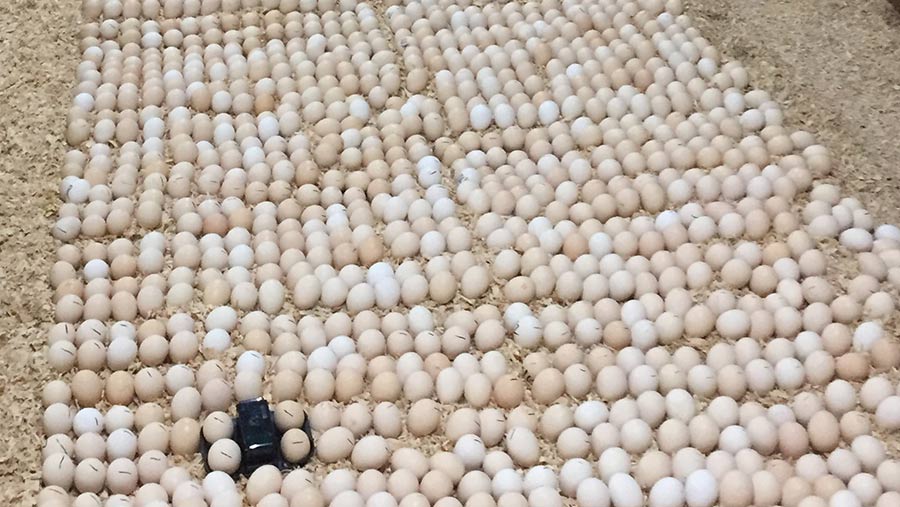
For this study, 560 male Ross 308 chicks from a single batch of eggs from 40-week-old breeder flocks were used, divided into two groups: one hatched in a commercial hatchery (HH) and the other hatched on-farm (HOF). For the HOF system, 18-day incubated eggs were transported, following candling, to the broiler house, carefully placed on litter material, and provided with feed, while maintaining optimal hatching conditions. Chicks began hatching on embryonic day 19, two days before commercial age. As hatching progressed, temperature regulation was adjusted to maintain chick body temperature between 39.5°C and 40.5°C. Male chicks hatched slightly later than females. Continuous lighting was provided to ensure rapid access to feed and water after hatching. HOF chicks were collected manually, sorted, and sexed. Deformed HOF chicks were culled by decapitation. Hatched eggshells were crushed within the pens. In contrast, HH chicks were incubated in a commercial hatchery, with a hatching window of 24–36 hours. After hatching, chicks underwent standard hatchery procedures, including sorting, sexing, and vaccination, before being transported to the farm. Transport took approximately 2–3 hours, resulting in more than 40 hours elapsing before most chicks received feed and water. The day on which HH chicks arrived at the farm was designated as day 1 for both hatching systems (HS).
Key Results
- Body Weight: HOF chicks showed significantly greater body weight on day 1 (45.7 g vs. 42.2 g). However, this initial advantage disappeared by day 7, and no significant differences in body weight were observed on subsequent days (14, 28, and 38).
- Daily Gain: There were no significant differences in average daily gain (ADG), average daily feed intake (ADFI), or feed conversion ratio (FCR) between the two hatching systems (HH and HOF).
- Organ Weights: HH chicks showed a greater relative heart weight on day 7, while HOF chicks showed a greater relative bursa of Fabricius weight on day 14. In addition, HOF chicks tended to have greater relative liver and small intestine weights on day 14 and greater relative bursa of Fabricius weights on day 38.
- Intestinal Permeability: No significant differences in intestinal permeability were found between the two groups at any time point, based on plasma FITC-d levels.
- Intestinal Morphology: HOF chicks showed an increase in duodenal villus width on days 7 and 14, as well as a greater submucosal layer thickness on day 7. In the ileum, HOF chicks showed greater crypt depth on day 7.
- Gene Expression:
- On day 7, HH chicks showed greater expression of MUC5ac and VDR, genes related to intestinal barrier function and nutrient transport, respectively. HOF chicks, in contrast, showed greater expression of CCK and IL-8, genes related to intestinal hormones and the immune response, respectively.
- On day 14, HH chicks demonstrated greater expression of CLDN2 and MUC2, genes related to intestinal barrier function, while HOF chicks showed greater expression of the immune genes AVBD9, IFN-γ, and IL-6.
- On day 38, HOF chicks showed upregulation of ZO-1, HIF1A, and NOS2, genes related to barrier function, oxidation, and immune response, respectively. HH chicks showed upregulation of genes related to nutrient transport SLC5A9 and SLC30A1.
“Early feed access in on-farm hatching not only improves initial body weight, but also shapes a more robust and efficient immune response in the birds.”
Comparative Table: Advantages and Disadvantages
| Characteristic | Hatchery Hatching (HH) | On-Farm Hatching (HOF) |
|---|---|---|
| Feed access | Delay of up to 40 hours or more in access to feed and water after hatching, due to the different hatching intervals between chicks and transport to the farm. | Immediate access to feed and water after hatching, reducing the fasting period and facilitating early hydration and nutrition. |
| Initial body weight | Lower weight on day 1 compared with HOF, due to delayed feed access. | Greater weight on day 1 compared with HH, as a result of early nutrition. |
| Intestinal development | Narrower duodenal villus width on days 7 and 14. Shallower ileal crypt depth and submucosal thickness on day 7. | Greater duodenal villus width on days 7 and 14. Greater ileal crypt depth and submucosal thickness on day 7. |
| Immune function | Lower relative bursa of Fabricius weight on day 14. Upregulation of intestinal barrier and nutrient transport genes. | Greater relative bursa of Fabricius weight on day 14 and a tendency towards greater weight on day 38. Upregulation of immune genes. |
| Stress | Exposure to transport stress, handling, and noise in the hatchery and during transport. | Reduced transport and handling stress, as chicks hatch directly in the farm environment. |
| Intestinal permeability | No significant differences, indicating that the intestinal barrier is maintained in both groups. | No significant differences, suggesting that early feeding does not negatively affect intestinal integrity. |
| Long-term performance | Compensatory growth, with no significant differences in long-term performance (ADG, ADFI, FCR). | Initial weight advantage that is not maintained long-term, with no significant differences in long-term performance. |
| Vaccination and sexing | Vaccination systems and programmes already well-established and proven in hatcheries. The same applies to sexing. | With on-farm hatching, vaccination programmes must be reassessed, as the farm is not equipped for vaccination or sexing in the same way a hatchery is, for reasons of hygiene, efficiency, etc. |
| Logistics and costs | Standardised and well-established incubation system. Lower logistical complexity and initial costs. | Requires specialised equipment, precise logistics, and specific training. Costs may be higher and process adjustments may be required. |
| Long-term performance | Compensatory growth, with no significant differences in long-term performance (ADG, ADFI, FCR). | Initial weight advantage that is not maintained long-term, with no significant differences in long-term performance. |
Recommendations prior to potential implementation:
- Economic and Logistical Assessment: Conduct a detailed cost-benefit analysis to determine the feasibility of implementing the HOF system in your specific operation. This includes evaluating the need for investment in new equipment, the logistics of transporting incubated eggs, and staff training.
- Pilot Trials: Implement the HOF system on a reduced scale or in a trial group to evaluate its impact under the specific conditions of the farm. Close monitoring of broiler performance, intestinal health, and immune response is recommended, comparing these results with those from the traditional HH system.
- Continuous Monitoring: Establish monitoring protocols to measure the performance, intestinal health, and immune response of HOF birds. Collect data on body weight, growth rate, feed intake, intestinal health, and mortality compared with historical data from HH birds.
- Adjustment of Management and Nutrition Protocols: Adapt management and nutrition protocols specifically for HOF birds, taking advantage of the benefits of an earlier start to feeding. Ensure that HOF birds receive a balanced diet and appropriate management to optimise their development and health.
- Collaboration with Experts: Work closely with veterinarians and poultry specialists to ensure correct implementation of the system and optimisation of results. Keep abreast of the latest research and advances in this field.
- Staff Training: Invest in training for personnel responsible for managing the HOF system. Ensure they fully understand the specific procedures of this system.
When might switching to an on-farm hatching system be worthwhile?
Based on all of the above, when might it be in a broiler integrator’s interest to migrate to this system? We say integrator, because it is the integrator who must decide — neither the farm nor the hatchery will make this decision. Below we detail some technical and economic considerations, but there is another, more intangible one: the ability to position the company socially as one that is committed to minimising transport stress for chicks and to implementing management practices that promote better intestinal health and consequently a reduced or zero use of antibiotics, thereby improving social marketing with consumers.
“Ongoing research is vital to fully understand the long-term impact of on-farm hatching on broiler health, performance, and welfare, particularly under challenging conditions.”
When evaluating whether on-farm hatching (HOF) is of interest, the integrator must therefore consider several key factors related to the impact of this system on broiler health, development, and productivity, as well as the logistical and economic implications. The following are some of the most relevant aspects to take into account:
- Benefits for Development and Intestinal Health:
- Improved intestinal morphology: The HOF system promotes better development of intestinal morphology, including greater duodenal villus width on days 7 and 14, as well as greater ileal crypt depth on day 7. These changes may indicate improved nutrient absorption and better intestinal health.
- Immune system modulation: HOF birds show greater upregulation of genes related to the immune response, such as IL-8 on day 7, and IL-6, IFN-γ, and AVBD9 on day 14, and NOS2 on day 38. This suggests that the HOF system may strengthen broiler immunity from an early age.
- Bursa of Fabricius weight: The HOF system is associated with greater relative bursa of Fabricius weight on day 14 and a tendency towards greater weight on day 38. This organ is crucial for immune system development in poultry.
- Effects of transport stress: The HOF system eliminates the transport stress experienced by newly hatched chicks, which can negatively affect their development and health.
- Growth and Performance:
- Initial weight advantage: HOF birds show significantly greater body weight on day 1 compared with HH birds (hatchery-hatched). This advantage, while transient, may be important for a good start in the chick’s life.
- Absence of significant long-term differences: Although HOF birds have an initial advantage, there are no significant differences in overall growth (ADG), feed intake (ADFI), or feed conversion ratio (FCR) throughout the rearing period compared with HH birds. This means that, in terms of final performance, both systems can be equally effective.
- Logistical and Economic Aspects:
- Costs and complexity: Implementing the HOF system requires investment in specialised equipment and staff training, in addition to considering the logistics of transporting incubated eggs rather than day-old chicks.
- Need for quality control: Careful handling of eggs during transport and on-farm incubation is required, as well as quality control to ensure optimal hatching conditions. The percentage of unhatched eggs and deformed chicks must be monitored, as these may be important factors to consider.
- Infrastructure adaptation: Farms may need to adapt their facilities to accommodate the HOF system, including temperature and humidity control to ensure correct hatching.
- Production Implications:
- Health and welfare: The HOF system may offer advantages in terms of animal welfare by providing immediate access to feed and water, eliminating the stress associated with transport and hatchery procedures. This may translate into a lower incidence of health problems and a better quality of life for the birds.
- Potential for antibiotic reduction: By improving immunity and intestinal health, the HOF system could contribute to poultry production with reduced antibiotic use, particularly in intensive production systems.
In summary, an integrator must evaluate the balance between the benefits to intestinal health and broiler immunity, the initial growth advantage, and the logistical and economic implications when deciding whether the on-farm hatching system is suitable for their operation. While the HOF system offers advantages in early development and health, the investment in infrastructure and training, as well as more careful management of eggs and chicks (on-farm hatching will be of no benefit if biosecurity on the farm is not excellent), are aspects that must be considered in detail.
Source:
-. Summary prepared by the NeXusAvicultura.com team based on proprietary information and the article “Effects of on-farm hatching versus hatchery hatching on growth performance, gut development, and intestinal health and function in broiler chickens“. Muhammad Zeeshan Akram et al. Nutrition and Animal-Microbiota Ecosystems Laboratory, Department of Biosystems, KU Leuven 3000, Heverlee, Belgium and the Precision Livestock and Nutrition Unit, Gembloux Agro-Bio Tech, University of Liege, Gembloux, Belgium. Poultry Science · 2025