
AVIAN HEALTH · HEALTH ALERT · JUNE 22, 2026
MAPA confirms four new outbreaks —all secondary to the index outbreak of June 15— on layer and broiler farms in the province of Valladolid; the total number of production birds affected in Valladolid rises, to date, to 117,150 layers and 33,000 broiler chickens. On the same day, it lifts the restrictions in Valencia and, in principle, rules out any connection between the two outbreaks.
From 1 to 5 outbreaks in a week
One week after the confirmation of the first Newcastle outbreak outside the Valencian Community, the situation in Valladolid has suddenly worsened. On June 22, the veterinary authorities of the Junta de Castilla y León reported four new outbreaks of Newcastle disease, all of them secondary due to geographic proximity to the patient zero outbreak in Aldea de San Miguel (outbreak no. 2026/7, from June 15). The tally in the area thus rises to five outbreaks in barely seven days.
In one week, Valladolid goes
from 1 to 5 Newcastle outbreaks.
The four new ones are secondary to the patient zero outbreak of June 15: geographic proximity and shared ownership accelerate the movement of the virus.
The four new outbreaks: where and how
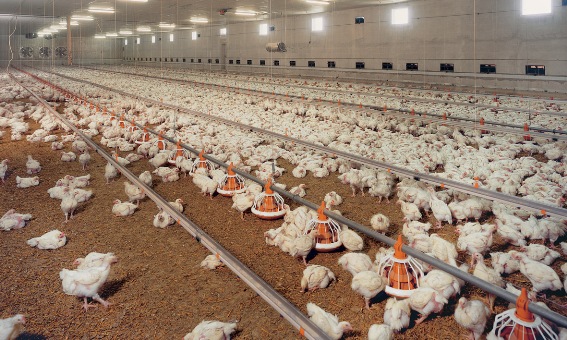
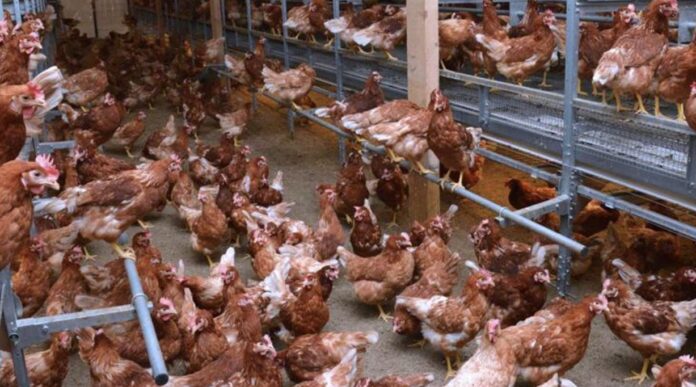
According to the official MAPA statement, two of the outbreaks correspond to laying hen farms in La Pedraja del Portillo (Valladolid district), owned by the same holder and located just a few meters from each other —therefore, epidemiologically linked— with populations of about 29,500 and 49,000 birds. The third is a broiler fattening farm in Montemayor de Pililla (Valladolid district), owned by the same holder as the Aldea de San Miguel operation. The fourth is a laying hen farm in Íscar (Olmedo district). In all cases, the Central Veterinary Laboratory of Algete confirmed a velogenic strain of the virus by PCR.
The NeXus Fact Sheet on the four outbreaks reported on June 22
| Municipality (district) | Type and population | Vaccinated | Detection |
| La Pedraja del Portillo (Valladolid) | Layers · ≈29,500 | Yes | Active surveillance; no symptoms |
| La Pedraja del Portillo (Valladolid) | Layers · ≈49,000 | Yes | Active surveillance; no symptoms |
| Montemayor de Pililla (Valladolid) | Broilers · ≈9,000 (44 d) | No | Symptoms + ≈40% mortality (Jun 17) |
| Íscar (Olmedo) | Layers · ≈38,650 | Yes | Drop in egg production + slight mortality (Jun 17) |
The two farms in La Pedraja del Portillo share the same owner; the fattening farm in Montemayor de Pililla belongs to the same owner as the index outbreak in Aldea de San Miguel.
Vaccination, once again at the center of the picture
The clinical contrast is the most telling data in the report. Three of the four new farms were vaccinated: the two in La Pedraja were detected through active surveillance, without any symptoms, and the one in Íscar only showed a drop in egg production and a slight uptick in mortality. The only unvaccinated farm, the 9,000-chicken farm about to go to the Montemayor de Pililla slaughterhouse, reached ≈40% mortality. This is the textbook illustration of what the vaccine does—and does not do—: it does not prevent infection, but it attenuates the clinical picture and, with that, makes early detection more difficult, the same pattern already observed in the immunized Valencian flocks.
Three of the four new farms were vaccinated and showed barely any signs.
The only unvaccinated farm, the broiler chicken farm, reached 40% mortality.
The restriction zone expands and 44 farms are left within it
The expansion is reflected in the surveillance perimeter. If the index case left 1 commercial operation within the 3 km radius and 10 within the 10 km radius, after the new outbreaks the restriction zone now encompasses 7 commercial operations within 3 km and 44 within 10 km. The Official Veterinary Services are maintaining the measures set out in Delegated Regulation (EU) 2020/687: immobilization of the farms, epidemiological survey, sanitary emptying of the confirmed operations, and destruction of carcasses, feed, and other contumacious materials at an authorized facility.

In orange, outbreak No. 2026/7 previously confirmed on June 15, 2026. Source: MAPA
Valencia closes while Castilla y León opens
MAPA reaffirms that, in principle, there is no epidemiological link between the Valladolid outbreak and the 10 outbreaks reported since December in Valencia. And, given the absence of new cases and favorable surveillance results, this past Monday, June 22, the restriction measures in the Valencian area have been lifted. The active epicenter of the disease in Spain thus shifts from the Mediterranean arc to Castilla y León. The origin of the Valladolid outbreak remains under investigation; the Ministry of Agriculture has not yet specified the genotype or the route of entry.
MAPA Recommendations
The Ministry reiterates the reinforcement of passive surveillance in farms and wild birds, the immediate notification of any suspicion, and the tightening of biosecurity, especially regarding contact with wild avifauna, in addition to appropriate vaccination programs. More information on the official MAPA page on Newcastle disease and in the wildlife health surveillance guide. To review the key facts about the pathogen, we keep available the guide What is Newcastle disease?.
Timeline of Newcastle outbreaks in Spain:
After more than three years (since 2022) without a single case of Newcastle disease in Spain, the situation has become more complicated since the resurgence of this disease in December 2025 in Valencia. This is the list of outbreaks updated as of June 16, 2026:
- The origin (Outbreak 1): The disease reappeared in Spain at the end of December 2025 in the municipality of Llutxent (Valencia), on a farm with 15,000 chickens, breaking the disease-free country status that Spain had maintained since 2022.
- The expansion (Outbreaks 2, 3 and 4): On January 2, 2026, three new secondary outbreaks were confirmed in the same municipality, affecting farms with populations of 28,500, 16,500, and 20,100 birds. The investigation pointed to geographic proximity and links between owners as transmission factors.
- The fifth case (January 20, 2026) at a farm with 75,000 broilers.
- Sixth outbreak (March 9, 2026) in Terrateig, affecting a single house with 27,000 hens in a poultry complex.
- Seventh outbreak (April 9, 2026) at a farm with 26,300 broilers and the eighth outbreak (April 10, 2026) at a farm with 32,000 laying hens. Both in Ráfol de Salem.
- Ninth outbreak (April 28, 2026) at a farm with 38,900 broilers in Ráfol de Salem.
- Tenth outbreak (May 8, 2026) at a farm with 20,040 laying hens in Castelló de Rugat (official statement).
- Eleventh outbreak (June 15, 2026) in a farm with 24,000 43-day-old broilers in Aldea de San Miguel, Valladolid (official statement).
- Outbreaks 12, 13, 14, and 15 from June 22, 2026 in Valladolid affect a total of 117,150 laying hens and 9,000 broilers.
To learn more:
-. What is Newcastle Disease?
-. National Newcastle Surveillance Program 2026. (14-page PDF from MAPA published in May 2025)
-. MAPA’s Newcastle Disease Control main page
-. Newcastle Disease on NeXusAvicultura
Want to stay one step ahead in poultry farming?
Subscribe for free to our eNewsletter and receive a weekly selection
of the best information to anticipate trends, stay up to date, and improve as a poultry professional.
NeXusAvicultura: Vision, Criteria, Quality and Context.