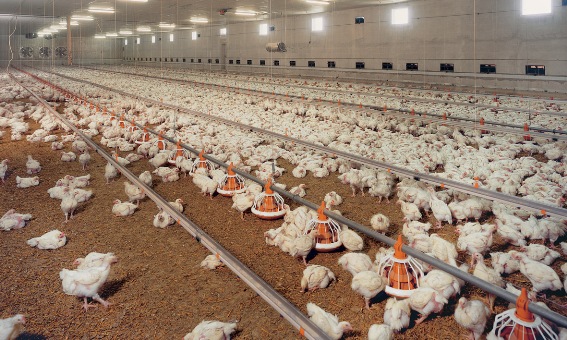

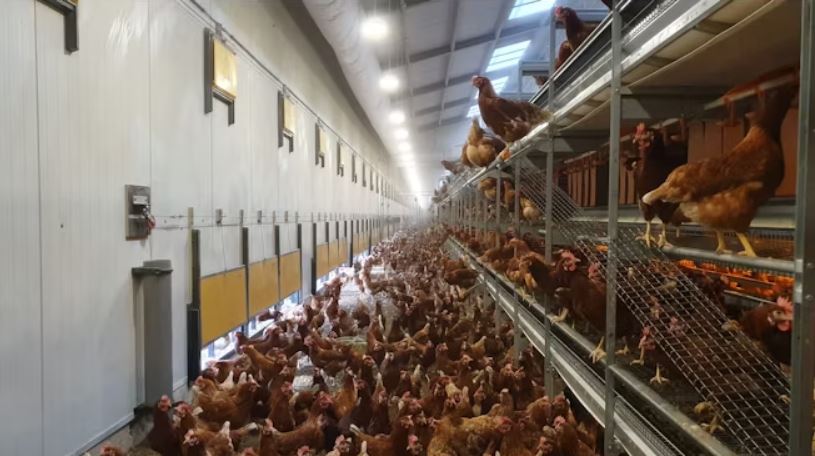
Wageningen University published an interesting study “Monitoring Wind-Borne Particle Matter Entering Poultry Farms via the Air-Inlet: Highly Pathogenic Avian Influenza Virus and Other Pathogens Risk” that investigates the potential of wind-borne particles (PM) contaminated with faeces from wild birds infected with highly pathogenic avian influenza virus (HPAIv) as a route of introduction of HPAIv in indoor-housed poultry. The primary objective was to measure the nature and quantity of PM entering poultry sheds through air inlets.
Methodology
- The study was conducted on two poultry farms recently infected with HPAIv (one broiler farm and one layer farm).
- The farm air inlets were equipped with mesh collection bags and PM was collected every 5 days over 25 days. Video cameras were used to monitor wild bird visits.
- PM was analyzed by PCR to detect avian influenza virus (AIV), Campylobacter and Salmonella. Insects were analyzed for AIV, West Nile virus, Usutu and Schmallenberg.
Key Results
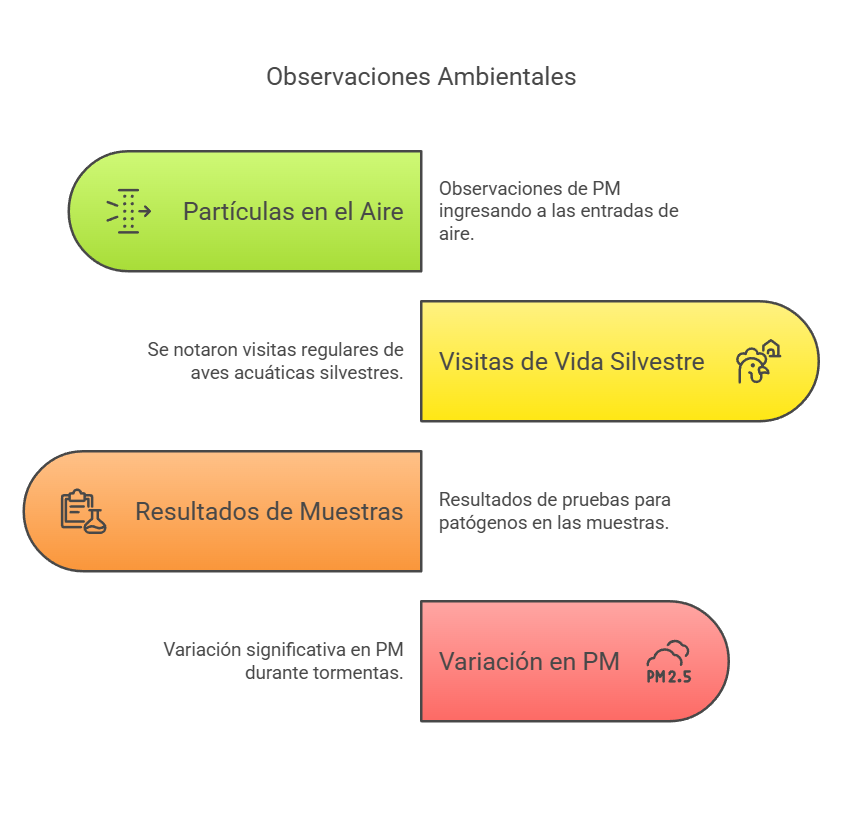
- A considerable amount of mosquitoes and small amounts of PM were found entering the air inlets, primarily spider webs and plant material.
- Regular visits by wild (waterfowl) birds were observed near the poultry sheds.
- PM samples were negative for AIV and Salmonella, and insect samples were negative for all viruses and bacteria.
- Several PM samples from broiler and layer farms tested positive for Campylobacter.
- Substantial variation in PM entry was observed between air inlets. During storm periods, significantly larger amounts of PM can enter air inlets facing the wind.
Type of Farms Studied and Location
- The broiler farm was located in an area of low poultry farm density, near the North Sea coast, on a wild waterfowl migration route. It was surrounded by waterways and grasslands where several bird species were observed.
- The layer farm was also located in an area of low poultry farm density, near the North Sea coast, on a wild (waterfowl) bird migration route. It was surrounded by small waterways and grasslands where several bird species were observed.
Air Inlet Measurements
- A total of 18 air inlets on each farm were cleaned and disinfected and covered with ventilation caps equipped with mesh collection bags.
- Collection bags were installed over a 25-day period and the collected items were identified, counted and measured.
- Samples from the collection bags were taken for diagnostic analysis.
Video Camera Monitoring
- Four video cameras were installed to monitor activity around the poultry sheds, including visits by wild birds and other animals.
- Video recordings were reviewed and data on wild bird visits were recorded in a database.
Pathogen Testing
- A total of 10 samples per measurement day per poultry farm were randomly selected for diagnostic testing.
- PM/dust cloth samples and insect samples were analyzed for influenza virus genome, Campylobacter and Salmonella.
- Insect samples were also analyzed for influenza virus genome, Usutu virus and Schmallenberg virus, as well as West Nile virus (WNV).
Statistical Analysis
- The distribution of the number and size of specific PM elements entering the air inlets was summarized by providing the median, 25th and 75th quartiles and range.
- The average number of specific PM elements entering the air inlets on the windward side of the layer farm shed was compared with that entering the air inlets on the opposite side of the shed.
Wind-Borne Particles (PM) Through Poultry Shed Air Inlets
- Spider webs and plant material were most commonly observed: a median of 1 spider web or plant material per air inlet per 5-day collection period.
- No faeces or feathers from wild bird species were observed.
- The median size of PM from spider webs, plastic and plant material ranged between 5 and 8 mm.
Wind-Borne Particles (PM) Through Poultry Shed Air Inlets
- More frequent entry of spider webs and plant material through the air inlet was also observed.
- The variation found was more substantial compared to measurements at the broiler farm, resulting from a major storm.
- The average number of specific PM elements in the mesh at the air inlets on that side of the shed was significantly greater than on the other side of the shed, which was sheltered from the wind.
- Furthermore, during the storm, two pieces of dry external faeces were detected in a sample collected from one of the air inlets.
Arthropods Through Poultry Shed Air Inlets
- The majority of arthropods observed entering through the air inlet were mosquitoes.
- A median of 12 mosquitoes per air inlet per 5-day collection period was found.
Arthropods Through Poultry Shed Air Inlets
- Also in this case, these were primarily mosquitoes: a median of 2 mosquitoes per air inlet per 5-day collection period.
Wild and Domestic Animals Visiting the Area Directly Around the Poultry Shed
- The following wild bird species visited the area near the shed or landed on the shed roof: blackbird, carrion crow, wood pigeon, lesser black-backed gull and oystercatcher, and mallards.
- Additionally, the shed area was occasionally visited by a domestic cat and wild rabbits.
Diagnostic Test Results
- PM/dust cloth and insect samples tested negative for AI virus genome and Salmonella.
- Insect samples tested negative for Usutu virus, WNV, Campylobacter and Schmallenberg virus.
- However, there was evidence of the presence of Campylobacter genome in PM/dust cloth samples from both farms.
Discussion
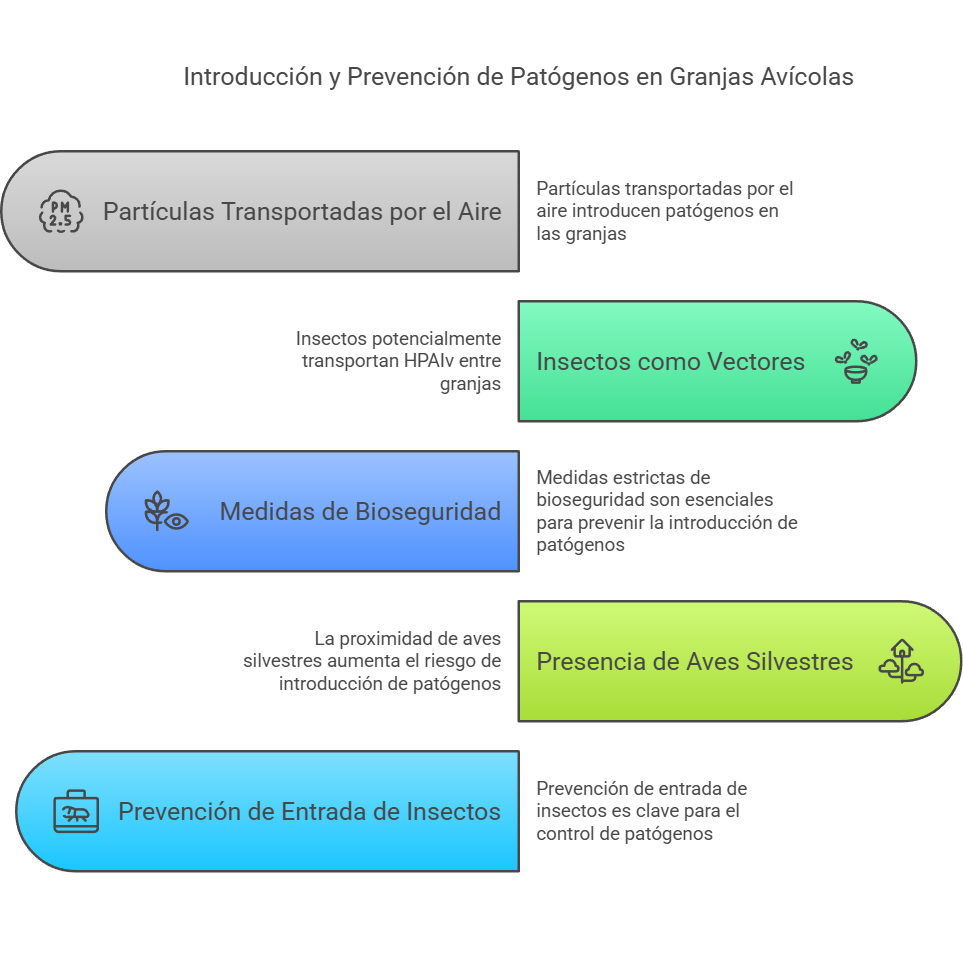
The study highlights the importance of considering the potential for air-borne PM and arthropods to enter poultry sheds through air inlets as a route of introduction of HPAIv and other pathogens.
While direct contact between poultry and infected wild birds is prevented by housing poultry indoors, many poultry farms are still infected, which suggests that other routes of entry may be involved.
- Airborne viral transmission, where a virus adhering to fine dust particles is transported through the air, is considered a possible route of introduction for HPAIv.
- The presence of Campylobacter genome in some of the PM and dust cloth samples confirms that pathogens can enter poultry sheds through air inlets attached to wind-borne particles.
- The absence of AI virus genome in the samples does not exclude flock infection by HPAIv entering through air inlets, as the entry of HPAIv through contaminated PM could be a very rare event.
- Strict biosecurity measures are essential to prevent the introduction and spread of infectious agents on poultry farms.
- The presence of avian influenza-risk birds near the poultry sheds emphasizes the need for strict separation between potentially contaminated areas outside the shed and clean areas inside the shed.
- The lack of wild bird feathers observed in air inlet collection bags suggests that direct entry of wild bird material through wind transport may occur with extremely low probability.
- The transport of PM contaminated with faeces from wild birds contaminated with HPAI from farm surroundings through air inlets is a possible route of introduction of HPAIv.
- It has been suggested that insects, such as mosquitoes, green flies and house flies, are possible vectors of HPAIv.
- The observation of considerable amounts of mosquitoes entering the air inlets of the study farms implies the potential of insects to act as (mechanical) vectors for transmission between farms during an epidemic.
- Prevention of insect entry to poultry sheds, including through air inlets, could be important in controlling not only HPAIv but also other pathogens.
Conclusions and Recommendations
The study concludes that air-borne PM and arthropods can enter poultry air inlets and potentially become contaminated with HPAIv or other pathogens. Therefore, it is advisable to limit this possible route of introduction. Further research is needed to understand how this can be done appropriately. The use of windbreak mesh nets could help limit this route of introduction. Strict and continuous compliance with biosecurity measures is essential to prevent the introduction of infectious agents into the flock and to prevent farm-to-farm transmission.
Source:
-. “Monitoring Wind-Borne Particle Matter Entering Poultry Farms via the Air-Inlet: Highly Pathogenic Avian Influenza Virus and Other Pathogens Risk” by Armin R. W. Elbers et al. Wageningen Bioveterinary Research, 8221 RA Lelystad, The Netherlands