
Interview with the former director of the Real Escuela de Avicultura of Arenys de Mar and worldwide poultry industry communicator
José Antonio Castelló Llobet is well known in Arenys de Mar for his work at the helm of the Real Escuela de Avicultura, an institution that for many years welcomed poultry farming apprentices from all over the world and was the driving force behind the Jornadas Profesionales de Avicultura and the journals Selecciones Avícolas and Cunicultura.
Castelló has written several books on this sector, but has now returned to publishing to compile and disseminate the first history of poultry farming written in Spanish. In this interview he discusses the book and his career.

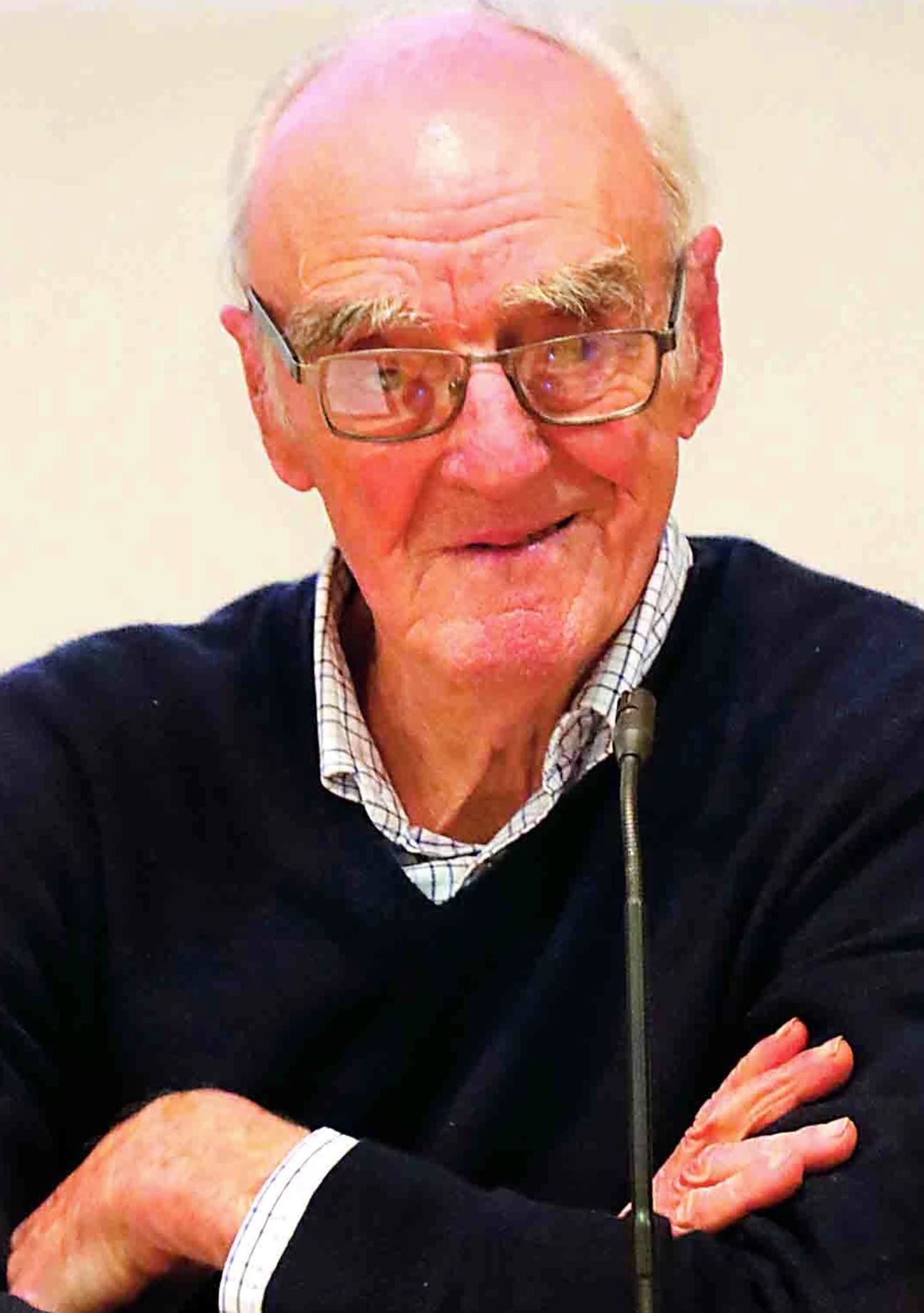
José Antonio Castelló Llobet. Photo: Xavi Salbanyà
You have devoted yourself wholeheartedly to promoting poultry farming, yet your beginnings were very different: your field was the merchant navy. What prompted such a radical change?
Yes, it was a very radical change. The merchant navy ran in the family line of my great-grandfather and other ancestors, who had studied at the pilots’ school in Arenys. I had a particular interest in everything connected with the sea and travel. With my official navigation certificate, I spent about two years at sea. And I have been a lifelong traveller.
How is it that now, at over 90 years of age, you have taken the step of documenting the history of Spanish poultry farming? What motivated you?
The fact that nothing had been written about our history. In English I have come across material on the history of poultry farming in England and the United States, but in Spanish there is no precedent whatsoever. I had a large amount of material — both photographs and written documents — that enabled me to write this book.
You have written many books throughout your life. Would you say this one is entirely different from the rest?
Yes. The others dealt with specific topics related to poultry farming. This one was intended to be completely different, with far less technical jargon — although I haven’t been able to escape it entirely. Bear in mind that the book has 24 chapters: I took the lead and wrote 18 of them myself, but for the other six I had to call on specialists.
Are these contributors people from your own circle, or did you have to seek them out specifically?
I knew all of them, and they each cover different fields: genetics, veterinary science, agricultural engineering… They are all from different parts of Spain, except for one who is German.
The book has five main sections. But the first part covers the origin of the chicken thousands of years ago.
Yes. It has two very distinct parts. The first six chapters cover the history of the chicken from its origins in Southeast Asia, some 3,000 to 4,000 years ago, through to 1959, when Franco permitted the free importation of maize and soya — two feed ingredients fundamental to poultry.
Who might be interested in your book?
From the broiler farmer right through to the person who simply wants more information. To understand how hens can lay 300 eggs a year, you need to know where we have come from.
Do you think the poultry industry has expanded in certain countries or specific regions?
It goes hand in hand with a country’s economic development. In African countries, for example, poultry farming has improved, but very slowly. In the end, the industry has been criticised for becoming too intensive. The aim has been to make chicken and eggs available to everyone. But it is a staple food — an important source of protein.
Do we have a record of how many breeds of hens or chickens there are?
I don’t know the exact figure. In Spain we have around 20 recognised hen breeds on record. But I can give you another figure: it is estimated that there are ten times more chickens in the world than people. So if there are 7.5 billion people, there are 75 billion chickens. And that’s not counting eggs…
Does shell colour have any bearing on egg quality?
No, colour has nothing to do with quality. The shell is one thing, and the contents are another. The shell colour is determined by the breed, but the egg itself is the same.
What is the difference between an egg from an organic hen and one from a hen in a conventional farm?
The difference lies in how the hens live and what they eat. And that justifies the price difference between a standard egg and an organic one. If producing a dozen standard eggs might cost €1.50, a dozen organic eggs could cost €2.50 or even €3. But in my view the quality is the same.
Is a turkey egg edible?
Of course! Just like duck and goose eggs, although they are fattier. Ostrich eggs are also edible. They can weigh up to one and a half kilograms, which is why they have little commercial appeal.
Where can we find this book?
Since it is a book aimed primarily at industry professionals — those with a background in poultry farming, veterinarians, technicians, and livestock farmers — I contacted various organisations, and they offered me the opportunity to distribute the book among their members.
It can also be requested directly at the following email address: castello1896@gmail.com
Source:
-. Xavi Salbanyà. LA AGENDA. 30 June 2022.