
The current avian influenza landscape
This past April, the Food and Agriculture Organization of the United Nations (FAO), the World Health Organization (WHO) and the World Organisation for Animal Health (WOAH) published the latest joint assessment of the AI situation. This update, based on data up to 1 March 2025, provides an overview of the current status of influenza A(H5) viruses in animals and humans.
The overall public health risk assessment for influenza A(H5) viruses remains at a low level at present. However, for individuals who, by virtue of their occupation, have contact with infected animals, the risk of infection ranges from low to moderate, depending directly on the biosecurity measures implemented and the local epidemiological situation of avian influenza. Although animal-to-animal transmission persists and additional human infections associated with exposure are expected to occur, the overall impact on global public health is considered minor at this time.
It is vital to understand that this assessment may change if new epidemiological or virological information comes to light. The application of a “One Health” approach is fundamental to effectively addressing avian influenza, monitoring and characterising virus circulation, preventing inter-species transmission, and reducing its spread.
“Based on available information, FAO-WHO-WOAH currently assess that the risk to global public health posed by influenza A(H5) viruses is low, while the risk of infection for occupationally exposed individuals is low to moderate, depending on risk mitigation measures and the local epidemiological situation of avian influenza.”
Infections in the animal sphere: beyond birds
The circulation of clade 2.3.4.4b A(H5) viruses continues in wild and domestic birds worldwide. These viruses have been implicated in multiple spillover events, affecting wild carnivorous and marine mammals, as well as domestic cats and dogs. Infections in mammals across the Americas, Asia and Europe have presented with severe clinical signs, including pneumonia, myocardial necrosis and neurological signs in some species.
A significant development, particularly in North America, has been the detection of clade 2.3.4.4b A(H5N1) virus in dairy cattle. The first detection in unpasteurised bovine milk samples was reported in March 2024 in the United States. Detections have continued since then. Initial analyses linked the majority of detections in dairy herds from January 2024 to a single wild bird-to-dairy cow transmission event in late 2023 or early 2024, involving genotype B3.13. However, in January and February 2025, two additional bird-to-cow transmission events were confirmed, both involving genotype D1.1, indicating multiple introductions of the virus into dairy cattle. Genotype D1.1 is currently the most frequently detected in North America and has affected wild birds, poultry and mammals. To the best of current knowledge, clade 2.3.4.4b A(H5N1) viruses with genotypes B3.13 and D1.1 have not been detected outside North America under field conditions.
As of 1 March 2025, 979 dairy cattle herds in 15 US states had tested positive for A(H5N1), with a notable increase in California. The average incidence of clinical disease on affected farms ranges between 10% and 20%, with predominant signs including reduced milk production (often abnormal), decreased feed intake, fever, dehydration, faecal changes, respiratory distress and abortions.
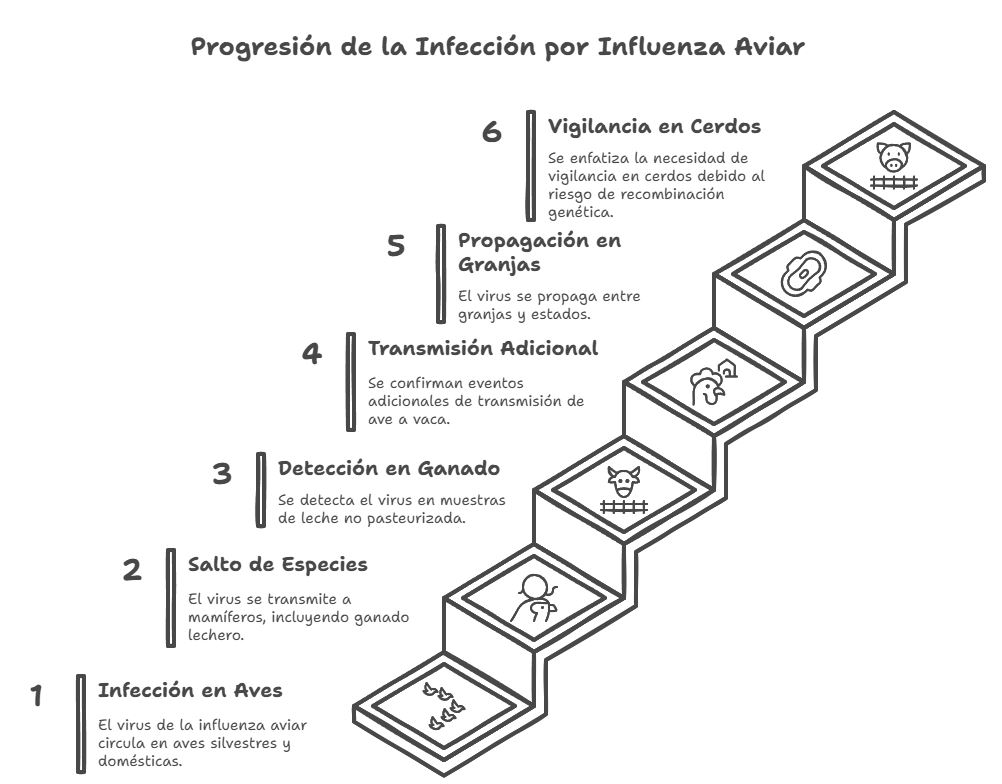
Understanding of transmission among cattle remains limited, but preliminary studies suggest that the duration of infectiousness may range from 2.8 to 13.1 days, with a median of 6.2 days. Spread between farms and states has been linked to livestock movement, possible contamination via feed or manure handling equipment, or through the clothing and footwear of personnel.
Regarding swine, no further detections have been reported in the US since October 2024. Preliminary experimental studies indicate limited replication of the bovine-derived B3.13 genotype virus in pigs and no transmission via direct contact. However, studies with other clade 2.3.4.4b A(H5N1) strains derived from mammals showed greater potential for replication, pathogenicity and transmissibility in pigs compared with strains of avian origin. This underscores the need for surveillance and analysis in pigs, as they can act as “mixing vessels” for the genetic reassortment of avian and human influenza viruses, with pandemic potential.
Detections in mammals other than dairy cattle continue. In the US, at least 88 cases in domestic cats have been reported since 2022. Some infections in domestic cats have been linked to the consumption of raw unpasteurised milk from affected farms or contaminated raw pet food. Ingestion of wild birds through hunting or scavenging is another possible route. It is important to note that humans can carry the virus on contaminated clothing or equipment and infect animals, and infected cats could bring contaminated material into the home, indirectly exposing people. A(H5N1) virus was detected in indoor domestic cats living in the homes of dairy farm workers with no known direct exposure to affected farms, suggesting complex transmission pathways. While limited cat-to-human transmission has previously been reported with other subtypes (A/H7N2), currently circulating H5N1 viruses have not yet been demonstrated to transmit efficiently between humans and cats.
Other A(H5) virus clades, such as 2.3.2.1e and 2.3.2.1a, continue to circulate and evolve in poultry in geographically restricted regions. Outbreaks in captive felids (tigers, lions, leopards) in Vietnam and India in 2024–2025, some linked to feeding on infected poultry and with suspected felid-to-felid transmission, involved clades 2.3.2.1e and 2.3.2.1a.
“Transmission among animals continues to occur and, to date, a growing — though still limited — number of human infections is being reported.”
Human cases: exposures and clinical presentation
Between the previous assessment in December 2024 and 1 March 2025, 17 additional human cases of A(H5) virus infection were reported. Twelve of these cases were reported in the US, with varied exposures: to infected dairy cattle, to infected commercial poultry farms during work or depopulation operations, and to sick or dead backyard poultry. Different genotypes (B3.13 and D1.1) of clade 2.3.4.4b were detected in these cases depending on the exposure. The majority of detected cases in the US presented mild symptoms, such as conjunctivitis and mild respiratory symptoms, and recovered without hospitalisation. However, some cases required hospitalisation and one case was fatal.
Serological studies in individuals working on dairy farms and bovine veterinarians have found evidence of recent infection or exposure to A(H5) virus.
Human cases caused by clade 2.3.2.1e A(H5N1) virus were also reported in Cambodia (two fatal cases with exposure to sick/dead poultry), one case in the United Kingdom (an individual enrolled in a zoonotic surveillance study, exposed on infected poultry farms, mild symptoms, genotype DI.2 distinct from those in North America), and one case in Vietnam (contact with sick/dead poultry, severe illness, recovered).

Virus characteristics and pandemic potential
Routine monitoring has rarely found markers of mammalian adaptation in clade 2.3.4.4b viruses in birds, although sporadic changes have been observed — more frequently in mammalian viruses — primarily in the polymerase proteins. As of 1 March 2025, no viral sequences from US dairy cattle showed well-recognised markers in the HA gene associated with increased binding to human receptors.
Additional studies with some B3.13 A(H5N1) viruses indicate that they retain the avian influenza virus phenotype and show no differences in receptor binding, pH of fusion or thermostability compared with other non-B3.13 avian A(H5N1) viruses. Some D1.1 viruses detected in dairy cattle carry the D701N substitution in the PB2 protein, associated with increased activity in mammalian cells. This substitution was also observed in the virus isolated from a patient in Nevada. Another substitution, E627K in PB2, associated with efficient replication in humans and mammals, was found in the virus from a patient in Wyoming, but not in D1.1 viruses from dairy cattle.
“A(H5) viruses currently detected in mammals, including human cases, largely retain the genomic and biological characteristics of avian influenza viruses and remain well adapted to spread among birds.”
Experimental studies in ferrets with clade 2.3.4.4b A(H5N1) viruses have shown variable transmission via direct contact but no or inefficient transmission via respiratory droplets in the majority of studies. For currently circulating A(H5N1) viruses to acquire the ability to spread efficiently among humans via respiratory droplets, additional genetic changes would be required. The current public health risk assessment reflects this absence of efficient human-to-human transmission.
Population immunity against H5 virus in humans is expected to be minimal. Work is ongoing on the evaluation and development of candidate vaccine viruses (CVVs) for pandemic preparedness, and new CVVs have been proposed for clades that react poorly to existing ones.

Key recommendations for the poultry sector
Given the situation, the recommendations from FAO, WHO and WOAH to Member States and national authorities are particularly relevant for veterinarians and poultry producers:
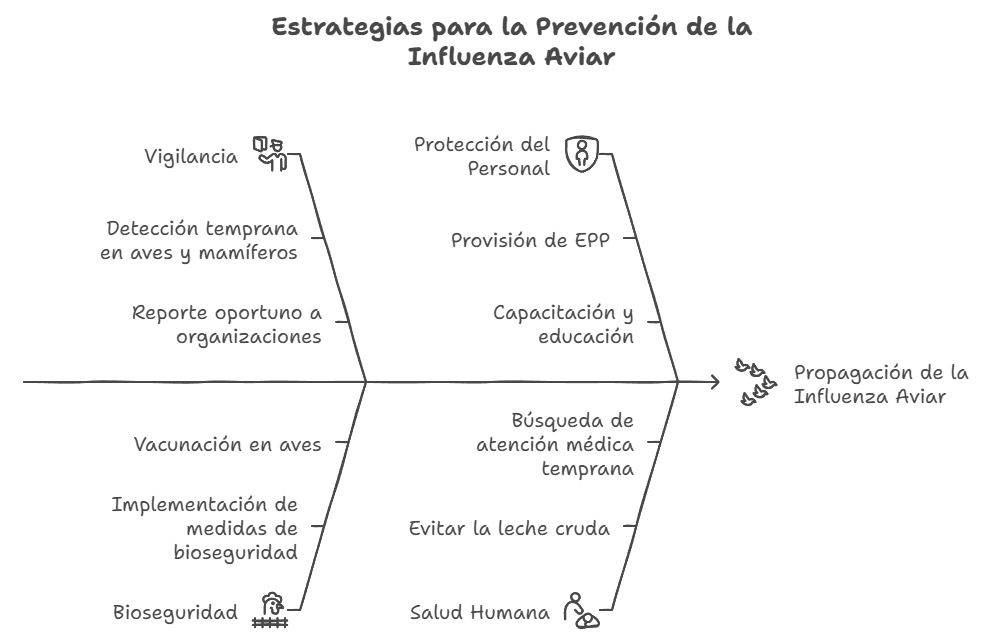
- Enhance animal surveillance: Increase surveillance and timely reporting for early detection of A(H5) viruses in domestic birds, wild birds and mammals.
- Differential diagnosis: Include influenza A(H5) virus infection as a differential diagnosis in non-avian species, including bovine and swine livestock, and other livestock, farm animal and wildlife populations with a high likelihood of exposure.
- Biosecurity: Implement and/or strengthen biosecurity measures on livestock and poultry holdings to mitigate the risk of disease introduction and spread.
- Vaccination in poultry: Consider the use of vaccination to reduce virus circulation in poultry, in accordance with national policies and the guidance of animal health organisations.
- Reporting: Promptly report highly pathogenic avian influenza (HPAI) events in all animal species, including cattle and other domestic and wild mammals, to WOAH and other international organisations such as FAO.
- Data sharing: Carry out genetic sequencing and share influenza virus sequences and associated metadata in public databases. This is essential for rapid and robust risk assessment.
- Personnel protection: Protect individuals working with animals and animal products by applying good production and hygiene practices. This includes providing appropriate personal protective equipment (PPE) to those in contact with suspected/infected animals, communicating and educating about its importance and correct use, and facilitating access to information and testing. Access to PPE and training in its use must be ensured for those exposed to potentially infected animals or contaminated environments.
- Raw milk recommendation: Although more relevant to the dairy sector, it is important to be aware of ongoing research into the risk to humans from consuming raw/unpasteurised milk contaminated with A(H5N1). Consumption of raw/unpasteurised milk is strongly discouraged due to the risk of dangerous zoonotic pathogens. Pasteurisation inactivates the virus, making milk safe.
- Human health: Advise any person who may have been exposed to infected animals or contaminated environments to seek medical attention immediately if they feel unwell and to inform their healthcare provider of their possible exposure. Early and appropriate clinical management should be initiated following timely testing, and precautionary measures should be applied to assess and prevent possible further spread between humans and animals.
Surveillance and the way forward
Routine epidemiological and virological influenza surveillance should ideally be conducted year-round, using standard case definitions. The rapid distribution of viral materials to WHO Collaborating Centres is essential for comprehensive risk assessment and the development or adjustment of response measures.
While human A(H5) vaccine for circulating strains is being produced and some countries are procuring it to vaccinate occupationally exposed individuals, this is not currently recommended as a global strategy given the limited number of human infections. Avian candidate vaccine viruses are periodically evaluated and updated.
“It remains essential that, while poultry producers improve biosecurity on their farms, governments focus their efforts on strengthening surveillance in susceptible animal populations and in people exposed to infected animals…”
In conclusion, the A(H5N1) influenza situation is dynamic. While the risk to the general population is low, occupational exposure in sectors such as poultry and livestock production carries a higher risk. Surveillance, strict biosecurity and collaboration between animal health and public health (the “One Health” approach) are our most important tools for mitigating risks and responding effectively to this threat. Additional information and genetic sequencing are critical to understanding the evolution of the virus and adjusting control measures.
Let us continue working together to protect the health of our birds, other animals and, above all, all those of us who work with commercial poultry.
Source:
-. Updated joint FAO/WHO/WOAH public health assessment of recent influenza A(H5) virus events in animals and people. Assessment based on data as of 1 March 2025
Further reading:
-. Current status of Avian Influenza (H5N1) vaccines
-. Vaccination in poultry against avian influenza
-. Vaccination of workers on poultry farms at NeXusAvicultura.com