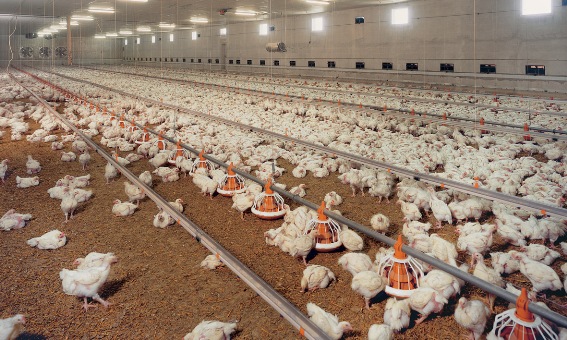


2 June 2024. The European Commission has published three regulations updating the egg marketing standards across the European Union. Among the changes, the new designations and their effect on egg labelling stand out, which are of interest to companies in the sector, consumers and other operators in the egg food chain, as noted by the Interprofessional Organisation for Eggs and Egg Products (Inprovo).
“The regulations revising the EU egg marketing standards reaffirm the objectives of the European agri-food model. They will help maintain market unity, traceability throughout the chain and improve the information provided to Spanish consumers, resolving some practical implementation issues,” states Enrique Díaz Yubero, director of Inprovo.
One of the key changes in the revision is the renaming of some production systems on the packaging, to help consumers make informed decisions at the point of purchase.
Specifically, “barn eggs” (bearing code 2 on the shell) will now be designated as “eggs from hens housed in loose housing systems“, and caged eggs (bearing code 3) will henceforth be identified as “eggs from hens kept in furnished cages“. These are the only cages permitted in the European Union. Those used in the majority of third countries, known as conventional cages, house more hens per square metre and lack equipment such as perches, nesting areas, scratching material, claw-shortening devices and greater height, all of which are mandatory in the EU.

Specifically, “barn eggs” (bearing code 2 on the shell) will now be designated as “eggs from hens housed in loose housing systems“, and caged eggs (bearing code 3) will henceforth be identified as “eggs from hens kept in furnished cages“. These are the only cages permitted in the European Union. Those used in the majority of third countries, known as conventional cages, house more hens per square metre and lack equipment such as perches, nesting areas, scratching material, claw-shortening devices and greater height, all of which are mandatory in the EU.
Accordingly, the names of the four egg production systems are as follows:
-Code 0: Organic eggs.
-Code 1: Free-range eggs.
-Code 2: Eggs from hens housed in loose housing systems.
-Code 3: Eggs from hens kept in furnished cages.

The member organisations of Inprovo support the change in designations, which “will help Spanish consumers to better differentiate, appreciate and understand how eggs are produced in the European Union, and to choose the eggs they wish to purchase according to their tastes, preferences or needs, with the necessary information on the packaging,” states Enrique Díaz Yubero.
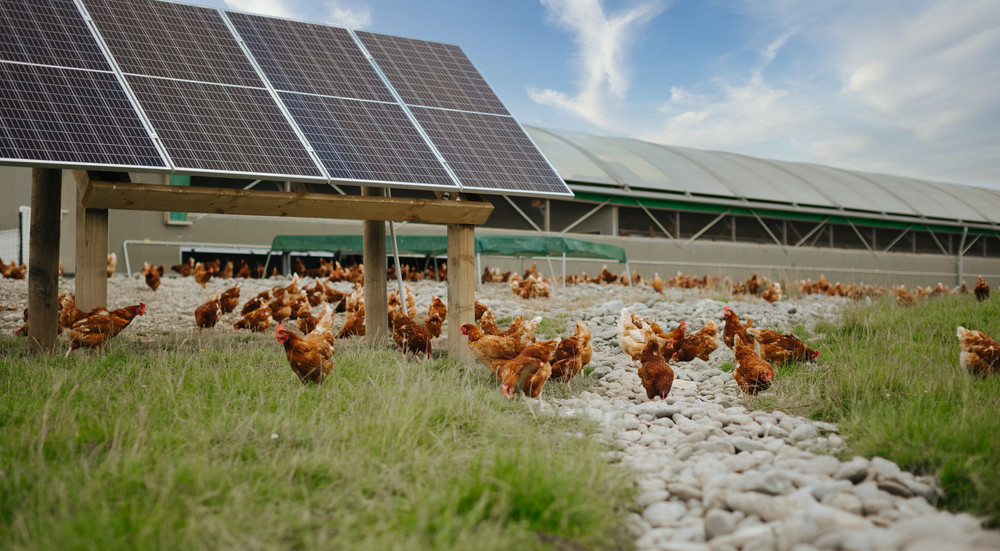
The new text incorporates a recurring demand from European free-range egg producers: to retain their commercial designation following prolonged housing of flocks for more than 16 weeks without access to outdoor range for animal health reasons. Member States are also permitted to authorise the use of free-range areas for other purposes, such as installing solar panels. In this way, hens will have access to more shaded areas and farms will become more sustainable.
Another new development is that flavoured eggs (with intentional aromas) are now included in Grade A (fresh eggs) and must comply with the corresponding marketing standards. These eggs have been on the Spanish market for several years.
The new Regulation also stipulates that the stamping of eggs with the producer code on the shell must be carried out at the production holding, unless national authorities establish that it may be done at the first packing centre to which the eggs are delivered.
The recently published regulations do not refer to the best-before date, which since last year has been included in Regulation 853/2004, amended to reduce food waste. The deadline for selling eggs to the consumer, previously 21 days from laying, has been extended to 28 days, and in the case of hen eggs this is equivalent to the best-before date.
The Ministry of Agriculture (MAPA) will publish in autumn 2024 a Royal Decree implementing the egg marketing standards in Spain. The representative organisations of the laying poultry sector in Spain are working with the Ministry on this text.
For further information:
-. Egg marketing standards