
Update on Avian Influenza as of 30 June 2024
Background
- Although known for many years (Perroncito, 1878), avian influenza (AI) has been described as “the foremost threat facing the poultry sector worldwide” (Rodríguez Ferri and Valerio, 2021)
- The recent spread of the virus to several mammalian species, and even to the human species, has heightened fears among the World Health Organization (WHO) and medical communities worldwide that we may face another pandemic similar to COVID-19, which affected humanity just a few years ago.
These circumstances have prompted us to attempt to compile the latest information received on the subject, despite the inherent difficulty of doing so, given the daily “bombardment” of news of all kinds on the topic, alongside the justifiable fear of the virus spreading to the human species. For this very reason, since what is known one day may already be “old news” the next, this update has a specific date (30 June 2024), which somewhat diminishes the relevance of any information presented below that may no longer hold true at a later stage.
Finally, as background to what follows, it is worth recalling that:
- In 1981, during a world congress held in the United States, the distinction was established between the highly pathogenic avian influenza (HPAI) and the low pathogenic avian influenza (LPAI) virus.
- Various AI outbreaks have affected commercial poultry in the USA (1996), northern Italy (1999), the Netherlands (2003) and several other countries across different continents, including Spain, involving either HPAI or LPAI variants, often linked to the near-simultaneous detection of the same strains in various migratory bird species.
- In 1996, a new form of HPAI was identified in Guangdong, southern China — the H5N1 strain — exhibiting the highest pathogenicity observed to date, causing 40% mortality in a flock of geese. This is currently the strain of greatest concern to the global poultry sector and to the WHO.
- In the USA, unlike AI outbreaks that occurred in poultry farms prior to 2023, which were caused by various virus strains, subsequent outbreaks have been caused by H5N1, carrying far greater severity despite the enhanced biosecurity measures implemented on those farms.
- In this same country, as well as in the European continent and the southern cone of the Americas, the spread of the most recent AI outbreaks has been linked to changes in migratory bird routes, which are largely associated with the undeniable climate change affecting our planet.
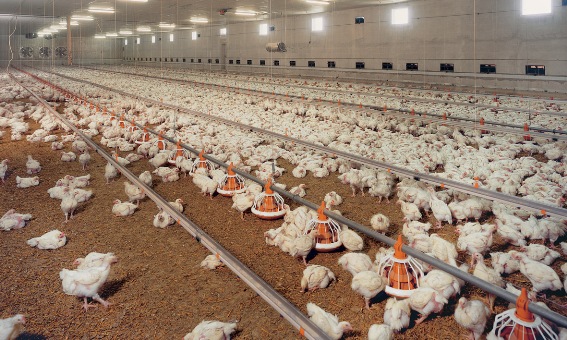
With regard to the poultry sector specifically, the incidence of outbreaks in recent years, worldwide, has affected laying farms, turkey farms and broiler farms equally, as well as backyard poultry. In France, the impact has been somewhat more severe on duck farms producing foie gras (due to their outdoor rearing system) and, conversely, less so on breeder flocks, in this case owing to the higher biosecurity standards typically applied to them.
Climate change and the impact of AI on other bird species
The H5N1 virus can infect more than 350 bird species and nearly 60 mammalian species, with migratory waterfowl (ducks, swans, geese, gulls, etc.) being particularly susceptible to it. Waterfowl infected with the H5N1 virus are typically asymptomatic carriers, yet they can infect other species, including mammals, along their migratory routes. This global transfer allows the disease to spread and enables the genetics and virulence of the virus to continuously adapt.
Evidence indicates that climate change appears to be influencing the emergence of zoonotic viruses such as H5N1. As global climatic conditions change, migratory patterns and routes of birds are also shifting.
Furthermore, non-migratory wild birds are highly susceptible to H5N1 infections brought by transient birds. In the USA, a 2022 report on the state of wild birds estimated that the country has lost more than three billion birds, partly due to climate-related factors.
In short, the global spread of AI viruses stems from their ability to survive long enough in one location to be transmitted to another, and climate change is, in some cases, making such survival increasingly likely.
The virus “spillover” into mammals
Without doubt, the greatest concern among the medical community worldwide, the WHO, and even the general public, has arisen from something that had long been anticipated: the “spillover” of the virus into mammals, some of them domestic, and from these, into the human species.
The H5N1 virus has been detected even in polar regions, specifically in the first recorded case involving the death of a polar bear from H5N1, in Alaska in 2022. Antarctica has also witnessed significant mortality in its populations of elephant seals and sea lions as a result of viral exposure, as has the western coast of the American continent.
The problem is not new; among others, an EFSA-ECDC-EURL 2023 report had already noted several cases in Europe of this transmission of the virus to other species, such as:
- in Poland, in several cats and a lynx,
- in Italy, in several domestic dogs and a cat,
- in Spain and Finland, in mink on two farms,
- in Latvia and the Netherlands, in red foxes, and in Finland, on a fox farm.
In addition, other reports from various parts of the world in recent years have indicated that the virus (primarily the H5N1 strain) has also been found in: alpacas in several locations in western Americas, several cats in Korea, cormorants in Chile, penguins, elephant seals and sea lions in Antarctica, and more.
…… and all of this is in addition to its detection in commercial poultry operations through outbreaks in many European countries (principally France, the Netherlands, Germany, Denmark, the United Kingdom, etc.), as well as in the Americas (USA, Mexico, Brazil, etc.). In these cases, the harm caused was obviously not only from losses due to the virus and the subsequent culling of surviving poultry flocks, but also from the mandatory declaration of “quarantine zones” and the suspension of local and international poultry trade for a given period.
However, real alarm was raised recently, at the start of spring 2024, when the H5N1 virus was detected on several cattle farms in the USA — initially only dairy, but subsequently also beef cattle, as well as goats and alpacas. It appears that the virus replicates rapidly in mammary tissue, negatively affecting milk production and spreading mechanically within groups through the milking process.
In this instance, the rapid spread of the virus across a large part of the country (at the time of writing, at the end of June 2024, 101 cattle herds had already been infected across 12 States) is believed to have been due not only to contamination by migratory birds but also to other causes: through inadequately cleaned vehicles, the detection of infected cats on farms in other States, and the possibility that some workers may have had contact with infected backyard poultry, etc. And perhaps most concerning of all was the near-simultaneous detection of the virus in fresh raw milk, although not in subsequently pasteurised milk.
The alarming jump to the human species
Following this, the almost immediate detection of the virus in several workers on the recently affected cattle farms in the USA triggered all alarm bells over what is truly concerning: the transmission of the virus to the human species through a foodstuff as commonplace as milk, with the potential to trigger a pandemic on a par with COVID-19 just a few years ago. Added to this is the fact that, as yet, no vaccine against this virus is available, although in the USA some laboratories have already begun working in this area.
As had been feared, this occurred last spring when four workers on as many dairy farms across different states in the US Midwest were found to be infected, presenting with conjunctivitis and typical symptoms of respiratory illness of varying severity depending on the case, though all subsequently recovered following antiviral treatment.
Nevertheless, although some media outlets reported human deaths linked to these cases on US cattle farms, NexusAvicultura.com has been unable to confirm this. Similarly, a report from Mexico last spring that also referred to a fatality caused by this virus was subsequently denied, although this does not diminish the seriousness of the issue.
In fact, this had already occurred previously, as the oldest medical records document the death of a veterinarian from avian influenza, 21 years ago, in 2003, in the Netherlands, after becoming contaminated on a positive-testing farm; he was elderly and simultaneously affected by other respiratory conditions. This is in addition to the death of a child from avian influenza in Hong Kong in 1997, in this case confirmed as caused by H5N1, and another in southern China, that of a woman, in 2024, though on this occasion due to the H5N6 virus.
In the USA, fortunately, the swift action of health authorities, with recommendations that dairy cattle milking workers protect themselves adequately, soon proved effective and the spread of the virus through this route was quickly contained. It appears that infection of milking workers was caused by aerosols generated during this procedure, and at present, there is no evidence of person-to-person transmission, which would represent the worst possible development.
Summary
To close this report, we consider it appropriate to reproduce the following text from the CDC (Centers for Disease Control and Prevention) of the United States:
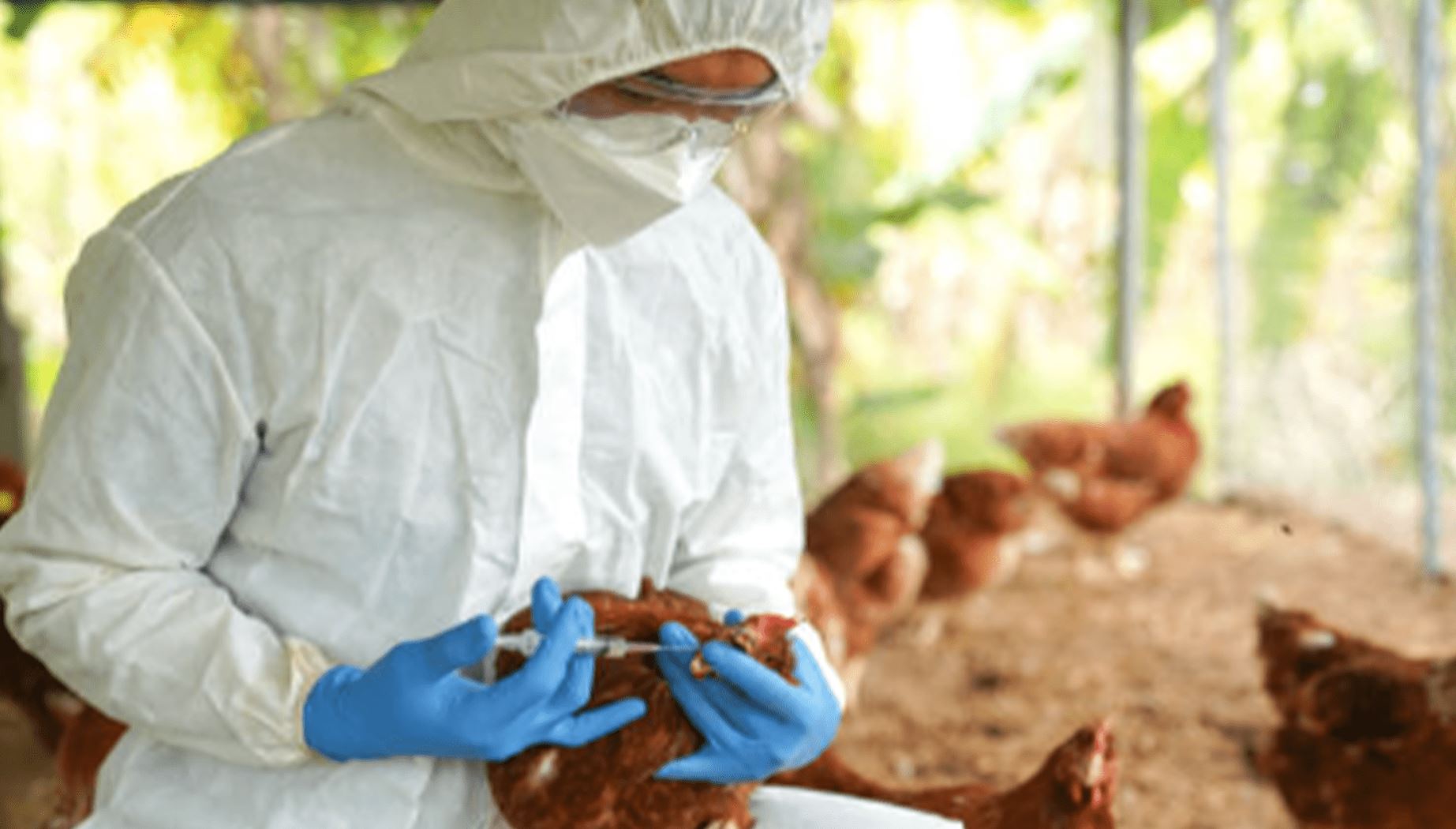
“Exposure to HPAI includes contact with infected birds (farm, backyard or wild), livestock (including dairy cows), carcasses of birds, livestock or other animals, faeces or litter, raw cow’s milk, and surfaces and water that may be contaminated with animal excretions. The University of California Davis recommends wearing gloves, protective goggles and face masks while working with poultry.”
“The CDC recommends that any person exposed to birds, livestock or other animals infected with H5N1 be monitored for symptoms consistent with the virus beginning on the first day of exposure and continuing for up to 10 days afterwards. Following up with exposed individuals can help rapidly identify human cases, provide appropriate treatment, prevent the spread of the virus and help to understand the extent of the human risk.
For further information:
-. European Centre for Disease Prevention and Control: Avian influenza overview March–June 2024 (72 pages)
-. “Unprecedented“: How bird flu became an animal pandemic (BBC, April 2024)
-. Bird Flu Radar (Europe)
-. Avian Influenza on NeXusAvicultura.com