
Update on Avian Influenza as of 31 July 2024
Although perhaps unnecessary for those reading us for the first time, we wish to provide this simply as a reminder that everything that follows is our attempt to keep readers of NeXusAvicultura.com up to date on all news published regarding avian influenza (AI) after 1 July 2024.
Development of AI up to July 2024 (inclusive)
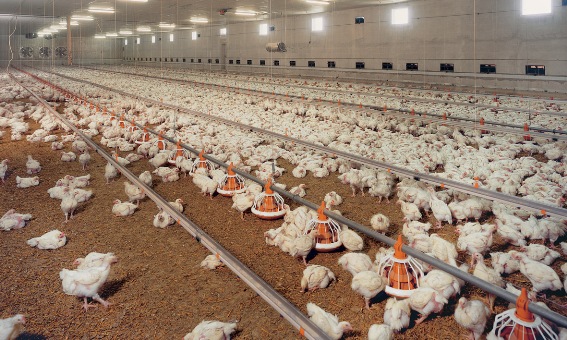
At the start of July, one of the first reports to reach us was the discovery of a dead seagull on the coast of Pontevedra which, upon analysis, was found to be affected by AI. However, as this was an isolated case, the decision was taken merely to maintain certain sanitary prevention measures in the area and to heighten biosecurity on poultry farms in the region.
Beyond this, in the year 2024 to date, Europe has recorded the lowest number of HPAI cases, both in wild and domestic birds, since 2020. This is believed to be attributable to several factors: immunity developed by wild birds following prior infection, a reduction in certain wild bird populations, a decrease in environmental contamination, and some changes in the composition of viral genotypes.
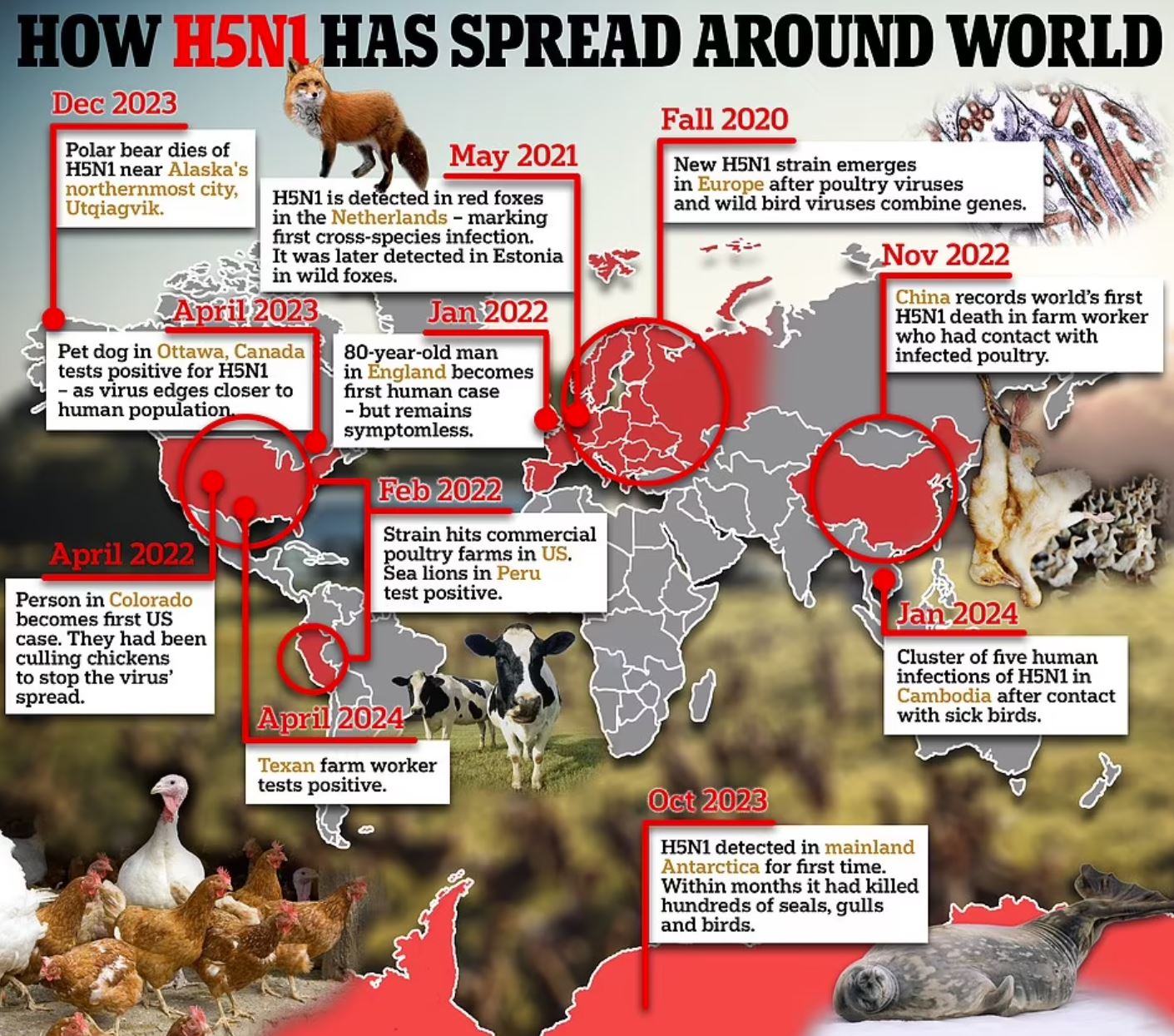
However, the situation is different in other parts of the world. In the USA, for example, findings of the H5N1 virus in various cattle herds across several States have continued to increase, while in China, India and Australia various outbreaks on farms have been reported, with all poultry exhibitions having been banned in the latter country.
Human cases of Avian Influenza
Nevertheless, what continues to cause the greatest concern among health authorities worldwide is the transmission of the virus to the human species. Although to date the number of cases has been limited, the most recently reported cases are as follows:
- in Mexico, the reconfirmation of a death last June of a man due to H4N2, although previously affected by other illnesses (?), but without having been in contact with animals;
- in the USA, the recent infection (in July) of 5 workers at a poultry farm in the State of Colorado, who had been depopulating a laying hen house, presenting with conjunctivitis and mild respiratory symptoms, though not requiring hospitalisation;
- in West Bengal (India), the detection of H9N2 subtype in a 4-year-old child, with no further details provided;
- in Vietnam, the death of a 21-year-old student from the H5N1 virus, who had been exposed to contact with wild birds but had no underlying illness, alongside a 37-year-old man;
- in Cambodia and Vietnam, 5 isolated cases of H5N1 infection last June;
- and in China, 3 individuals affected by strains H5N6, H9N2 and H10N3, with 2 fatalities, in the south of the country, all of whom had been in contact with backyard poultry.
The involvement of cattle
In the USA, concern over the discovery of the virus in cattle last spring has prompted more in-depth study of what occurs in these animals following infection.
At the University of Iowa, it has been observed that both the respiratory tract and the mammary glands of cows are the preferred sites for AI viruses to infect animals, and that the viruses found in cattle have a far greater binding affinity than those of avian origin. However, unlike what occurs in birds — in which AI viruses are lethal — in cattle they cause no more than a disease manifested by a drop in milk production.
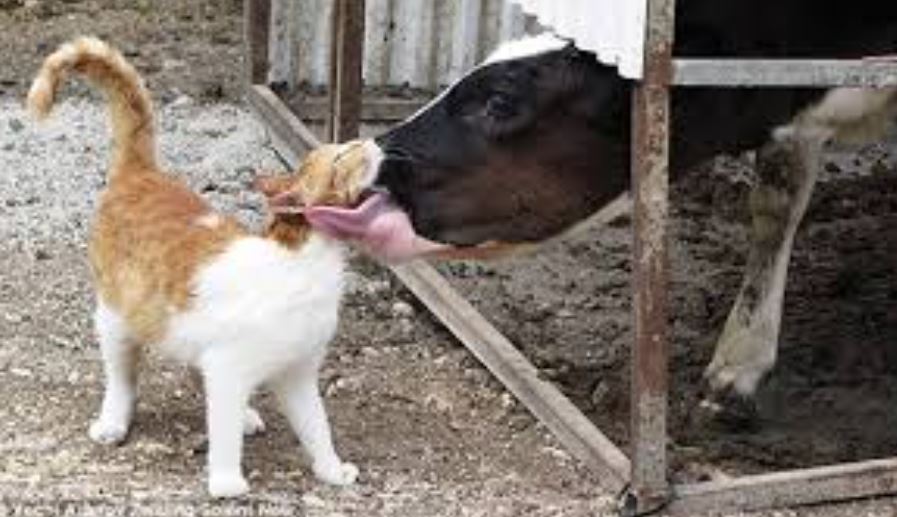
Nevertheless, this in itself poses a risk to the health of farm workers should it not be given the attention it deserves, as the spread of the virus through milking operations is highly significant. That said, the risk is subsequently eliminated through milk pasteurisation and, most importantly, human-to-human transmission has not been detected.
Human prevention against Avian Influenza
Given this situation, the concern of the WHO and health authorities worldwide regarding the possibility of virus transmission to the human species — potentially triggering a pandemic on the scale of COVID-19 — is understandable.
This concern has been reflected, for example, in the recent procurement by the European Commission of 700,000 doses of an avian influenza vaccine from CSL Seqirus, based in Maidenhead, United Kingdom, with an option to expand the purchase to up to 50 million doses, to protect the population against 115 strains of influenza A. In doing so, they have followed the example set by the US Department of Health and Human Services (HHS), which last May acquired approximately 5 million doses of the same vaccine for emergency use.
Furthermore, at the beginning of July the HHS announced that it had provided USD 176 million in funding to pharmaceutical company Moderna, headquartered in Cambridge, Massachusetts, for the development of an mRNA-technology vaccine against the H5 AI virus — the same technology used during the recent COVID-19 pandemic.
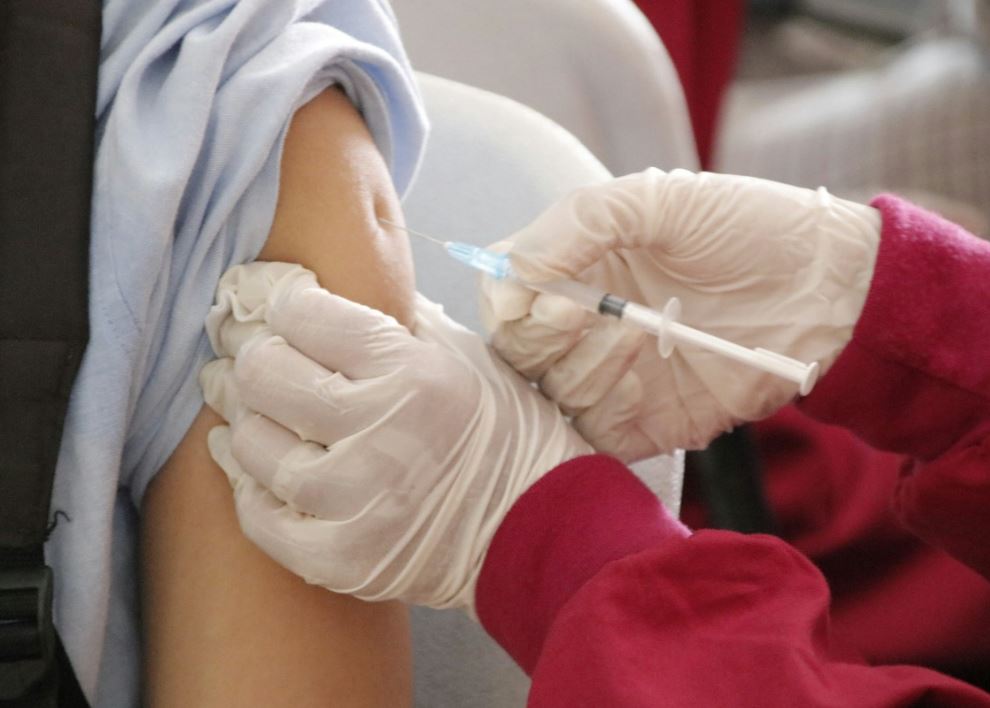
Finally, it was also announced at the beginning of July that Finland will be the first country to begin vaccinating workers on poultry farms and fur farms against AI. No further information was available at the time of publishing this report.
Federico Castelló
For further reading:
-. European Centre for Disease Prevention and Control: Avian influenza overview March–June 2024 (72 pages)
-. “Unprecedented“: How bird flu became an animal pandemic (BBC, April 2024)
-. Bird Flu Radar (Europe)
-. Avian Influenza on NeXusAvicultura.com