
A publication in Science highlights the potential global consequences of the US management of this infection
The US approach to H5N1 Avian Influenza endangers global public health
The avian influenza epidemic affecting poultry in the United States since 2022 has sparked a new public health controversy following statements by the Secretary of the Department of Health and Human Services, Robert Kennedy Jr., who suggested allowing the H5N1 virus to spread unchecked among poultry in order to identify resistant animals. A proposal that has been sharply criticised by public health and animal health experts, who consider it “unethical, irresponsible, and dangerous”.
The declaration by Kennedy Jr., supported by Brooke Rollins, Secretary of the US Department of Agriculture, has raised all alarm bells within the scientific community. Rollins, whose department has direct jurisdiction over animal disease outbreaks alongside state authorities, endorsed the idea of not intervening in the spread of the virus on broiler and turkey farms, on the grounds of allowing a supposed natural selection.
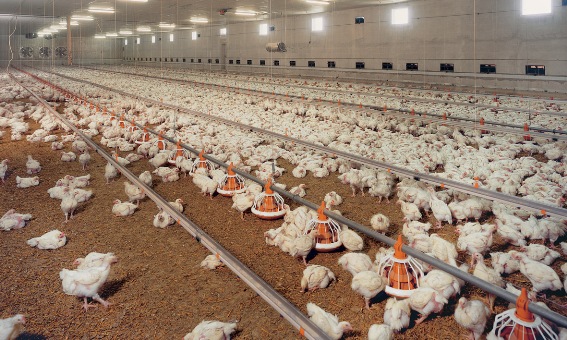
From the start of the outbreak in the USA in January 2022 through 20 May 2025, the USDA has confirmed highly pathogenic avian influenza (HPAI) infection in more than 173 million birds across the country. “Allowing a highly lethal, rapidly evolving, and contagious virus to run its natural course would cause unnecessary suffering to birds, put other animals on farms at risk, and prolong the exposure of workers,” various specialists warn in a publication in Science.
The avian influenza situation in the USA
The current avian influenza epidemic, considered the most severe in history, began in 2021 and has affected every continent. The United States is one of the most critical epicentres: in addition to the culling or death of more than 170 million domestic birds, the virus has caused outbreaks in wildlife, domestic mammals, and, more recently, in more than a thousand dairy farms.
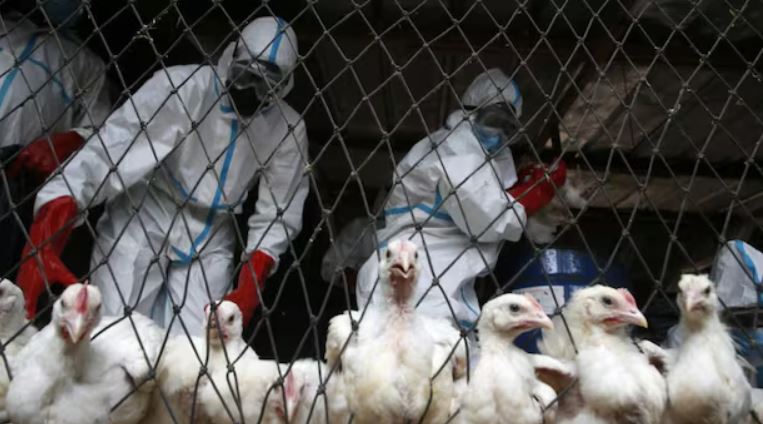
US health authorities have so far confirmed 71 human cases, some of them severe. Four individuals required hospitalisation and at least one patient has died. “The most severe cases have occurred through contact with infected domestic poultry, demonstrating the zoonotic risk of this virus,” experts note.
Kennedy Jr.’s proposal, as denounced by specialists, not only lacks any scientific basis but contradicts all international recommendations. No health authority, such as the World Health Organization (WHO) or the World Organisation for Animal Health (WOAH), supports a “natural selection” strategy against a pathogen with pandemic potential such as H5N1.
Viable alternatives? Vaccination, surveillance, and biosecurity
In contrast to the passive approach proposed by the US government, the scientific community advocates an active, multidisciplinary strategy to contain the virus and minimise its consequences for animal and human health as well as the agri-food economy. The most prominent tool: mass vaccination of domestic poultry against the H5 subtype.
Vaccination models applied in countries such as China and France have demonstrated that comprehensive vaccination programmes, combined with active epidemiological surveillance and improvements in biosecurity measures, can dramatically reduce the impact of the virus. In these countries, infection rates in birds have fallen significantly and the risk of transmission to humans has also been reduced.
As set out in the publication, although these programmes involve a considerable economic and logistical investment, experts insist that they are far more cost-effective in the long term than allowing uncontrolled spread of the virus. “The cost of doing nothing is paid in animal and human lives and in the stability of the agri-food system,” they warn.
Europe prepares for the risk of infection across all livestock species
The US outbreak is not a threat confined to its own territory. The European Food Safety Authority (EFSA) has warned that the HPAI genotype affecting dairy cattle in the USA could reach Europe through various routes, such as the seasonal migration of wild birds or the importation of food products, particularly those derived from raw milk.
A recent EFSA report, published in May, identifies critical points for early detection of the virus during bird migration: Iceland, the British Isles, western Scandinavia, and wetland areas of northern Europe, such as the Wadden Sea. Although the importation of live animals from the USA to the European Union is limited and highly regulated, EFSA does not entirely rule out the possibility of virus introduction via this route.

Furthermore, the report analyses in detail the internal situation in the USA, where up to May 2025, 981 dairy operations across 16 states have been affected. The factors that have facilitated the spread of the virus include poor biosecurity, frequent movement of livestock between farms, and the shared use of agricultural machinery.
EFSA plans to issue an impact assessment later this year, in which it will recommend additional preventive measures to prevent the entry and spread of the virus in Europe.
A situation requiring global attention
The management of avian influenza in the USA is generating concern well beyond its borders. The decisions taken in this country, one of the world’s leading agri-food producers and exporters, may have cascading consequences for global public health.
“We are dealing with a virus that knows no borders. Unilateral, misguided, or pseudoscientifically-based strategies not only endanger the citizens of the USA, but also the rest of the planet,” the document published in Science concludes. The international community is watching with concern as political decisions threaten to undo years of work in the prevention of zoonotic diseases.
Faced with the challenges posed by H5N1, science has demonstrated that effective means of containment exist. However, they require political will, international coordination, and evidence-based management. Ignoring the lessons learned from recent pandemics would be, once again, a mistake the world cannot afford.
Source:
-. The consequences of letting avian influenza run rampant in US poultry. The approach proposed by a high-ranking US government official would be dangerous and unethical. Science, 3 Jul 2025, Vol 389, Issue 6755, pp. 27-29. DOI: 10.1126/science.adx8639
Further reading:
-. Kennedy suggests letting bird flu spread freely. The US Secretary of Health has suggested allowing the virus to proliferate in order to identify birds that may be immune. Such an experiment would be disastrous, scientists say. NY TIMES
-. Poultry production in the USA
-. Poultry vaccination strategies against Avian Influenza