

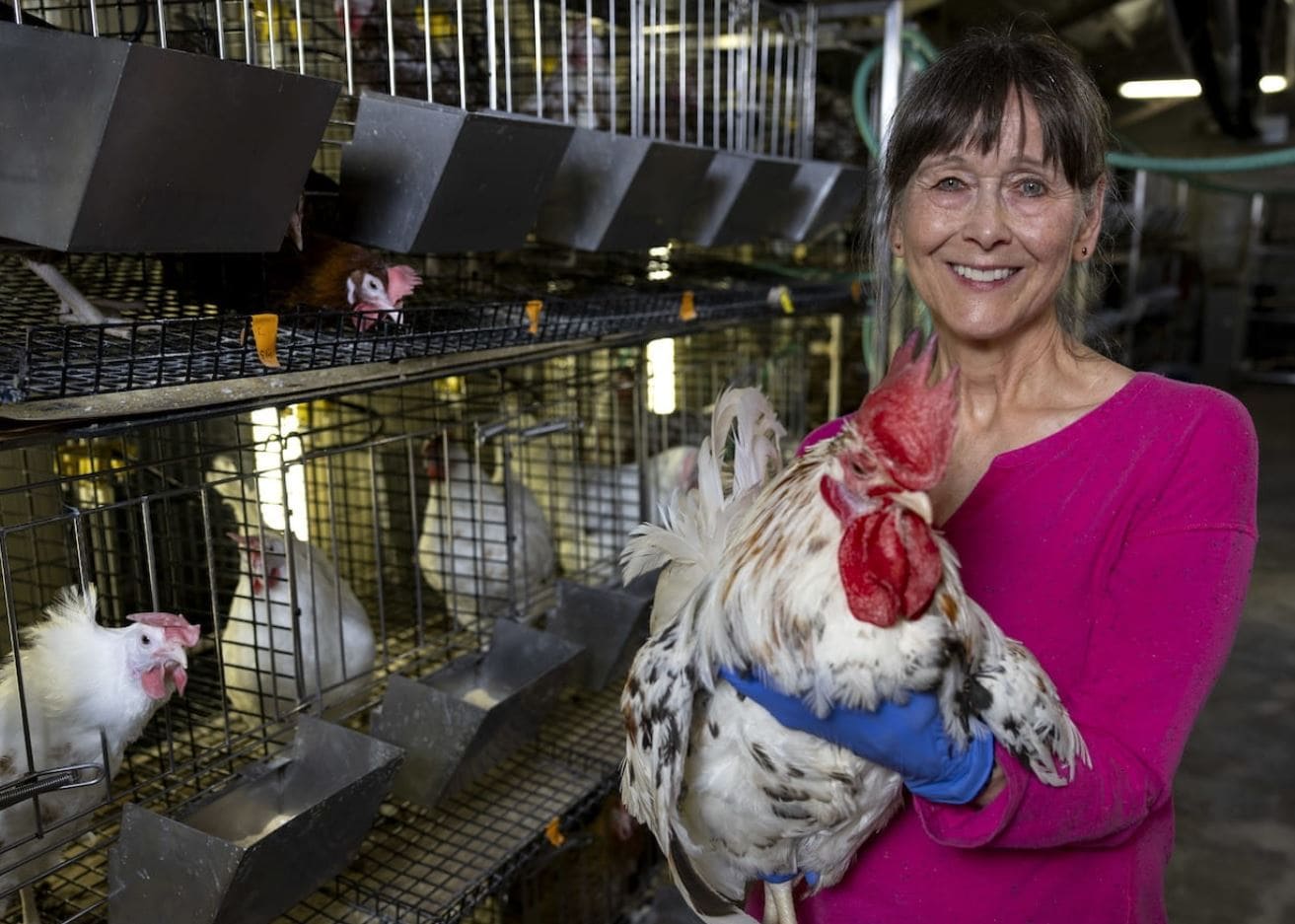
A unique bird breed is helping researchers better understand vitiligo, a chronic autoimmune disease affecting 1–2% of the world’s population. In vitiligo, the immune system attacks melanocyte cells in the skin, causing pigment to disappear and resulting in well-defined depigmented areas on the skin surface.

As explained by Gisela Erf, professor of immunology at the Arkansas Agricultural Experiment Station, USA, “autoimmune diseases are multifactorial and non-communicable, often associated with other autoimmune disorders. In humans, vitiligo is closely linked to autoimmune thyroiditis, in which the thyroid is attacked by the immune system — something that also occurs in birds with vitiligo.”
Prof. Erf studies the disease using a rare breed of bird prone to vitiligo known as the Smyth line, the only animal model for vitiligo that shares all the characteristics of the human condition. These include the spontaneous loss of melanocytes, the interactions between genetic, environmental and immunological factors that drive disease manifestation, and associations with other autoimmune diseases.
Research with the Smyth line helps scientists observe immune responses that are relevant to humans. The findings have just been published in Frontiers in Immunology, identifying the immunological mechanisms behind the onset of vitiligo, which could one day inform the development of effective preventive and therapeutic measures for humans.
Erf’s study compared the immune responses of the Smyth line with those of its Brown parental line, which is susceptible to vitiligo but far less prone to developing the disease. A unique feature of this animal model is that the target tissue containing melanocytes — the “pulp” of small growing feathers — is highly accessible, allowing samples to be taken multiple times before and during disease onset and progression without causing harm to the bird.
Indeed, based on the study of the autoimmune response in feather pulp, this tissue was adopted as a skin test site (referred to as a “living test tube”), providing a minimally invasive procedure for studying immune responses to injected vaccines and other antigens. Erf has since patented this method.
“The method emerged from these vitiligo studies, and in my opinion it has been an incredibly successful technique for studying these highly complex inflammatory responses, in which cells are recruited from the blood to the site of infection or injection,” says Erf.
Examination of the growing feathers from the Brown line also revealed other immune cells in the feather pulp; however, these exhibited anti-inflammatory immune activities that could be responsible for preventing the development of vitiligo in these birds, Erf explains.
The researchers also detected positive correlations indicating an immune response involving regulatory T cells, which inhibit the development of vitiligo and the death of melanocytes.
In the Smyth line, an increase in the expression of specific immunoregulatory genes was observed approximately one month before vitiligo becomes clinically apparent. This early immune activity is believed to potentially play a role in triggering the disease. Overall, these findings are consistent with observations from human studies, providing new insights into what occurs prior to disease onset.
These findings suggest that the different immune responses in Smyth and Brown line birds could help clarify how the immune system determines whether to attack or tolerate melanocytes — a development that would represent a significant advance in the treatment of autoimmune diseases such as vitiligo.
The Smyth line birds were developed by J. Robert Smyth in 1977 at the University of Massachusetts Amherst. They have been studied by Prof. Erf’s team since 1989 and are the only birds of this genetic background known to exist in the world.