

Research led by scientists at the Ineos Oxford Institute for Antimicrobial Research at the University of Oxford has found that wild birds such as ducks and crows living close to humans, for example in cities, are prone to carrying bacteria with antimicrobial resistance (AMR). This creates an urgent need for policymakers and health services to consider the different ways in which antibiotic-resistant bacteria can spread outside hospital settings.
“Our study demonstrates that wild bird populations in cities are reservoirs of bacteria resistant to many antibiotics important to humans. There is an urgent need to understand how human activity is influencing the spread of zoonotic diseases and AMR,” states Professor Samuel Sheppard, of the Ineos Oxford Institute for Antimicrobial Research and the Department of Biology at the University of Oxford.

AMR occurs when disease-causing microbes, such as bacteria, become resistant to the antibiotics that would otherwise kill them. In the United Kingdom, an estimated 58,224 people had a serious antibiotic-resistant infection in 2022, and 2,202 died. Globally, AMR was directly responsible for approximately 1.27 million deaths in 2019, and the World Health Organization has described it as one of the leading global threats to public health and development.
In a new study published this week in Current Biology (Cell Press), researchers analysed 700 bacterial samples taken from the intestines of 30 species of wild birds across 8 countries. They examined Campylobacter jejuni, a common zoonotic bacterium causing diarrhoea that is found in the intestinal microbiomes of birds. Zoonotic diseases are those that can spread between animals and humans.
Using genomic analysis, they studied the diversity of C. jejuni strains, as well as the presence of genes associated with AMR. A new statistical model was developed to study the relationship between these and various factors, including bird behaviour and location.
Genetic markers associated with AMR were found in all bird species studied. Wild birds living close to humans, such as crows and ducks, were found to carry a broader range of bacterial strains and up to three times more AMR genes than birds living in more isolated environments such as mountains. This included genes associated with resistance to many antibiotics commonly used in humans, including fluoroquinolones and beta-lactams.
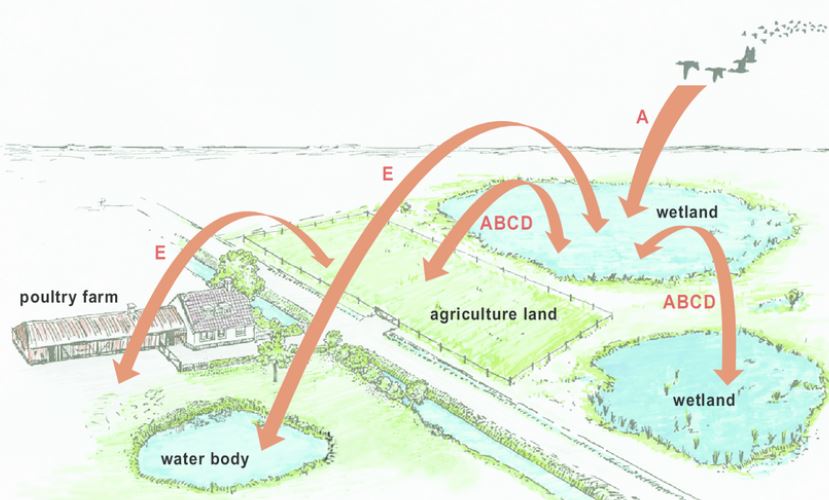
Professor Samuel Sheppard, Digital Microbiology and Bioinformatics Lead at the Ineos Oxford Institute for Antimicrobial Research and the Department of Biology at the University of Oxford, and lead author of the study, said: “Antimicrobial resistance (AMR) is a complex problem that affects not only human health but also animals and the environment. Wild birds have the potential to transfer AMR over long distances to livestock raised for meat consumption and to companion animals such as pets. This can have economic implications for agriculture, animal welfare and food safety.”
Animals living in urban areas are exposed to various sources of antimicrobial-resistant bacteria, such as rivers contaminated by wastewater, and could play a role in their spread to humans. As human populations continue to grow, urbanisation disrupts the existing environment as well as the animals living there. This leads to increased contact between humans and wild animals, providing new opportunities for the spread of zoonotic pathogens.
“Our study highlights the need for coordinated global action that considers wildlife conservation, public health and agriculture, to limit the far-reaching impacts of AMR,” states Professor Samuel Sheppard.
Despite this threat to global health, there has been little research into how habitat disruption affects bacteria carried by animals living close to humans. This new study provides important quantitative evidence for the transmission of AMR across ecosystems, and highlights the interconnected roles of humans, animals and the environment in contributing to the spread of AMR.
Birds can travel long distances, and many species identified in this study, such as crows and starlings, are prevalent in urban environments, in close contact with humans. The data provided by this research will be invaluable for future studies to understand the full impact of human expansion on the spread of zoonotic pathogens and AMR.
The study “Proximity to humans is associated with antimicrobial-resistant enteric pathogens in wild bird microbiomes” has been published in Current Biology.
*The countries included in the study were Canada, Finland, Italy, Lithuania, Japan, Sweden, the United Kingdom and the United States.
For further information: “Proximity to humans is associated with antimicrobial-resistant enteric pathogens in wild bird microbiomes” Mourkas, Evangelos et al. Current Biology, Volume 34, Issue 17, 3955 – 3965.e4