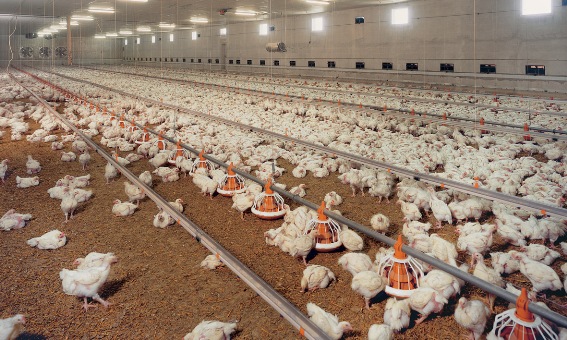


In a revealing interview, we spoke with Jesús Arango, Vice President of Research and Development (R&D) at Cobb, about the latest trends and technologies in poultry genetics. Arango, who works closely with Henri William (the Global R&D Director), shares with NeXusAvicultura readers Cobb’s strategic vision, highlighting the crucial role of artificial intelligence, digital phenotypes, and sustainability in the improvement of broiler strains.
The full interview, published on NeXusAvicultura.com, can be found here: The Future of Broiler Poultry Genetics According to Jesús Arango, R&D Director at COBB
Focus on Meat Quality and Myopathies
One of the key points addressed was Cobb’s substantial investment in meat quality and the fight against myopathies — muscular disorders induced by historical selection for efficiency and growth. Arango explained that Cobb maintains an agreement with the University of Arkansas, where they have modernised a processing plant to carry out detailed meat quality studies, from slaughter through to myopathy analysis.
The company has implemented Near Infrared (NIR) technology in its genetic programme, which allows myopathy problems to be predicted in live birds without the need for slaughter. This is directly applicable to selection candidates on pedigree farms.
A recent job posting for a “Meat and Muscle Scientist” underscores this commitment. This senior geneticist will join the R&D department to deepen basic research at the biological, cellular, and physiological level, investigating the root causes of myopathies. This individual will be integrated with the end-product quality programme and research efforts in collaboration with Tyson, consolidating genetic research in the United States.
The Artificial Intelligence and Digital Phenotypes Revolution
Arango highlighted that, while genomic selection has been the primary tool over the past 10–15 years and is already well established at Cobb, the R&D programme is now exploring new technologies, particularly artificial intelligence (AI) and digital phenotypes in precision poultry production.
AI is revolutionising genetic programmes in two areas:
- New phenotypes for difficult-to-measure traits: Using computer vision systems, 3D cameras, photographs, diagrams, and sensors.
- Large-scale data analysis: Enabling retrospective analysis of complex historical datasets that were previously unmanageable.
A standout example is the implementation of computed tomography (CT scan) technology across all of Cobb’s pedigree farms. This tool allows hundreds of X-rays of live birds to be obtained in 45–50 seconds, analysing tissue composition, yield of different cuts (breast, legs), cardiovascular health, and, crucially, leg health (tibial dyschondroplasia, femoral head necrosis).
CT scanning transforms subjective measurements into quantitative and objective data (percentage of affected tissue), which dramatically improves heritability and response to selection. Furthermore, this technology is “animal friendly” and entirely managed by machine learning and deep learning. CT scan data can be retrained for new traits, such as cardiac anatomy to predict ascites or cardiovascular conditions, and gonadal development for fertility assessment.
Three-dimensional cameras are also being introduced in processing plants to study the shape and dimensions of the breast, with this information being integrated to train the CT scan using live birds.
Gene Editing and Disease Resistance
Regarding gene editing (CRISPR), Arango revealed that Cobb has a new genetic innovation programme, led by Dr. Mark Sigan. Sigan, who previously led the team that developed pigs resistant to Porcine Reproductive and Respiratory Syndrome (PRRS) using gene editing, is seeking to apply these tools in poultry.
The primary focus of avian gene editing at Cobb is on traits that are difficult to measure and have a major impact on the industry, such as disease resistance (e.g. Salmonella, Enterococcus). Cobb’s model for this includes:
- Exploring global databases (animal and human) for genetic signals associated with resistance.
- Validating the existence of these genes in chicken populations.
- Determining whether they are present in Cobb chicken populations.
- If they segregate, applying traditional selection; gene editing would be an option in specific cases where traditional selection is not effective.
It was emphasised that gene editing will not be used to improve traits such as growth rate or carcass yield, as these respond well to traditional genetic selection. Arango recalled his experience collaborating with the Roslin Institute on avian influenza resistance, highlighting the difficulties and costs of inducing disease in pedigree populations for selection purposes.
Genetic Priorities: Sustainability, Efficiency, and Quality
Cobb’s current genetic priorities are centred on sustainability.
- Feed conversion efficiency remains a top priority, with the expansion of automated real-time feed conversion systems.
- Intensive work is being carried out on female breeder lines and on all aspects of end-product quality: yield of high-value cuts, breast shape, chemical composition of meat, and reduction of myopathies. CT scanning and NIR are fundamental for understanding muscle biology, improving density (higher protein content) and quality.
- In the long term, disease resistance through the genetic innovation system.
Arango clarified that, while growth rate and body weight remain important, the focus has broadened. “It is not that we are neglecting growth rate or bird weight, but rather that we are placing special emphasis on other aspects that are very important in the biology, production, and quality of that final product.”
The “Genetic Ceiling” and Uniformity
On the question of whether a genetic ceiling will be reached, Arango affirmed that genetic variation continues to exist within populations due to phenomena such as recombination and mutation. This allows continued improvement in traits such as body weight and feed conversion, even if progress is less rapid than in the past. The ultimate goal is maximum uniformity in the commercial product to facilitate management and processing.
The Era of Biological Data and Collaboration
The availability of cost-effective tools for large-scale biological data collection (sensors, cameras) is opening a new paradigm. These data, combined with AI and machine learning, allow previously unattainable parameters to be analysed and correlations to be identified for genetic selection. The current bottleneck is the efficient management and storage of these vast databases.
Cobb promotes external research through the Cobb Research Initiative (CRI), an annual grant programme that funds research projects worldwide. This programme has received dozens of proposals and currently supports 12 projects aimed at generating implementable solutions for Cobb’s genetic programme, covering areas ranging from animal welfare to intestinal microflora.
Market Trends and Key Challenges
- In-ovo Sexing and Separate Rearing: Seen as a growing market trend, improving uniformity and efficiency, particularly as the costs of these technologies decrease.
- Incubation Times and On-farm Hatching: Although independent of genetics, incubation management and early access to feed and water (such as on-farm hatching) can have a significant economic impact on chick health and immune system development.
- Growth in Poultry Consumption: Arango predicts continued growth driven by cultural and religious acceptance, sustainability (poultry is the most efficient protein source), and economic affordability, particularly in emerging economies such as Asia, Africa, and Latin America.
- Wet Litter Problems: Acknowledged as a multifactorial issue (management, nutrition, genetics). However, new generations of the Cobb 500 are being selected to produce drier litter, even under the same management conditions.
- Slaughter Line Speed: While automation enables higher line speeds, plants will self-regulate to avoid compromising product quality, as this would result in losses.
The Challenge of Genetic Concentration
Arango addressed the question of whether new players could emerge in poultry genetics, particularly in countries such as China. While not ruling it out entirely, he stressed that it is extremely difficult and costly due to:
- High investment requirements: R&D programmes (CT scans, genomics) require multi-million-dollar annual investments.
- Continuous improvement: Genetics is a field of constant improvement; a strain that is not intensively updated every generation becomes obsolete within a year.
- Complex infrastructure: Enormous financial resources are required, along with a pyramidal market infrastructure (great-grandparent, grandparent flocks) that has taken years to develop.
As can be read in the comprehensive full interview with Dr. Jesús Arango conducted by NeXusAvicultura, the company COBB, at the forefront of broiler poultry genetics, is not only seeking to continue improving efficiency and growth, but is redefining its priorities towards end-product quality, sustainability, and disease resistance — all driven by artificial intelligence and intensive global scientific collaboration.