
We state this upfront without wishing to cause alarm, but we must say it clearly, just as our health authorities did during the recent COVID pandemic: avian influenza (AI) is here and it is only a matter of time (how long, we do not know) before it appears among us (let us say in Spain, in someone we know, in a pet animal, in a wild bird found dead in our garden, etc.)
And if this statement may appear to be a catastrophist message, let us look at the facts recorded during August 2024 in relation to this subject, even if we confine ourselves solely to the AI outbreaks detected in very different parts of the world, leaving expressions of opinion on them for another occasion.
AI in Europe
Starting with what is closest to us, we have the case of the 3 yellow-legged gulls collected dead in the A Coruña municipalities of Camariñas, Oleiros and Pontedeume at the end of August, which, upon analysis by the Central Veterinary Laboratory in Algete, confirmed the suspicion that they were infected with highly pathogenic avian influenza (HPAI). These cases were added to others confirmed shortly before, also in wild aquatic birds, in other Galician estuaries in Pontevedra.
A nearby finding is that of other gulls found dead in the Portuguese districts of Aveiro and Leiria, north of Lisbon, in mid-August, and shortly before that, others in Nazaré and in Albufeira and Faro, the latter in the south of the country.
This already allows us to see the spread of the deadly virus along the entire Atlantic coast of the Iberian Peninsula, without having affected domestic poultry — unlike what occurred in France, where the virus was found last August, first in seabirds in the department of Morbihan in the west of the country, and shortly afterwards in two nearby turkey farms, one of them close by and the other slightly further north in Ille-et-Vilaine (Brittany). In all cases, the virus was also identified as the dreaded HPAI.
Continuing in that country, at the end of last August the French Government launched a new duck vaccination campaign against AI to prevent the virus from taking hold in this species, as occurred in 2021–22, when some 20 million birds had to be culled.
With this latest development, having vaccinated around 50 million ducks by mid-August, the French Ministry of Agriculture wishes to highlight that France is becoming the first major poultry-exporting country to implement AI vaccination as an innovative system to strengthen the protection of poultry farms.
Finally, rounding off Europe, other reports from recent months point to the detection of the deadly virus in wild birds in Belgium, the Netherlands, the United Kingdom, Poland and Germany, in the latter case on two duck and goose meat farms in Pomerania.
Moving to another continent, Israel also notified the presence of the virus last August, in this case on a large turkey farm in the north of the country, the birds from which have of course had to be culled. According to its Ministry of Agriculture, this was the first AI case detected this year.
And also in the Americas
However, the most alarming situation of late has arguably been that surrounding AI in the United States, though not so much because of its impact on the poultry sector per se, but rather due to its repercussions on the dairy cattle industry and the consequences thereof for other mammalian species, and the obvious fear of transmission of the virus to humans.
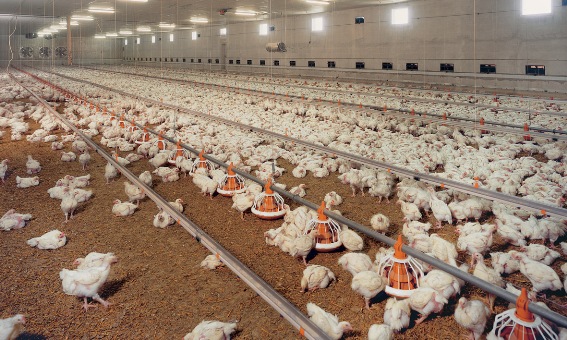
Starting with the impact of AI on the country’s poultry industry throughout this year, the detected outbreaks have been declining, although in total they have affected nearly 25 million commercial birds, across turkey, layer, heavy breeder and broiler flocks alike. The spread across the country has been nationwide, covering almost the entire territory from the Mexican border to the Canadian border and from east to west.
Regarding the spread of HPAI in the US dairy sector, from the detection of the first case last spring in a couple of dairy cattle herds in Colorado, by the end of August it had already affected 192 herds across 13 different states. But the most serious development was the transmission to several cats on the initial Colorado farms and, almost simultaneously, to several farm workers involved in milking operations, some of whom had also been infected on poultry farms where they worked.
Although fortunately none of these cases demonstrated human-to-human transmission of the virus, the fact that milk became contaminated caused considerable alarm, which was only somewhat allayed by the failure to demonstrate the presence of the virus after pasteurisation. The clinical signs in all cases resembled those of a cold, more or less severe, and not very different from a COVID reinfection in individuals who had already been vaccinated and were going through it for a second time.
Finally, to conclude with North America, mention should be made of the detection of H5N1 in Canada in wild birds found in several provinces, as well as in Temascalcingo, Mexico, in this case in a flock of backyard poultry. The latter took place last August, just a few days after the country’s health authorities officially declared that Mexico was free of the virus following its last confirmed case, reported in October 2023…
In South America and Antarctica
The most alarming aspect surrounding the global spread of HPAI is, however, its extensive impact on all migratory birds and several marine mammals, as evidenced by its detection in locations as remote as the Falkland Islands and, further still, South Georgia and the South Sandwich Islands, already close to Antarctica, as well as on the Antarctic continent itself.
In these latter locations, confirmation of the detection of the H5N1 virus took place last spring by British scientists and others from the Spanish CSIC, who were investigating the discovery of carcases of albatrosses, brown skuas, cormorants, penguins, and Antarctic pigeons and terns, as well as of several mammalian species such as southern elephant seals and fur seals. Their studies of the samples demonstrate that the spread of the virus occurred through migratory birds arriving from South America.
As for South America itself, we believe there is virtually no country on the subcontinent (with the exception of Brazil, fortunately, given that it could have affected the world’s largest poultry meat exporter) that has not been impacted by the virus since 2022 to date, both in terms of farmed poultry and migratory and marine birds, as well as some mammalian species (sea lions in Peru). Even in the remote Galápagos Islands the virus has been detected following the deaths of several individuals from the islands’ abundant albatross population.
Finally, the rest of the world.
Lastly, perhaps most concerning of all, given the enormous concentration of human population in the region and the overcrowded living conditions, is the spread of the virus in several Asian countries. This leaves, for the time being, only Oceania as the sole continent where the virus has not been detected.
Without going back further than 2023, the HPAI cases diagnosed on this continent were located in China, India, Nepal, Vietnam and Cambodia, with limited information available on them. However, in June, July and August 2024 the situation worsened in the latter country with the detection of the virus in a 3-year-old child in the south, then in a 4-year-old in the centre, and most recently, in August, in a 15-year-old girl in a village near the capital, all presenting with acute respiratory symptoms.
In this last case specifically, it was reported that several free-range chickens had died suspiciously in the same village as the patient, and that the girl had been handling several dead birds in her family home’s kitchen for the family’s consumption.
Federico Castelló