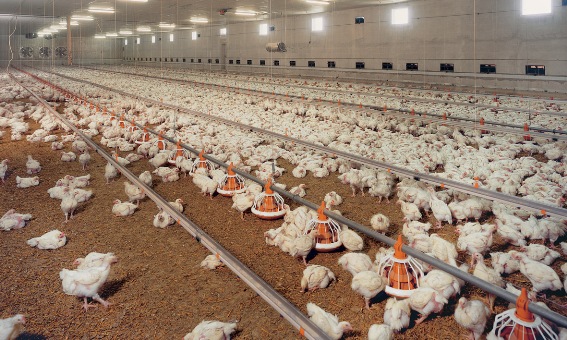

From July 13 to 17, 2026, the 27th World’s Poultry Congress, organized every four years by the World’s Poultry Science Association, brings together the elite of poultry science at the Metro Toronto Convention Centre around sustainability, One Health, genomics, animal welfare, and artificial intelligence.
Global poultry farming has a single major quadrennial event, and in 2026 it’s called Toronto. From July 13 to 17, the Metro Toronto Convention Centre will host the 27th edition of the World’s Poultry Congress (WPC), the largest scientific and technical gathering of the poultry sector on the planet, organized by the United States, Canada, and Mexico branches of the World’s Poultry Science Association (WPSA). The organizers expect to bring together more than 3,000 attendees —industry leaders, scientists, veterinarians, technicians, companies, and students— from around fifty countries.
Unlike other trade fairs, the WPC is above all a science congress: five days of cutting-edge research structured into nine parallel thematic tracks, 41 opening keynote lectures, hundreds of oral presentations and posters, and an assembly that will decide the direction of the WPSA through 2030. At NeXusAvicultura we have analyzed the official program to distill the poultry topics that will truly shape the Toronto agenda.
WORLD’S POULTRY CONGRESS · TORONTO 2026 · A PRACTICAL GUIDE SO YOU DON’T GET LOST AMONG THE MORE THAN 4,000 PRESENTATIONS
WPC 2026: the complete map of the science that will redraw global poultry farming in Toronto
Eight uninterrupted days of science —from July 10 to 17, alongside the PSA annual meeting—, six keynote lectures, nine parallel tracks, and 41 opening presentations to dissect genomics, microbiome, welfare, One Health, sustainability, and artificial intelligence
The poultry industry is undergoing a profound structural transformation: feeding a growing population while navigating climate pressure, raw material volatility, welfare demands, and the threat of cross-border pathogens. Against this backdrop, the 27th edition of the World’s Poultry Congress (World’s Poultry Congress, WPC) —from July 13 to 17, 2026 at the Metro Toronto Convention Centre— stands as the most relevant scientific and industrial forum of the decade for the sector.
Organized by the United States, Canada, and Mexico branches of the World’s Poultry Science Association (WPSA), the congress is chaired by Bruce Rathgeber (Dalhousie University, Chair of the Organizing Committee) and Sami Dridi (University of Arkansas, Chair of the Scientific Committee). The organization projects bringing together more than 3,000 researchers and professionals from the poultry sector around the world.
Unlike a trade fair, the WPC is above all a science congress: an opening day with keynote speeches and five plenary sessions, followed by nine parallel thematic tracks opened by 41 keynote lectures, hundreds of oral communications and posters, and a General Assembly that will decide the course of the WPSA until 2030.
At NeXusAvicultura.com we have analyzed the more than 4,000 communications (papers, conferences, etc.) presented at WPC 2026 and now offer our readers a practical summary of the topics that will shape the sector’s agenda.

Eight days of nonstop science: the synergy with the PSA annual meeting
The WPC doesn’t come alone. The Poultry Science Association (PSA) Annual Meeting is held at the same venue from July 10 to 13, connecting seamlessly with the Congress’s opening on day 13. The result is an eight-day consecutive epicenter of knowledge transfer. (PSA · 2026 annual meeting)
This is no scheduling coincidence: the PSA has been designated as the professional organizer of the Congress itself. Its program includes 13 symposia ranging from AI applications in poultry operations and foodborne pathogen control to the management of extended laying cycles, the ingredient supply chain, or the informal nutrition symposium on modern breeder management. This way, poultry professionals get a 2-for-1 deal: whoever travels to Toronto will find, in a single week, almost everything global poultry science has to say in 2026.
| From July 10 to 17, Toronto concentrates in eight days what the rest of the poultry planet will take four years to reassemble. |

The industry thermometer: who’s sponsoring and where it points
A congress’s sponsorship is a direct indicator of where the industry expects the greatest return on innovation. In Toronto, the levels break down as follows: Platinum for Elanco and Cargill; Gold for Merck Animal Health and Zoetis; and an extensive Bronze tier bringing together Novus, Evonik, Trouw Nutrition, Novonesis, Guangzhou Insighter, Nor-Feed, Adisseo, Huvepharma, and Jefo, among others. Jamesway, Hendrix Genetics, Hy-Line, HatchTech, and Egg Farmers of Canada appear as additional sponsors. (official sponsors)
The composition is revealing. The bulk of the funding —animal health, next-generation vaccines and, above all, precision nutrition, enzymes, additives and microbiome modulation— confirms the shift in the production model that began years ago: from antibiotic growth promoters toward innate biological resilience. That same priority is reflected in the program, with entire tracks dedicated to the gut microbiome and functional additives. The companies’ satellite symposiums confirm this: Elanco (live vaccines against Salmonella and intestinal integrity), Cargill (microbiome intelligence), Trouw Nutrition, Anitox, Nor-Feed, Novonesis and Insighter bring digestive health and antibiotic alternatives to the center of the debate. (WPC · technical symposiums · pp. 98 to 109)

The opening sets the tone: sustainability and One Health as a global framework
The opening afternoon on Monday, July 13 (room 718) begins with a speech by Kim Stackhouse-Lawson (Colorado State University, director of CSU AgNext and former sustainability director at JBS) on leadership in the transition of livestock production systems. (WPC · Mon 13 · 1:10 PM · room 718 · session 1000S · p. 17) · featured speakers
This is followed by five plenary sessions addressing sustainability from complementary angles: Cheryl Stroud (One Health Commission) traces the path of One Health thinking toward sustainability (WPC · Mon 13 · 2:10 PM · session 1001S · p. 17); Frank Mitloehner (CLEAR Center, UC Davis) raises the question of how to produce sustainably to meet 2050 protein demand (WPC · Mon 13 · 2:40 PM · session 1002S · p. 17); Ingrid de Jong (Wageningen) positions behavioral needs and welfare assessment as pillars of that sustainability (WPC · Mon 13 · 3:30 PM · session 1003S · p. 17); Huaijun Zhou (UC Davis) integrates genetics, genomics and epigenomics in service of health and food security (WPC · Mon 13 · 4:00 PM · session 1004S · p. 17); and Suresh Neethirajan (Dalhousie) decodes “poultry intelligence” through AI. (WPC · Mon 13 · 4:30 PM · session 1005S · p. 17)
The day closes with the opening ceremony and the presentation of the industry’s major awards, along with Canadian Indigenous cultural performances.

Nine parallel tracks (and several specialized ones)
Tuesday the 14th and Wednesday the 15th roll out the bulk of the program across nine simultaneous tracks: environmental impact and sustainability; health, disease and One Health; genetics, genomics and epigenomics; gut microbiome and health; innovation and technology; nutrition (amino acids and protein); nutrition (additives); reproduction and breeders; and welfare and behavior. (WPC · Tue 14 · p. 18) On Wednesday, specialized sessions are added: incubation and physiology, small-scale family poultry farming, waterfowl, and education, extension and youth programs. (WPC · Wed 15 · p. 46)
Pillar 1 · Genomics, epigenetics, and the pursuit of biological resilience
For five decades, chicken selection focused on performance: daily gain, feed conversion ratio, breast yield. This approach has pushed birds to their physiological limits—myopathies such as wooden breast, skeletal problems, increased heat sensitivity. Toronto consolidates a paradigm shift: from selecting for performance to selecting for resilience. The genetics track opens with a historical review of 75 years of broiler selection and its associated “defects,” presented by Avigdor Cahaner. (WPC · Tue 14 · 8:30 AM · room 713 · pres. 2022 · p. 21)
The technological frontier is dazzling: a graphical chicken pangenome with telomere-to-telomere (T2T) assemblies to locate structural variants linked to growth (WPC · Tue 14 · 9:00 AM · room 713 · pres. 2023 · p. 21); genomic and epigenomic approaches revealing climate adaptation signatures in local breeds (WPC · Tue 14 · 10:30 AM · room 713 · pres. 2027 · p. 22); and single-nucleus transcriptomics dissecting breast myopathies. (WPC · Tue 14 · 4:00 PM · room 713 · pres. 2127 · p. 35)
Thermal adaptation even has its own genetics: expression of the GH, IGF-1, and PIT genes as the molecular basis of growth and thermotolerance in indigenous birds (WPC · Tue 14 · 2:15 PM · room 713 · pres. 2122 · p. 34), and seven generations of selection for water use efficiency in broilers, a trait set to become strategic in the face of climate change. (WPC · Tue 14 · 1:30 PM · room 713 · pres. 2120 · p. 34)
| Genomics no longer chases growth alone: it now seeks birds capable of withstanding heat, water stress, and viruses. Resilience is the new performance. |
Pillar 2 · Precision nutrition, microbiome, and alternative proteins
With feed accounting for around 70% of operating costs, nutrition is no longer just about meeting requirements: it is a precision intervention to modulate the microbiome, strengthen the intestinal barrier, and improve the final product. The amino acid and protein track kicks off by establishing the biological limits of nitrogen efficiency (Markus Rodehutscord). (WPC · Tue 14 · 8:30 am · room 716 · session 2054 · p. 25)
Two axes dominate: reducing reliance on soybean and cutting nitrogen excretion. Peas and faba beans are presented as an alternative to soybean meal (WPC · Tue 14 · 9:00 am · room 716 · session 2055 · p. 25), black soldier fly larvae (WPC · Tue 14 · 10:30 am · room 716 · session 2059 · p. 25), and even bacterial protein to replace soybean in broilers. (WPC · Tue 14 · 4:30 pm · room 716 · session 2165 · p. 40)
The conceptual highlight is the combination of low crude protein diets (LCP) with raised without antibiotics production (RWA): reducing crude protein with synthetic amino acids lowers diet cost and cuts the substrate available to pathogens such as Clostridium perfringens, the agent behind necrotic enteritis. Sylvester Mutinda (University of Guelph, with Trouw Nutrition) evaluates precisely that intersection in terms of cost, organ weight, and growth. (WPC · Tue 14 · 2:15 pm · room 716 · session 2159 · p. 39)
In additives, the track opens with Chengbo Yang on the strategic importance of choosing the most suitable ones for health, performance, and sustainability (WPC · Tue 14 · 8:30 am · room 718A · session 2065 · p. 27), and combinations of phytocomplexes and targeted-release butyrates stand out for intestinal resilience (WPC · Tue 14 · 10:30 am · room 718A · session 2070 · p. 27). The microbiome closes the loop: from the role of the gut as a “hub” for disease resistance (WPC · Tue 14 · 8:30 am · room 718B · session 2011 · p. 20) to additives against necrotic enteritis. (WPC · Tue 14 · 2:00 pm · room 801A · session 2133 · p. 36)
Pillar 3 · Animal Welfare: Behavior, Light, and the Slow-Growth Dilemma
Welfare has shifted from being measured by mortality to being assessed through the bird’s natural behavioral repertoire, driven by commitments such as the Better Chicken Commitment. Ingrid de Jong leads the framework from the opening plenary session (WPC · Mon 13 · 3:30 pm · session 1003S · p. 17), and the welfare track opens with Tina Widowski on “the other impact factor”: bringing research into practice. (WPC · Tue 14 · 8:30 am · room 714 · session 2087 · p. 29)
Environmental enrichment takes center stage in several studies: plastic shelters and metal ramps for Ross 308 (WPC · Tue Mar 14 · 10:30 · Room 714 · Comm. 2092 · p. 30), the cost of gaining and losing enrichment on feathering and mortality (WPC · Tue Mar 14 · 11:00 · Room 714 · Comm. 2094 · p. 30), and above all laser enrichment in broilers, which improves the immune profile without inducing fear or stress. (WPC · Tue Mar 14 · 11:15-11:30 · Room 714 · Comm. 2095-2096 · p. 30)
Light is another major vector: how ultraviolet light supplementation influences the physiology, behavior, and welfare of the hen (WPC · Tue Mar 14 · 13:45 · Room 714 · Comm. 2191 · p. 43), and gradient lighting to create functional zones within the house (de Jong’s group). (WPC · Tue Mar 14 · 14:15 · Room 714 · Comm. 2193 · p. 44)
The slow-growth dilemma will be one of the liveliest debates. Slow-growing lines improve gait, footpad condition, and plumage cleanliness, but require more days, feed, and water per kilo of meat, raising the carbon footprint. The congress puts numbers to this trade-off with studies on stocking density and “thinning” in conventional versus slow-growing strains (WPC · Tue Mar 14 · 16:45 · Room 714 · Comm. 2201 · p. 45) and on density and sustainability in fast-growing broilers. (WPC · Tue Mar 14 · 15:45 · Room 717 · Comm. 2104 · p. 31)
| Welfare is no longer discussed solely in ethical terms: every point of welfare has a cost in feed, water, and footprint. Toronto forces both sides of the scale to be weighed. |
Pillar 4 · Health, biosecurity, and the urgency of One Health
Global poultry density turns the farm into a potential viral amplifier. Cheryl Stroud advocates from the plenary session for the One Health approach —animal, human, and environmental health as one— against work in regulatory “silos.” (WPC · Mon Mar 13 · 14:10 · Comm. 1001S · p. 17)
Avian influenza (HPAI): the priority front. A notable study on HVT-H5 vaccine transmission against H5N1 (clade 2.3.4.4b) at 24 weeks post-vaccination, from Wageningen Bioveterinary Research (WPC · Tue Mar 14 · 9:00 · Room 718B · Comm. 2012 · p. 20); an online tool to improve farm preparedness against HPAI (WPC · Tue Mar 14 · 11:45 · Room 718B · Comm. 2021 · p. 21); and the One Health lessons from the 2021 outbreak in Senegal. (WPC · Tue Mar 14 · 10:45 · Room 718B · Comm. 2017 · p. 21)
Newcastle Disease, highly topical in Spain: its immune evasion mechanisms are addressed —hijacking of the ARIH2-CYBB axis to suppress ROS defense— (WPC · Tue 14 · 1:45 PM · room 718B · comm. 2109 · p. 32) along with its detection in backyard and family poultry farming in Togo and India. (WPC · Tue 14 · 3:30-3:45 PM · room 718B · comm. 2114-2115 · p. 33)
Salmonella, E. coli and Enterococcus cecorum account for dozens of presentations: the Quebec model for preventing Salmonella Enteritidis (WPC · Wed 15 · 9:00 AM · room 718B · comm. 3001 · p. 47), the vertical transmission of E. cecorum confirmed by whole genome sequencing (WPC · Wed 15 · 11:00 AM · room 801A · comm. 3018 · p. 49), and antimicrobial resistance (AMR) with biofilms of atypical Salmonella Infantis. (WPC · Tue 14 · 4:30 PM · room 718B · comm. 2118 · p. 34)
Pillar 5 · Sustainability, climate, and water as a strategic resource
Environmental sustainability runs through the entire congress. Frank Mitloehner debunks myths about livestock emissions and advocates for a mitigation “toolkit” tailored to each geography (WPC · Mon 13 · 2:40 PM · comm. 1002S · p. 17), while Kim Stackhouse-Lawson brings sustainability to the supply chain and to data-driven decision-making. (WPC · Mon 13 · 1:10 PM · comm. 1000S · p. 17)
The environmental impact track begins with phytase as a historic sustainability technology (Michael Persia) (WPC · Tue 14 · 8:30 AM · room 717 · comm. 2000 · p. 19) and moves toward net-zero emissions production through biochar obtained from litter (WPC · Tue 14 · 2:15 PM · room 717 · comm. 2100 · p. 31) or low-protein diets with phytase that reduce impact without compromising performance. (WPC · Tue 14 · 2:30 PM · room 717 · comm. 2102 · p. 31)
Water, “the forgotten nutrient,” emerges as a critical resource —a field that connects with the very research of Sami Dridi (Arkansas), Chair of the Scientific Committee, who specializes in heat stress and water homeostasis—. (WPC · committees · p. 6) The program lands with the sustainable use of purified rainwater on farm (WPC · Tue 14 · 4:00 PM · room 717 · comm. 2105 · p. 32) and the circular reuse of cleaning water through membrane bioreactors. (WPC · Tue 14 · 4:15 PM · room 717 · comm. 2106 · p. 32)
Pillar 6 · Artificial intelligence, computer vision, and in-ovo sexing
If one thread defines Toronto, it’s the emergence of artificial intelligence on the farm. Suresh Neethirajan opens the conversation from the plenary session, with his pioneering work decoding chicken vocalizations through AI to monitor welfare in real time. (WPC · Mon 13 · 4:30 PM · room 1005S · pres. 17) · featured speakers
The innovation track opens with “the vision of the future” of poultry technology (Colin Usher) (WPC · Tue 14 · 8:30 AM · room 801B · pres. 2043 · p. 24) and rolls out concrete tools: an AI chatbot to assist producers and technicians (WPC · Tue 14 · 2:00 PM · room 801B · pres. 2144 · p. 37); VisioChick mixed reality glasses that simulate the chicken’s vision (WPC · Tue 14 · 2:30 PM · room 801B · pres. 2146 · p. 38); and optical in-ovo sexing, with 25 years of evolution and profound ethical implications for the egg industry. (WPC · Tue 14 · 2:45 PM · room 801B · pres. 2148 · p. 38)
Data science also reaches phenotyping: carcass yield estimation through deep learning on tomography (WPC · Tue 14 · 11:45 AM · room 801B · pres. 2053 · p. 24), machine learning authentication of the housing system based on egg quality (WPC · Tue 14 · 10:30 AM · room 801B · pres. 2048 · p. 24) and a broiler growth model for technical-economic decisions (Matheus Reis, Trouw Nutrition). (WPC · Wed 15 · 9:30 AM · room 801B · pres. 3036 · p. 51)
| Chatbots advising the farmer, cameras counting birds, algorithms translating the hen’s song: precision poultry farming is leaving the lab and entering the barn. |

The generational handover: securing scientific talent
The future of the sector doesn’t depend solely on technology, but on new blood. The WPC is sponsoring 15 students and 15 young scientists from 12 countries —Australia, Belgium, Canada, China, India, Israel, the Netherlands, Romania, Spain, Togo, the United Kingdom, and the United States—, with registration, accommodation, and visits to an egg grading facility, a solar-powered laying farm, and a processing plant ( student and young scientist programs ). The international Cliff D. Carpenter essay contest also rewards the connection among young scientists.
Awards, General Assembly, and the mystery of the 2030 host
The opening ceremony will present the International Poultry Hall of Fame, the Paul Siegel Scientific Award, the Education Award, and the student and young scientist program awards. On Wednesday afternoon, the WPSA Council Meeting and General Assembly will hold elections for 2026-2030 positions and announce the host of WPC 2030.
A clue for the curious: among the exhibitors is a “Tokyo 2030” booth, an unmistakable sign of Japan’s bid to host the next edition. (WPC · exhibitors · p. 12) The day culminates with a gala at the iconic Royal Ontario Museum, sponsored by Cargill. (WPC · Wed 15 · 6:30 PM · p. 46)
What the professional takes away from Toronto
Global poultry farming has operated for decades under the logic of “volume.” Toronto certifies the shift toward “value”: verifiable welfare, measurable ecological footprint, and antimicrobial resistance now weigh as much as cost per kilo in major retailers’ contracts. Resilience genomics, the microbiome as a profitability driver, digitalization of welfare, and water and thermal resilience are the four major guidelines that will emerge from the Metro Toronto Convention Centre. Whoever assimilates them will lead the sector’s next decade.
NeXus Summary Sheet of the Congress
| Event | 27th World’s Poultry Congress (WPC 2026) |
| Dates | July 13 – 17, 2026 (PSA annual meeting, July 10 – 13, at the same venue) |
| Venue | Metro Toronto Convention Centre · 255 Front Street West, Toronto (Ontario), Canada |
| Organized by | US, Canada, and Mexico branches of the WPSA · PSA as professional organizer |
| Chairs | Bruce Rathgeber (Organizing Committee) · Sami Dridi (Scientific Committee) |
| Attendance | +3,000 professionals from +50 countries |
| Program | 9 parallel tracks + specialized sessions · 41 keynote talks · 6 plenary conferences |
| Key topics | Genomics and resilience · microbiome and precision nutrition · welfare and slow growth · One Health, avian influenza, and Newcastle disease · sustainability, climate, and water · AI and in ovo sexing |
| Highlights | WPSA Assembly · 2026-2030 elections · announcement of the 2030 host (will it be Tokyo?) · gala at the Royal Ontario Museum |
| Sponsorship | Platinum: Elanco, Cargill · Gold: Merck, Zoetis · Bronze: Novus, Evonik, Trouw, Novonesis, Insighter, Nor-Feed, Adisseo, Huvepharma, Jefo… |
| Official website | wpc2026toronto.com |
To learn more:
-. Full scientific program of WPC 2026 (official PDF) — presentations, speakers, committees, sponsors and schedules; the basis for all sessions by day, time, room, presentation number and page.
-. Official WPC 2026 website: home page, program, abstracts and posters, featured speakers, student programs, sponsorship and exhibitors.
-. World’s Poultry Science Association (WPSA) — WPC 2026.
-. Poultry Science Association (PSA) — 2026 Annual Meeting and program preview
-. Check out all the upcoming poultry farming events at NeXusAvicultura.com
Want to stay one step ahead in poultry farming?
Subscribe for free to our eNewsletter and receive a weekly selection
of the best information to anticipate trends, stay up to date, and improve as a poultry farming professional.
NeXusAvicultura: Vision, Judgment, Quality and Context.