
AVIAN HEALTH · HEALTH ALERT · JUNE 16, 2026
Newcastle disease leaves Valencia for the first time: MAPA confirms outbreak 11 at a broiler farm in Valladolid
An unvaccinated operation with 24,000 broiler chickens in Aldea de San Miguel breaks the virus’s geographic containment in Spain. This is the first outbreak outside the Valencian Community since the disease reappeared in December 2025 and the first recorded in Castile and León.
A leap of nearly 600 kilometers that breaks the Valencian pattern
Veterinary authorities of the Junta de Castilla y León reported on Monday, June 15, 2026, an outbreak of Newcastle disease at a broiler farm in Aldea de San Miguel, in the province of Valladolid. With this, the national total of outbreaks in poultry since December 2025 rises to 11: ten in the province of Valencia and, now, one in Valladolid. Until this confirmation, the ten previous outbreaks had been concentrated in a single county, the Vall d’Albaida. The new case brings the disease more than 600 km from that core and introduces it, for the first time in this crisis, into Castile and León.
For the first time since December, Newcastle disease has left the Valencian Community: the Valladolid outbreak breaks its geographic containment in Spain.
What MAPA’s official statement says
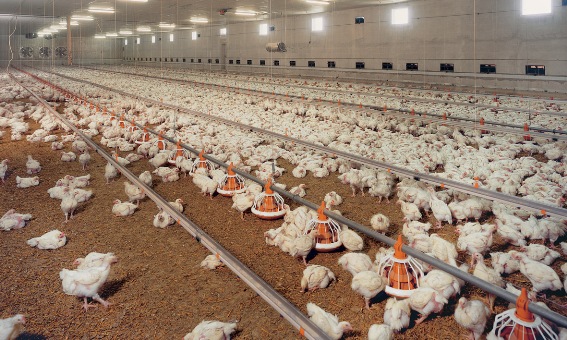
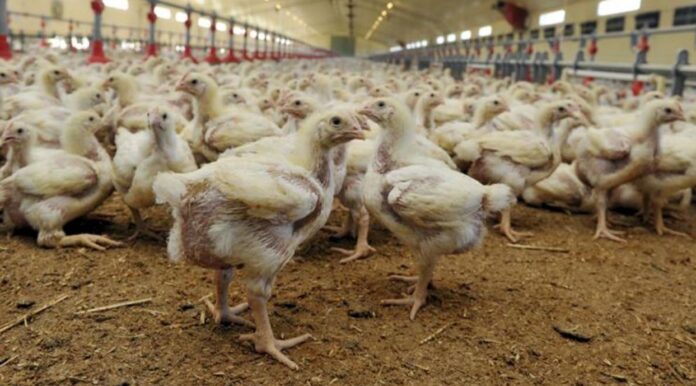
According to the statement from the Ministry of Agriculture, Fisheries and Food dated June 15, the affected farm was not vaccinated against Newcastle disease and had an approximate census of 24,000 broilers aged 43 days. The suspicion was triggered after an increase in mortality of around 6.7% of the census was reported on June 12. The Official Veterinary Services took samples that were sent to the Central Veterinary Laboratory of Algete —the national reference laboratory for the disease in Spain—, where the presence of a velogenic strain of the virus, the most virulent form, was confirmed by PCR.
An unvaccinated farm and a textbook velogenic presentation
The profile of this outbreak differs from what had been dominant in Valencia. There, five of the ten outbreaks affected vaccinated flocks, with attenuated clinical presentations —drops in egg laying with barely any mortality— that made early detection difficult.
In Aldea de San Miguel, by contrast, the farm was not immunized and the disease manifested with a mortality peak of 6.7%: a classic presentation of a velogenic strain that raised suspicion within days. This difference is not minor when it comes to interpreting the virus’s dynamics, and it reopens the debate over the role of vaccination.
The farm in Aldea de San Miguel was not vaccinated and showed 6.7% mortality: a textbook velogenic profile, in contrast to the attenuated pattern of the immunized Valencian flocks.
The measures: immobilization, sanitary vacuum, and restriction zone
The Official Veterinary Services have applied the measures set out in Delegated Regulation (EU) 2020/687: immediate immobilization of the farm from the date of suspicion, an epidemiological survey to determine the possible origin and the farms at risk due to movements of people and vehicles, and sanitary vacuum of the confirmed operation, with destruction of carcasses, feed, and other resistant materials at an authorized treatment plant. A restriction zone has been established around the outbreak: within the 3 km radius there is 1 commercial operation, and within the 10 km radius, 10 commercial operations currently in use.

A second farm, headed for preventive sanitary vacuum
The most sensitive detail of the restriction zone lies within the 3 km radius. The only commercial operation located in that radius is also a broiler farm and belongs to the same integrator as the confirmed outbreak. Due to the epidemiological links between the two, MAPA plans to proceed with its preventive sanitary vacuum. In other words: the episode could end with the depopulation of two farms, not just one.
The episode could close with two farms depopulated: to the outbreak farm is added a second operation from the same integrator within the 3 km radius.
The underlying question: outbreak linked to Valencia or a new introduction?
Caution is warranted here. MAPA’s statement confirms a velogenic strain, but does not specify the genotype or the origin of the virus, which remains under investigation through the epidemiological survey. In the Valencian outbreak, Algete’s phylogenetic analysis had attributed the circulation to a lineage specific to genotype VII, considered an introduction independent of the Polish-German axis. Whether the Valladolid outbreak is related to that Valencian lineage, represents a new introduction, or has a different origin—wild avifauna is always a hypothesis to consider—remains, as of today, an open question. Any claim one way or the other would, for now, be speculative.
MAPA confirms a velogenic strain, but does not specify genotype or origin. Whether the Valladolid outbreak is linked to the Valencian lineage or is a new introduction remains, today, an open question.

What the Ministry recommends
MAPA insists on strengthening passive surveillance—both on poultry farms and in wild birds—and on reporting any suspicion to the official veterinary services. It also emphasizes the reinforcement of biosecurity, especially measures to prevent contact with wild birds, and the implementation of appropriate vaccination programs. The statement itself clarifies a key technical point: although the vaccine does not provide 100% protection, it reduces the risk of birds becoming infected and the amount of virus shed by vaccinated and infected birds, which limits spread to new farms. Detailed guidelines can be consulted on the MAPA’s official Newcastle disease page and in the wildlife health surveillance guide.

The entire Iberian Peninsula is potentially susceptible to Newcastle
The virus’s spread beyond Valencia changes the scale of the problem. While the disease remained confined to the Vall d’Albaida, it could be read as a contained regional outbreak. Its appearance in Castilla y León forces us to treat Newcastle disease as a risk of national scope and to intensify surveillance beyond the Mediterranean arc. The sector would do well to review biosecurity protocols and vaccination status before—not after—the virus comes knocking. For those who need to review the key aspects of the pathogen, our guide What is Newcastle disease? remains available.
The NeXus Outbreak Summary Sheet
| Notification date | June 15, 2026 (suspicion reported on June 12) |
| Location | Aldea de San Miguel, Valladolid district (province of Valladolid, Castilla y León) |
| Type of operation | Broiler farm (meat chickens), unvaccinated |
| Affected census | ≈ 24,000 broilers, 43 days old |
| Warning sign | Increased mortality ≈ 6.7% of census |
| Diagnosis | PCR positive for velogenic strain (Central Veterinary Laboratory of Algete) |
| Total outbreaks in Spain | 11 since December 2025 (10 in Valencia + 1 in Valladolid) |
| Significance | First outbreak outside the Valencian Community; first in Castilla y León |
| Restriction zone | 3 km: 1 commercial operation · 10 km: 10 commercial operations |
| Additional measure | Preventive sanitary void planned at a 2nd broiler farm belonging to the same integrator (3 km radius) |
| Regulatory framework | Delegated Regulation (EU) 2020/687 |
Timeline of Newcastle disease outbreaks in Spain:
After more than three years (since 2022) without any cases of Newcastle disease in Spain, the situation has become complicated since the resurgence of this disease in December 2025 in Valencia. Below is the list of outbreaks updated as of June 16, 2026:
- The origin (Outbreak 1): The disease reappeared in Spain at the end of December 2025 in the municipality of Llutxent (Valencia), on a farm of 15,000 chickens, breaking the disease-free country status that Spain had maintained since 2022.
- The expansion (Outbreaks 2, 3, and 4): On January 2, 2026, three new secondary outbreaks were confirmed in the same municipality, affecting farms with populations of 28,500, 16,500, and 20,100 birds. The investigation pointed to geographic proximity and links between owners as transmission factors.
- The fifth case (January 20, 2026) on a farm of 75,000 broilers.
- Sixth outbreak (March 9, 2026) in Terrateig, affecting a single house of 27,000 laying hens on a poultry complex.
- Seventh outbreak (April 9, 2026) on a farm of 26,300 broilers and the eighth outbreak (April 10, 2026) on a farm of 32,000 laying hens. Both in Ráfol de Salem.
- Ninth outbreak (April 28, 2026) on a farm of 38,900 broilers in Ráfol de Salem.
- Tenth outbreak (May 8, 2026) on a farm of 20,040 laying hens in Castelló de Rugat (official statement).
- Eleventh outbreak (June 15, 2026) on a farm of 24,000 43-day-old broilers in Aldea de San Miguel, Valladolid (official statement).
To learn more:
-. What is Newcastle Disease?
-. National Newcastle Surveillance Program 2026. (14-page MAPA PDF published in May 2025)
-. Main page of the Newcastle Disease Control section of MAPA
-. Newcastle Disease on NeXusAvicultura
Want to stay one step ahead in poultry farming?
Subscribe for free to our eNewsletter and receive a weekly selection
of the best information to anticipate trends, stay up to date, and improve as a poultry farming professional.
NeXusAvicultura: Vision, Criteria, Quality and Context.