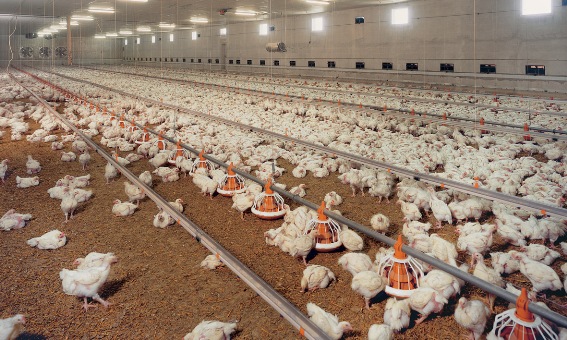

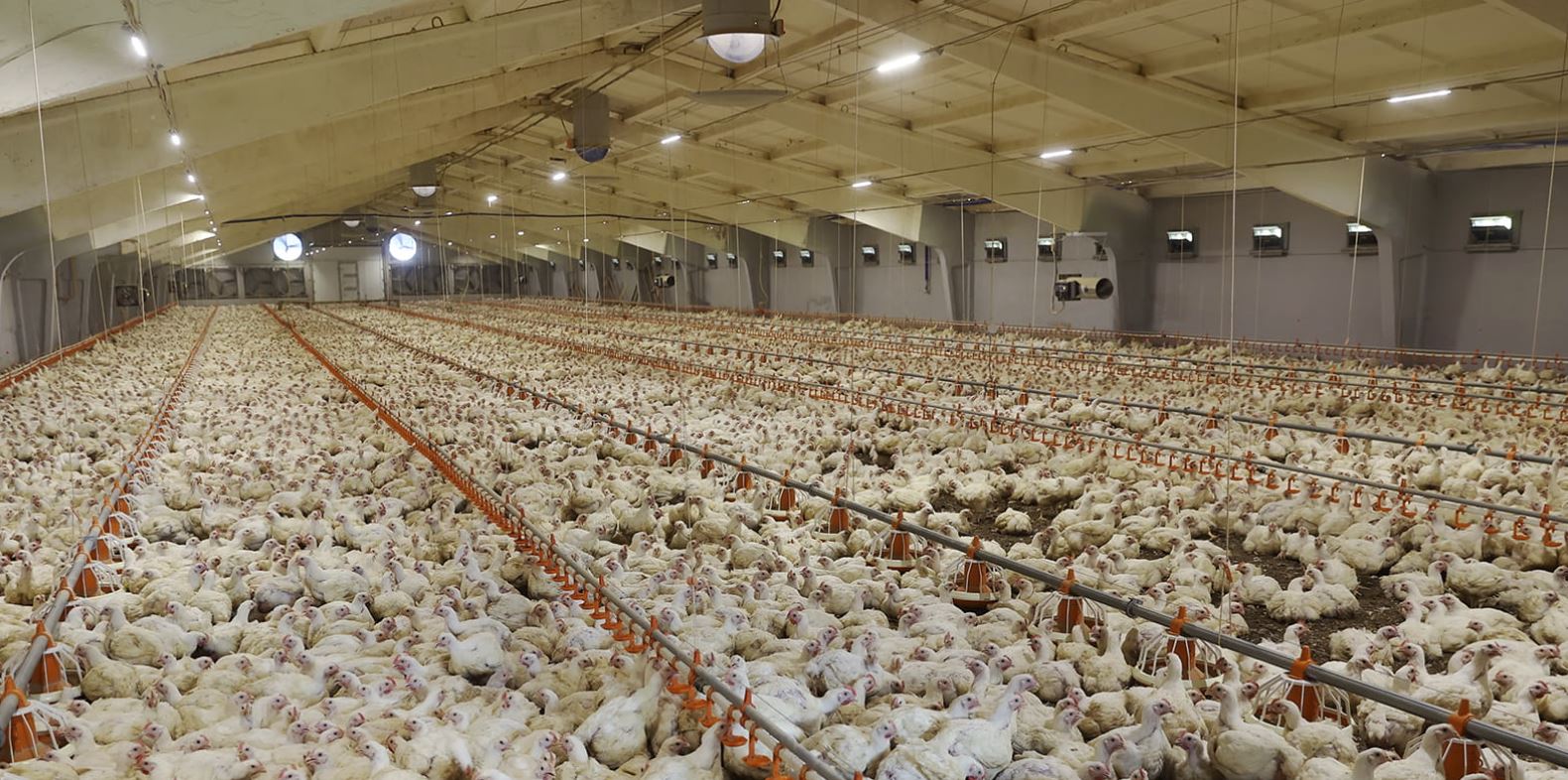
Light is a critical environmental factor for broilers as it affects numerous aspects of production, such as growth, health, physiology and welfare. The ability of light to influence all these aspects in domestic poultry is well documented and has attracted the attention of researchers for over 100 years.
The environment in which broilers are currently reared is very different from that of the ancestors from which they have evolved. In nature, chickens are exposed to a variety of circumstances and environmental conditions, including different day lengths and light intensities.
Lighting is a key management tool in broiler production, although research on it in commercial houses is relatively recent. It has been demonstrated that the use of LED lights improves production performance and that greater adoption of this technology can provide additional improvements. Furthermore, recent reports have suggested that the optimal lighting environment for broiler production may be a NON-UNIFORM distribution of light intensity.
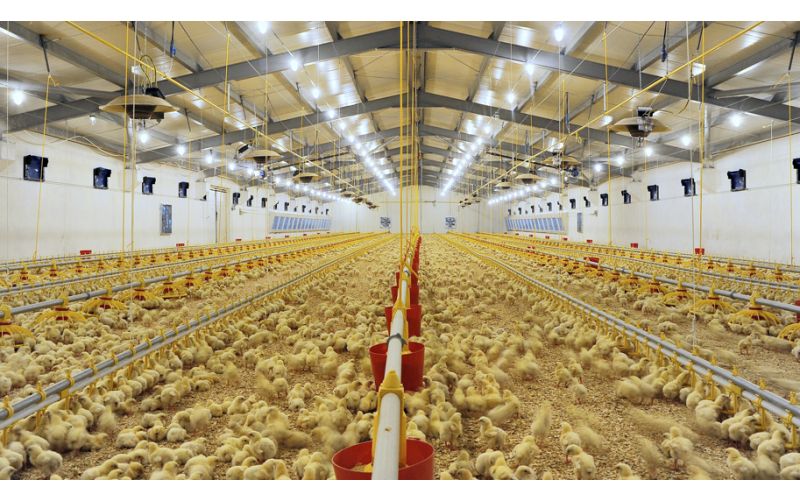
Wavelength and light intensity for broilers
The lighting programme remains of vital importance as it is intimately linked not only to the rhythm and physiology of broilers, but also to the secretion of growth-related hormones. An appropriate lighting regime in terms of intensity, photoperiod and wavelength (colour) is fundamental to their growth and welfare.
Wavelength also influences fear and stress levels, as it has been observed that broilers reared under blue light showed less fearfulness than those reared under white light. It has also been observed that broilers reared under dual light (warm (2,700 K) and cool (5,000 K)) exhibited a clear preferential pattern for warm light during the first and last hour of a 16-hour photoperiod.
The behavioural impacts on broilers may suggest that lighting programmes with different wavelengths and light intensities could be a usable tool for improving welfare and production. However, it is important to understand the origin of the behavioural changes and whether they are related to visual capacity or another critical factor.
The lighting programme remains of vital importance because light has been intimately associated not only with the synchronous rhythm and physiology of broilers, but also with the secretion of growth-related hormones. An appropriate lighting regime in terms of intensity, photoperiod and wavelength (colour) is fundamental to broiler growth and welfare. Wavelength also influences broiler fear and stress levels, as it has been observed that these were lower in broilers reared under blue light than in those reared under white light.
In experimental trials it has been found that broilers reared under dual light (warm (2,700 K) and cool (5,000 K)) exhibited a clear preferential pattern for warm light during the first and last hour of a 16-hour light period.
The behavioural impacts on birds may suggest that lighting programmes with different wavelengths and light intensities could be a usable tool for improving welfare and production aspects. However, it is important to understand the origin of the behavioural changes and whether they are related to visual capacity or another variable broiler lighting programme.
For example, leg health is one of the most prevalent causes of late mortality and culling in commercial flocks. Numerous researchers have indicated that increased locomotor activity in broilers can improve bird welfare, and several studies on the subject suggest that the stimulating effect of bright light on locomotor activity can improve leg condition.
This is explained by the fact that increased natural voluntary behaviour and physical activity can improve footpad condition and leg health, which is achieved through a variable lighting programme.
Studies on dual light intensity have indicated that when birds are able to choose between eating in a more brightly lit area versus a darker one, they show higher feed intake in the more brightly lit area (20 lux) compared to the darker area (2 lux). And while there were no significant differences in production parameters (body weight and feed conversion ratio), observations regarding welfare suggest an improvement in broilers reared under variable light intensity.
Few studies have examined the effect of natural light on performance, welfare, health and behaviour. However, no differences have been found in welfare indicators (lameness, footpad dermatitis, hock burn, cleanliness and lesions) between birds in a commercial farm with natural light only and one with this supplemented by artificial light. However, another study suggests that broilers preferred natural light (280 to 900 lux) over a single artificial light source (22 to 44 lux) after 18 days of age, and it has also been observed that broilers reared in commercial conditions with natural light (averaging around 85 lux) show greater activity and better leg condition than those reared with artificial lighting alone (11.4 lux).
It has also been demonstrated that lower light intensities reduce broiler activity, cannibalism and litter scratching, while higher levels promote greater activity, which may explain some of the differences observed in studies on natural light.
An area that has received increasing attention in recent years has been the uncontrolled entry of natural light into houses through tunnel fan inlets, side-wall openings and other locations, which increases the temporal and spatial variability of light intensity. In one study, significantly higher feed conversion ratios and feed intake were reported for birds reared under variable light to mimic the enormous variation found near tunnel fan exhausts, compared with values for broilers reared under a constant intensity of 2.5 lux. Intensities of up to 6,000 lux have also been reported in naturally lit broiler houses compared to those with traditional artificial lighting, more than 600 times higher than the levels generally accepted in the broiler sector today.
The new trend: applying light gradients within the house so that broilers can choose
There is growing evidence indicating that focusing on a single uniform light intensity and colour (Figure 1) applied uniformly over time (age) and space (the rearing environment) may have been a mistake. With the poultry sector’s increased focus on animal welfare, gradient lighting programmes (Figure 2) that provide bright light levels near feeder lines and much lower levels near the walls, allowing broilers to “choose” their preferred zone, are attracting considerable attention.

Broilers have shown a preference for higher-intensity light when engaged in active behaviour (such as feeding), but prefer dimmer areas when resting. It has been demonstrated that light intensity affects activity, but most studies have focused on constant, uniform light intensities to determine their effect on welfare and performance. However, a strong effect of light intensity contrast on behaviour and health has been reported, and it is suggested that high intensity contrast was associated with strong behavioural rhythms.
Vision is probably the dominant sense in domestic poultry, and the evolution of vision is determined, at least in part, by the available natural light, with its gradients of direct sunlight and shade, in the jungles of Southeast Asia where the ancestors of today’s broilers originated. However, commercial broilers today are housed under dim light conditions because it is assumed this improves productivity and feed conversion, while reducing overall activity and pecking episodes.
If birds perceive different light intensities differently, this can influence their behaviour. Manser (1996) suggested that the intensities between 5 and 22 lux currently used for broilers and turkeys may contribute to a decrease in their engagement in exploratory behaviour and social interactions, and to a high prevalence of leg abnormalities, mortality, ocular abnormalities, breast blisters and fearfulness. This indicates the potential for environmental enrichment and, consequently, for improving welfare through a lighting gradient, and justifies further investigation.

Numerous reports indicate that birds have preferences for specific light intensities depending on their age.
When offered a choice between intensities of 6, 20, 60 and 200 lux, two-week-old broilers preferred the highest intensity across all their behaviours. However, at six weeks they showed greater activity below 200 lux, resting under less than 6 lux. In another trial it was observed that when broilers were offered a choice, the majority were found disproportionately distributed in areas with feed and water available illuminated at 20 lux, as well as in poorly lit areas (1 lux) with no feed or water, compared to other areas with feed and water illuminated at 5 lux.
It has also been observed that a variable light intensity programme increases natural voluntary behaviours and physical activity in broilers, improving weight gains and feed conversion ratio, as well as the gene expression of the cerebral welfare indicator.
These studies tend to suggest that the uniform light intensity that producers have used for years may not be the best option for broilers. And this fact has not gone unnoticed by lighting system manufacturers, with multiple gradient lighting options now available on the market and others currently under trial.
Summary: lighting is evolving — let us take nothing for granted.
Lighting programmes in the broiler sector continue to evolve and are far from being an exact science. Responses to changing consumer demands for alternative light programmes and improved welfare conditions have led to a reassessment of lighting programmes by the commercial broiler sector in recent years.
A variety of lighting programmes are currently in use or being studied throughout the broiler sector. These range from reinstating windows in side walls to allow natural light entry, to the more recent concept of gradient or variable-intensity lighting that allows birds to “choose” the light level they desire during their grow-out. This often means higher-intensity lighting near feeders and drinkers, where activity levels are high, and a much lower light level near the walls for resting where activity levels are lower.

Despite our knowledge of the importance of light for broilers, the sector continues to seek the ideal lighting programme that can deliver the production performance, growth, health and welfare benefits we desire. This challenges lighting manufacturers to develop new options that can meet the needs of a changing poultry sector. Continued collaboration between lighting manufacturers and the poultry sector is fundamental to addressing the outstanding challenges and enabling improved lighting practices for broilers.
Author: Tom Tabler, Professor at the University of Tennessee with over 40 years of experience in poultry science.