
Brussels – 20 May 2025
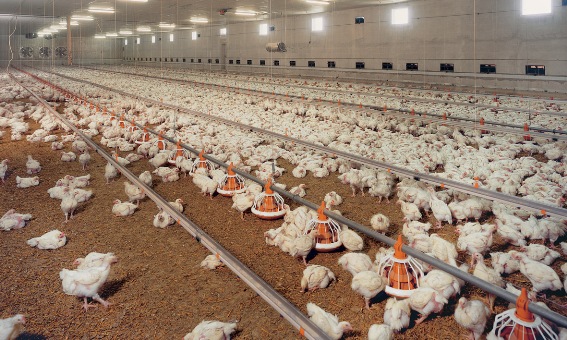
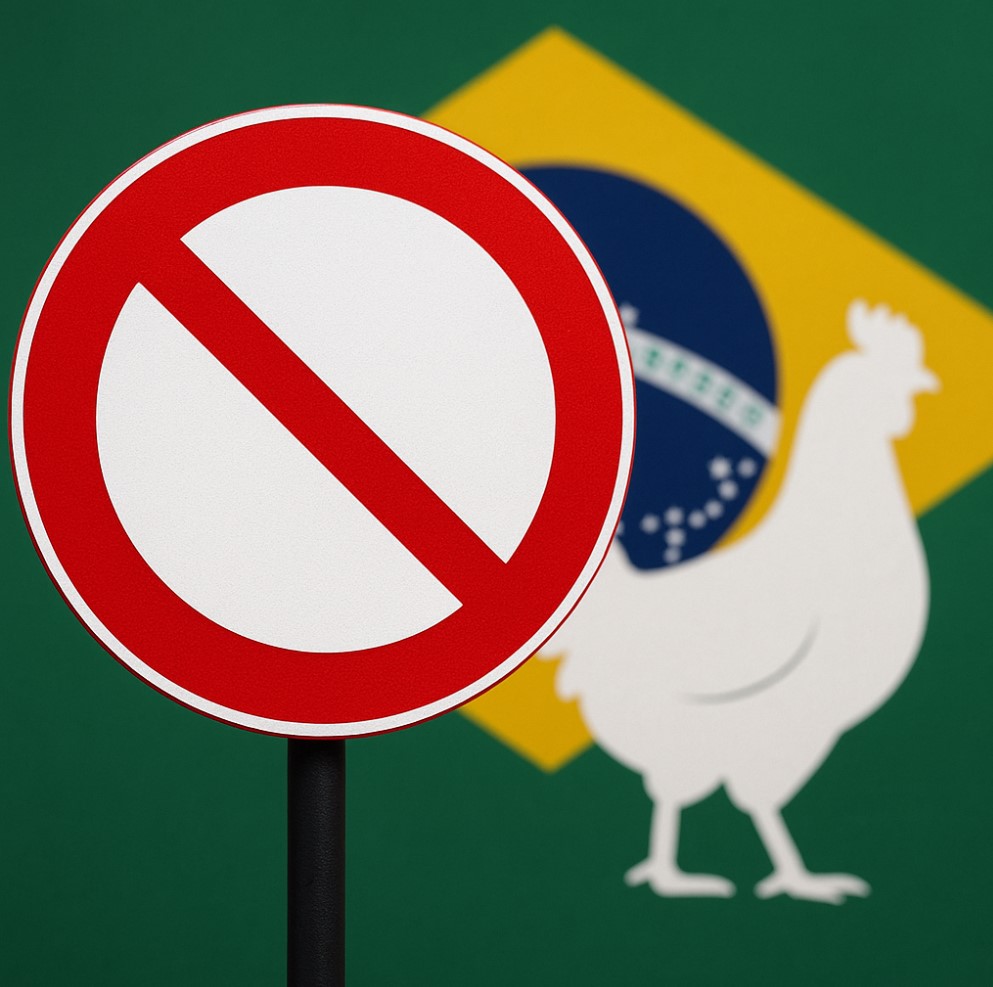
Brazil, the world’s largest poultry meat exporter and the European Union’s primary source of poultry meat imports, can no longer export poultry and meat products to the EU. This decision by the European Commission follows Brazil’s confirmation on Friday, 16 May 2025, of its first avian influenza outbreak on a commercial poultry farm.
According to a statement made on Monday, 19 May, by European Commission spokesperson for health and food safety, Eva Hrncirova, EU import conditions require that the exporting country (Brazil) be free of Highly Pathogenic Avian Influenza (HPAI). As a result of the outbreak detected on a farm in the state of Rio Grande do Sul, Brazil can no longer issue the veterinary health certificates required to attest that the country is free of avian influenza — an indispensable requirement for export to the EU. Consequently, poultry and meat products cannot be exported to the EU from any part of Brazilian territory.
EU restrictions will apply to the entire country. However, Brussels has not ruled out relaxing restrictions at the national level at a later stage. Spokesperson Hrncirova mentioned that regionalisation, a mechanism that would allow unaffected areas to continue exporting, could be considered “at a later stage”. This would depend on “sufficient assurances from the Brazilian authorities”, which could include an audit by the Commission. The Commission has given no timeline for this consideration.
Brazil’s Minister of Agriculture, Carlos Favaro, had stated on Friday that, under existing protocols, countries such as China, the European Union and South Korea would ban poultry imports from Brazil for 60 days. The Brazilian avian influenza outbreak triggered protocols for a nationwide trade ban by the leading buyer, China, and state-level restrictions from other major consumers such as Japan.
Although the EU represents only a small market for Brazil — dominated by China, the United Arab Emirates, Japan, Saudi Arabia and South Africa — Brazil is the leading source of total EU poultry imports, accounting for a 32% share last year. In 2024, Brazil exported millions of tonnes of poultry meat, of which approximately 4.4% was destined for the EU. The total volume of imports from Brazil to the EU remains relatively low, as the majority of EU consumption is supplied by European poultry producers.
Nevertheless, despite the modest volumes, cheaper, high-value-added Brazilian imports have exerted downward pressure on EU prices. A suspension of imports is therefore likely to increase demand from European poultry integrators for their contract growers and to accelerate new broiler farm projects on European soil that had been placed on hold.

The crux of the matter: regionalisation
The debate is centred intensely on the concept of regionalisation. While the EU has managed its own HPAI outbreaks by restricting trade only from affected regions, this flexibility is not automatically extended to key trading partners such as Brazil. The European Commission is reportedly considering legislative changes to allow a regionalised approach for third countries in the future. However, such changes would not be retroactive and would require a new legislative process, meaning they are unlikely to resolve Brazil’s current predicament in the short to medium term.
6 lessons that all of us working in the poultry industry can draw from this situation:
- The importance of having regulatory frameworks that account for all scenarios: The EU’s stringent sanitary and phytosanitary measures can significantly affect global trade flows. The absence of a pre-negotiated regionalisation agreement is now a critical vulnerability for Brazil.
- Significant market disruption: Brazil is a colossal player in the global poultry market, and although only 4.4% of its exports are destined for the EU, it remains an important destination. A ban — even if not total due to a possible (but currently non-existent) regionalisation — could shift trade patterns, affect prices and create supply chain challenges.
- Biosecurity, Compartmentalisation and Regionalisation: The spread of HPAI, even if primarily in wild birds, represents a constant threat. This situation reinforces the paramount importance for poultry companies of maintaining robust biosecurity measures, rapid surveillance systems and swift response protocols. For countries, it serves as a reminder of the importance of being able to isolate, compartmentalise and regionalise outbreaks as far as possible.
- Precedent for other countries: The EU’s stance towards Brazil could set a precedent for how it handles HPAI outbreaks in other third countries that are major poultry exporters.
- The drive towards harmonised standards: EU poultry bodies are seizing upon this situation to call for the universal extension of the European production system and the consistent application of animal health and welfare standards, arguing that exporters from third countries must meet requirements equivalent to those faced by EU producers in order to ensure fair competition.
- Food sovereignty: In the face of ongoing pressure on EU regulators from animal rights lobbies to reduce the production of animal-derived food in Europe — that is, to reduce the number of farms — and the support lent to them by certain politicians and journalists who have “Walt Disneyified” the rearing and fattening of poultry and livestock in general, the poultry sector and the entire agri-livestock sector must remain strong and must not allow technocrats to force further reductions in the number of farms across Europe. As far as possible, every country and every region should achieve the maximum degree of food sovereignty that its agricultural and rural environment allows.
Federico Castelló
Founder of NeXusAvicultura