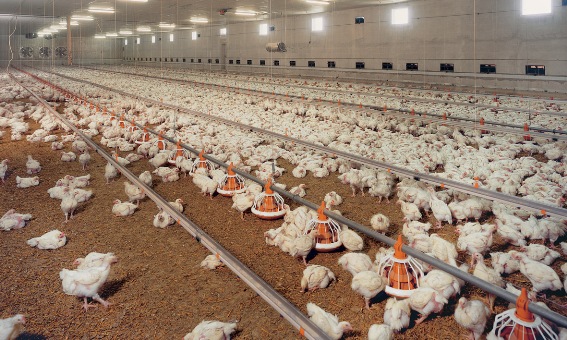

A recent study sheds light on the influence of genetics and stocking density on broiler behaviour, highlighting significant differences between conventional and slow-growth strains. The findings, which are crucial for veterinarians and poultry producers, suggest that genetics plays a more determining role in animal welfare than stocking density within typical commercial ranges.
Growing global concern for animal welfare in modern poultry production has driven numerous studies focusing on factors such as growth rate and stocking density. High stocking density has traditionally been associated with a deterioration in welfare, but a new study published in Poultry Science examines in depth the interaction between genetics and stocking density, offering a more nuanced perspective on broiler behaviour.
Researchers from the University of Arkansas and Purdue University evaluated the behaviour of two distinct genetic strains: a conventional-growth strain (CONV, Ross 708) and a slow-growth strain (SG, Hubbard Redbro). Birds were reared at two stocking densities: 29 kg/m² (LO, low density) and 37 kg/m² (HI, high density), replicating common industry conditions. Throughout the study, various behaviours were recorded and analysed — including walking, standing, sitting, lateral sitting, eating, drinking, and dust-bathing — at different growth stages.

Genetic strains: major behavioural differences
The study results revealed notable behavioural differences between genetic strains, regardless of stocking density.
- Greater sedentary behaviour in conventional broilers: Birds from the CONV strain showed a greater tendency to sit compared with SG birds. This difference became more pronounced with age; at 39 days, a significantly higher percentage of CONV broilers were sitting compared with 25-day-old birds and compared with SG birds that had reached market weight (60 days).
- Lateral sitting: an indicator of potential problems: A particularly interesting finding was the higher prevalence of “lateral sitting” behaviour in CONV broilers. This posture, in which the bird sits with one leg extended to the side, was observed significantly more frequently in CONV birds at both ages assessed and also when compared with SG birds at market weight. The researchers suggest that this behaviour could be related to discomfort or musculoskeletal problems, which is consistent with previous studies associating fast-growth broilers with poorer leg health. Indeed, earlier studies by this same research group found a higher incidence of hock burns in conventional broilers.

- Greater activity in slow-growth broilers: In contrast, SG broilers displayed higher levels of active behaviours such as walking and standing. They walked more than CONV birds at 39 days and at market weight, and also remained standing for longer at both ages and at market weight. This greater activity is consistent with the previous literature describing slow-growth strains as more energetic and displaying a broader repertoire of behaviours associated with improved welfare, such as foraging and dust-bathing.
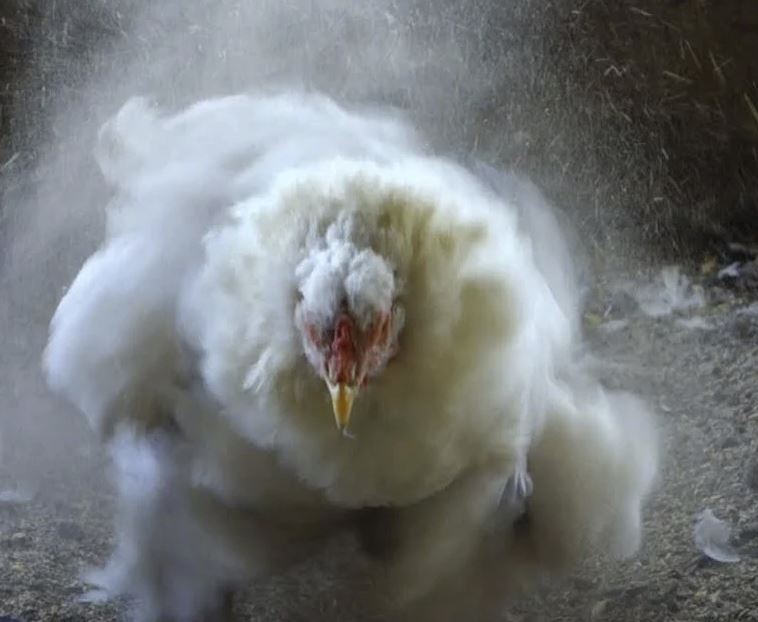
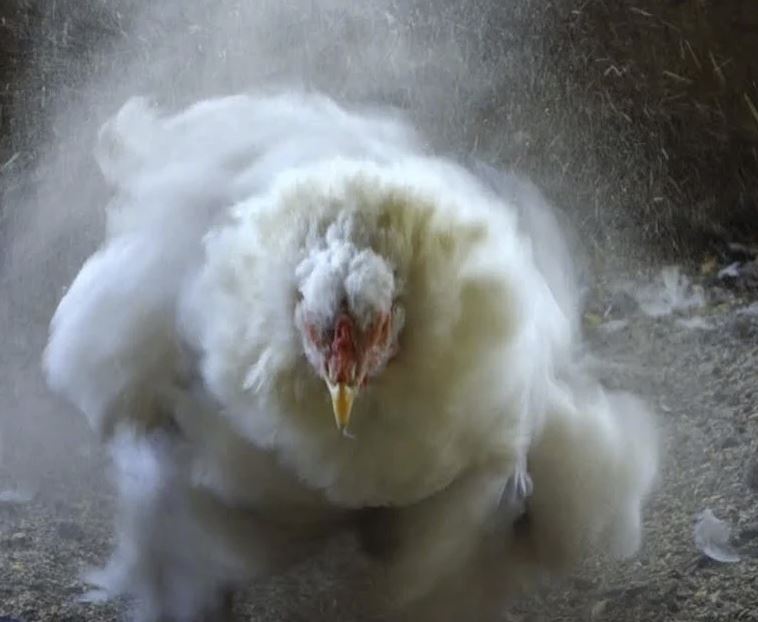
- Dust-bathing: a sign of comfort: Dust-bathing behaviour was another aspect where significant differences were observed. Although no differences were found at 25 days, a higher percentage of SG broilers dust-bathed compared with CONV birds at 39 days and at market weight. This finding is consistent with other studies suggesting that slow-growth strains exhibit more comfort behaviours.
Stocking density affects behaviour, but less than expected
Contrary to widespread belief, the study found that stocking density (within the ranges of 29 and 37 kg/m²) had a limited impact on most of the behaviours observed.
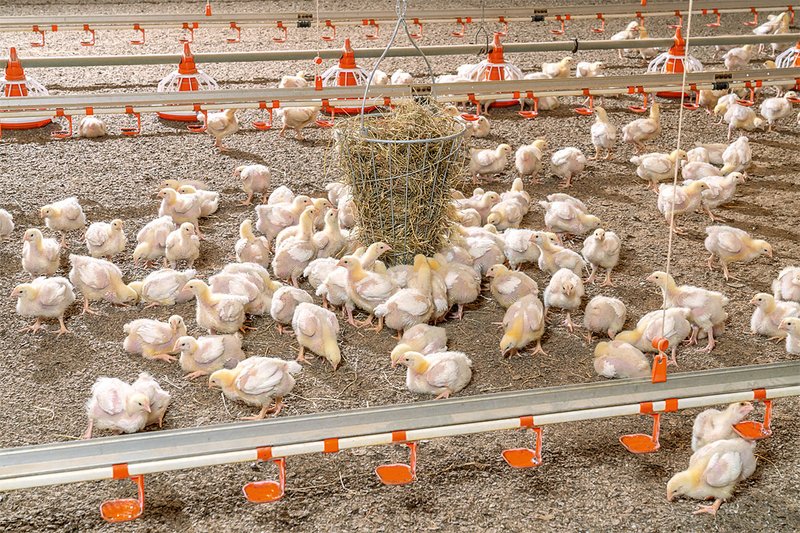
- Greater drinker usage at higher density: The only significant difference related to stocking density was that a higher percentage of birds drank at the higher density (37 kg/m²) in the age-adjusted analysis. However, the authors note that this percentage difference is small and may lack biological significance.
- More dust-bathing at lower density: A higher frequency of dust-bathing was also observed at the lower density (29 kg/m²) in the age-adjusted analysis.
- Sporadic behaviours: Foraging and dust-bathing behaviours were infrequent at both densities and in both strains, which precluded robust statistical analysis. Nevertheless, a numerically greater tendency towards dust-bathing was observed at the lower density.
These findings suggest that, within the limits studied, stocking density may be a less influential factor in broiler behaviour compared with genetics. This is consistent with some previous research highlighting that overall environmental management has a greater impact on welfare than stocking density alone. Factors such as litter quality, ventilation, and resource availability may be more critical to welfare than a slight variation in stocking density.
Practical implications for integrators and poultry producers
The results of this study have significant implications for decision-making in the poultry industry:
- Genetics as a key welfare factor: The study underscores the importance of genetic strain selection as a determining factor in the behaviour and, potentially, the welfare of broilers. Slow-growth strains appear to exhibit more active behaviours associated with improved welfare, which must be considered when designing production systems with higher animal welfare standards.
- Behavioural observation: a diagnostic tool: The higher prevalence of “lateral sitting” in conventional broilers could be an early indicator of musculoskeletal health problems or discomfort. Veterinarians and producers should monitor this behaviour as a potential warning sign requiring further investigation into management conditions and flock health.
- Re-evaluating the impact of stocking density: While high stocking density remains a legitimate concern, this study suggests that, within typical commercial ranges, genetics may have a more pronounced impact on behaviour. This does not imply that density is irrelevant, but it does highlight the need to consider a holistic approach to welfare, in which genetics, environmental management, and stocking density interact.
- Considerations in higher-welfare production systems: For production systems seeking to improve animal welfare, transitioning to slow-growth strains could be a more effective strategy for promoting positive behaviours than simply reducing stocking density slightly. Nevertheless, it is essential to consider the economic challenges associated with slow-growth strains, such as lower breast meat yield and poorer feed efficiency.
- Future research: The authors recommend that future studies explore a wider range of genetic strains and examine in greater depth the relationship between body conformation, growth rate, and leg health in order to better understand the factors driving the observed behavioural differences.
Factors such as litter quality, ventilation, and resource availability may be more critical to welfare than a slight variation in stocking density.
Based on the target market to which the integrator wishes to sell, it must decide which genetics to use and, on that basis, which management practices to recommend to its contract growers.
This study provides valuable evidence emphasising the significant influence of genetics on broiler behaviour. The marked differences observed between conventional and slow-growth strains in aspects such as activity levels, sedentary behaviour, and comfort behaviours suggest that genetic selection is a critical factor for animal welfare. While stocking density remains an important management aspect, this study indicates that, within the ranges studied, its impact on behaviour may be less determining than genetics.
These findings urge integrators to carefully decide which genetics and which stocking densities/management practices they will recommend to their contract growers, since different genetics require different management. The final decision will obviously depend on the market conditions and the purchasing power of the market to which the integrator wishes to sell its birds, but if it wants to claim the merit of providing higher animal welfare standards, it will need to adapt not only its management practices, but also its choice of genetics.
Source:
-. Effects of genetic strain, stocking density, and age on broiler behavior. Rosemary H. Whittle, Darrin M. Karcher, Marisa A. Erasmus, Shawna L. Weimer. Poultry Science, Volume 104, Issue 2, 2025, 104723
For further reading:
-. Stocking density in broiler rearing