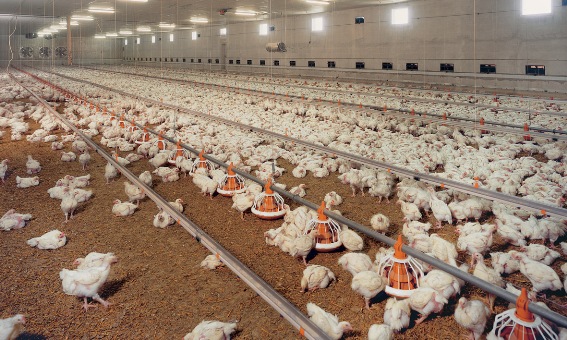

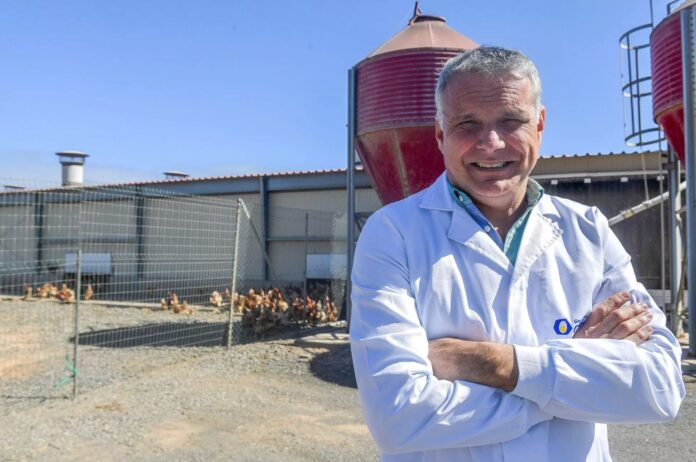
Egg consumption grows but there is no land for more hens in the Canary Islands
The lack of land and «excessive» red tape are reducing the number of farms on the Islands, despite the region being one where this product is most purchased
The egg is one of the key foods in the Canarian diet, but the scarcity of land and the «strict» requirements for setting up laying hen farms are preventing self-sufficiency. Meanwhile, demand continues to grow. Egg consumption is rising steadily: in 2019 per capita consumption in the region stood at 121 eggs, and currently that figure has reached 140 per person. This figure is one of the highest in Spain and even exceeds the national average of 137 eggs.
The product has been gaining recognition for its nutritional benefits and enormous versatility. However, the upward trend in numbers is also explained by the growing influx of tourists to the Islands. This increase is leading to a reduction in the self-sufficiency rate, which has fallen over the last decade from 70% to 62%. «Consumption is up, but production is not. The number of farms is not growing, nor is the laying hen flock», explains the president of the Canary Islands Poultry Farmers’ Association (Asavican) and the Archipelago’s largest egg producer, Fulgencio González.
Concern within the sector exists not only because the number of farms is not growing, but also because data from the Canary Islands Institute of Statistics (Istac) show that the trend is towards contraction and that the industry is in decline. In 2009 the number of agricultural holdings reached 1,292 and by 2023 – the last year for which records are available – this had fallen to 360 holdings. «There are many small farms with around 200 hens, but there must be about a hundred large ones», explains González, who states that the Archipelago has 1.4 million birds of this type.
The representative of Canarian poultry farmers regrets that over the past nine years the sector has suffered a period of «stagnation», despite ever-growing product consumption. The flock size is not increasing, nor is the number of farmers willing to invest in a major project. «Since 2010, perhaps three new farms will have been registered, no more», he asserts.

The list of problems is long. «The first is land availability, and also the number of conditions imposed on us when setting up a new farm», González complains, asserting that the bureaucracy is a «continuous obstacle course» that holds back the sector’s growth. The producer explains that obtaining permits from the authorities is «extremely complicated» and insists that the environmental requirements that must be met when exceeding 40,000 hens are «very difficult to achieve».
The sector wants to grow, but many producers decide not to because of the difficulties encountered in the process. «Most want to move forward, but building new sheds and facilities is becoming increasingly complicated», acknowledges González, who operates six farms in Gran Canaria.
Waste management and building density limits are two further issues that add obstacles along the way. «There is a lot of technology we could use to manage waste, but obtaining a permit for this type of plant is extremely complicated — there is no land available», notes González. Furthermore, individual management of this waste represents an additional cost for poultry farmers.
Animal welfare
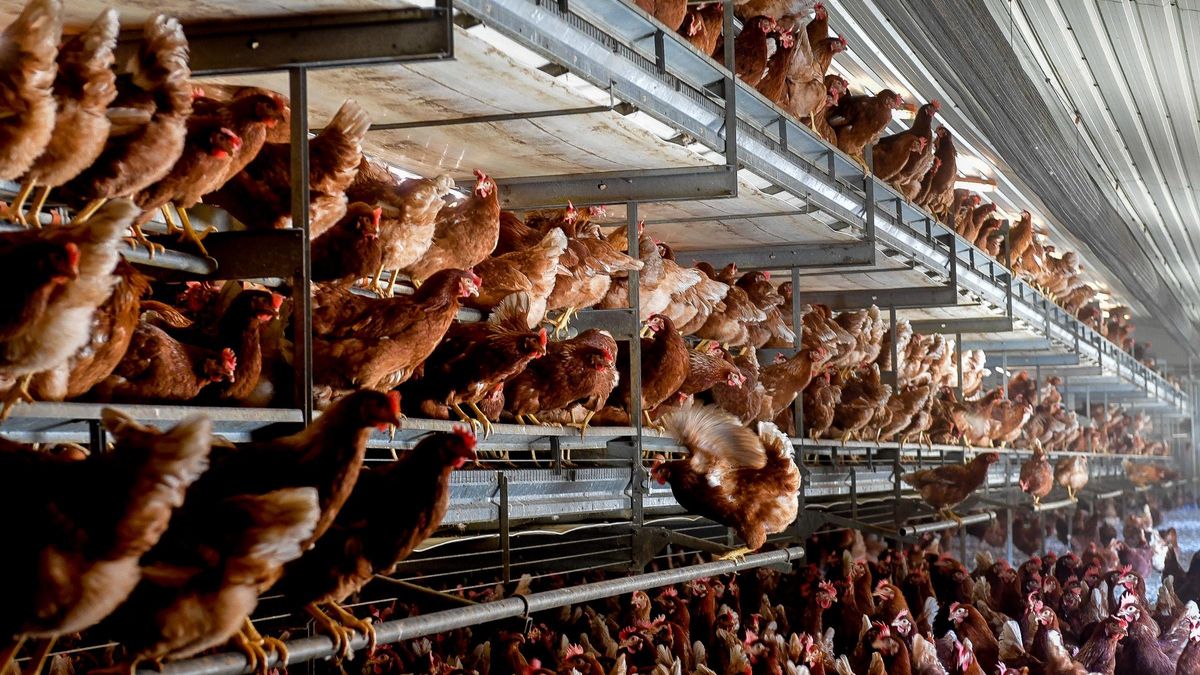
The sector is fully committed to complying with animal welfare regulations. «The practice of keeping four hens in a small cage disappeared 25 years ago; now, under the enriched cage system, the animals are housed in a kind of compartment measuring three metres by four», explains the producer. The eggs obtained by González from his Las Rosas farm (Agüimes) – part of the Grupo Huevos Guillén – come from free-range hens, the system currently in greatest demand from consumers. The birds roost in spacious areas and have complete freedom to roam an open-air plot. «This type of farming significantly increases costs because each hen needs at least four square metres of land», explains González, who acknowledges that for the entire sector meeting this requirement on the limited land available in the Canary Islands is «impossible». This rearing system is not compulsory but, according to the producer, «if it were, eggs would cost 20 euros».
For pullet rearing, the sector needs to import day-old chicks from mainland Spain. The native Canarian hen breed is very marginal. «Here there are usually two or three strains; the Canarian breed is only kept by small-scale farms, and there are very few of them», confirms González. The conditions for bringing in the birds have also become more complicated, adding a further problem for producers. According to the president of Asavican, day-old chicks used to arrive on the Islands in batches of 10,000 on scheduled flights operated by airlines such as Iberia or Air Europa, which allowed poultry farmers to place orders according to their needs.
Now producers’ purchases are consolidated and arrive in groups of 70,000 on charter flights, which forces all orders to be placed simultaneously. Commercial airlines refuse to transport live animals.
This situation causes production to become concentrated. At Las Rosas farm there are five separate flocks of hens — each group of the same age — to ensure a continuous egg supply, totalling 30,000 birds. Hens begin laying at 20 weeks of age and have a productive life of between 75 and 90 weeks. «Once they reach a certain age, production declines», clarifies González. By importing all birds simultaneously, the timings converge and slaughterhouses become overwhelmed. «When we go to the slaughterhouse, we all go at the same time; when small eggs are being produced, we all have small eggs», the president explains.

And placing small («S» grade) eggs on the market is no easy task. «They usually go to the catering trade, but if we all have the same size the market cannot absorb them», clarifies González, who annually produces 60.8 million eggs.
The sector is also unhappy with the distribution of subsidies, specifically those under the Community Support Programme for Agricultural Production in the Canary Islands (POSEI). In addition to being insufficient, they arrive late. «The laying poultry sector is receiving less than 1% of the programme’s aid», González denounces, calling for a proportional increase for his sector. «It does not reflect what we produce; we are not a minor sector», he stresses.
Increase in aid
The Minister for Agriculture, Livestock, Fisheries and Food Sovereignty of the Canary Islands Government, Narvay Quintero, visited one of González’s farms last October and promised that the Canarian authorities would «fight» to secure an increase in POSEI aid for local hen egg production for the 2025 campaign.
The president of Asavican would be satisfied if «the few subsidies» allocated to them were to arrive on time and in full. «We are the last to be paid of all the Canarian livestock sectors; 80% of our aid reaches us a year and a half later than it does other sectors», he complains.
European animal welfare legislation also obliges producers to make major investments to, among other things, completely phase out cages from farms.
The Las Rosas farm is an example of modernisation. González has been investing for years to comply with regulations, but also to offer the best possible product to his customers. The farm is equipped with state-of-the-art machinery. One of the devices takes up to 24 photographs of each egg to verify product quality and reject those that do not meet standards. «We can see inside the egg and detect any anomaly», explains the owner. This grading process also creates batches that are sold once a month to liquid egg processing plants on the mainland. They send up to 20,000 dozen eggs per month.

Poultry farmers like González strive every day to modernise their operations and call on the authorities for recognition. «Legislation has imposed obligations on us, and that comes at a cost», the producer recalls, explaining that «in order to be competitive, modernisation is essential». At Las Rosas, all management is digitalised, which facilitates operations. Even so, «you have to dedicate 24 hours a day to it». González’s company employs nearly 60 workers and there is always work to be done. «Free-range rearing involves a completely different management system compared to cage systems and requires more staff», he explains. One of the tasks involves teaching newly arrived pullets where to roost at night so that, when the laying period begins, they do not lay eggs on the floor or outdoors.
Source:
-. Andrea Saavedra. LA PROVINCIA. Diario de Las Palmas. (2 Feb. 2025)