

In February 2024, veterinarians from the Czech Republic investigating an avian influenza (AI) outbreak encountered a puzzling case that has now (February 2025) come to light through a study they published on bioRxiv. BioRxiv is a free online archive for unreviewed preprints in the life sciences, operated by Cold Spring Harbor Laboratory, allowing authors to share findings immediately and receive feedback before submitting to journals.
It was a “perfect” farm with the best biosecurity, yet even that was not enough
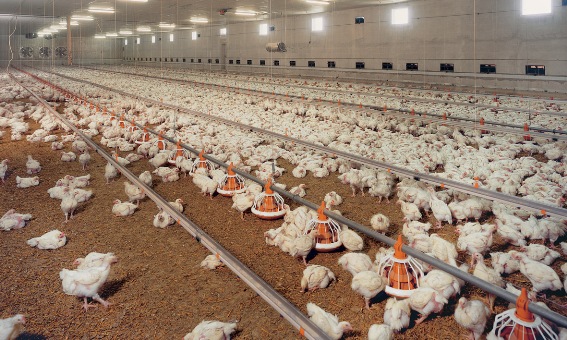
As described, the highly pathogenic H5N1 virus affected birds on a high-biosecurity breeder farm with state-of-the-art facilities. The water used was filtered from the farm’s own wells, the houses were equipped with fans providing unidirectional airflow, the premises were surrounded by adequate fencing that kept wildlife at bay, and employees were not permitted to keep poultry at their homes.
The investigation concluded that this particular case involved a combination of conditions that allowed the virus to reach the farm via the wind. Although windborne AI transmission had already been suspected, it is very difficult to confirm; however, this could also have been the cause of the recent spread of the virus among cattle herds in California.

In the case of the Czech Republic farm, the only clue as to the origin of the outbreak came from a large nearby duck fattening farm with 50,000 birds that, one week earlier, had also detected avian influenza in its flocks. On this other farm, the birds were housed in confinement with natural ventilation and a basic level of biosecurity — that is, with the necessary precautions to protect them — but it was situated close to a lake accessible to wild ducks.
The avian influenza swept through the duck houses like wildfire, with 800 ducks dying on the first day and a further 5,000 over the following two days, prompting the decision to depopulate all remaining birds to control the spread of the virus.
In the case of the high-biosecurity breeder farm, conditions were different, as birds fell ill slowly: over the course of a week, they gradually ate and drank less, and some mortalities were observed, particularly near the ventilation inlets of the houses.
The infection then spread to other houses, resulting in several thousand losses among the breeders.
Government veterinarians collected samples from the viruses that had infected the ducks and the birds at the breeder farm, and were able to confirm that three H5N1 strains sequenced from the duck farm were genetically identical to the strains found in the breeder birds, indicating that the duck farm had been the source of the outbreak.
But how? The duck farm was approximately 8 km from the breeder farm, and the investigators could find no physical link between the two. None of the people working on the duck farm ever visited the other, and even the supply or waste-collection contractors were different.
There were also no water sources near the chicken farm, ruling out the possibility that wild birds could have transmitted the virus.
The investigators then verified weather patterns during the week in which the birds fell ill. A steady westerly breeze had been blowing, and an extensive cloud layer could have blocked the ultraviolet sunlight that kills pathogens. Temperatures were cool but not freezing — around 7°C — and viruses thrive in cold air. In other words, perfect conditions for transporting a virus and allowing it to survive the journey.
This is the view of Dr. Kamil Sedlak of the State Veterinary Institute in Prague, who states that after exploring all possibilities, windborne spread was the most plausible explanation in this case. Nevertheless, it is not ruled out that viral particles could also have been carried on something larger, such as duck dander, which may have enabled them to travel such a distance.
Although no attempt was made to sample the air near the affected farms for the virus, previous studies have shown that viral concentrations dissipate rapidly as air moves away from infection points.
That may be why the hens fell ill more slowly than the ducks: they were receiving a lower dose of the airborne virus. The fact that the first birds to die were located near the ventilation grilles provided another clue.
Source:
-. “Genetic data and meteorological conditions: unravelling the windborne transmission of H5N1 high-pathogenicity avian influenza between commercial poultry outbreaks”. Alexander Nagy , Lenka Černíková , Kamil Sedlák. State Veterinary Institute Prague, Prague, Czech Republic
What exactly does this study say?
Windborne transmission of avian influenza: relevance for poultry management
For a long time, we have focused on classical transmission routes, such as direct contact with wild birds, movement of contaminated equipment and personnel, and contamination of water and feed. However, recent scientific evidence — such as that presented in this study — compels us to reconsider the role of wind as a significant factor in the spread of this disease.
Wind as a transmission vector: Genetic and epidemiological evidence
The study “Genetic data and meteorological conditions: unravelling the windborne transmission of H5N1 high-pathogenicity avian influenza between commercial poultry outbreaks” provides robust genetic evidence supporting windborne transmission of HPAI H5N1 in an outbreak in the Czech Republic during the 2023–2024 season. By combining genetic, epizootological, meteorological and geographic data, the researchers reconstructed a sequence of events strongly suggesting that wind was the mechanism of transmission of infection between commercial poultry premises.
- Genetic similarity between strains: Identical H5N1 strains were identified on unrelated premises located approximately 8 km apart. Phylogenetic analysis revealed that viruses from the first affected farm — a large commercial duck fattening unit with 50,000 birds (Farm B) — and the chicken premises (C1A and C1B) showed no farm-specific clustering, with some strains from B being 100% identical to those from C1A and C1B.
- Meteorological correlation: Weather conditions, particularly wind direction and speed, correlated with the transmission route inferred from genetic data. The optimal period for spread of infection coincided with continuous westerly or south-westerly winds.
- Exclusion of other routes: Other possible transmission routes — such as human contact, wild birds or vectors — were ruled out. Farms B and C operated in different market segments and had no interaction with one another. Biosecurity measures at Farms C1 and C2 excluded the entry of rodents and small carnivores.
HPAI outbreaks: Details of the cluster of interest
- Background:
- The study focuses on a cluster of highly pathogenic avian influenza (HPAI) H5N1 outbreaks in the Czech Republic during the 2023–2024 season.
- The primary objective of the study is to investigate and present evidence of windborne transmission of HPAI H5N1 between commercial poultry farms.
- Key dates:
- 4 February 2024: A sudden increase in mortality is detected at a commercial duck fattening farm (Farm B).
- 7–9 February 2024: The entire duck farm (Farm B) is depopulated to control the outbreak. A 3 km protection zone and a 10 km surveillance zone are established.
- 12 February 2024: HPAI H5N1 is detected at two chicken farms (Farms C1 and C2). These farms belong to the same company (C) and are located within the surveillance zone.
- 19 February 2024: The virus is also detected in C1B.
- Affected farms:
- Farm B: Commercial duck fattening farm with approximately 50,000 birds. Ducks were housed in identical buildings with litter flooring and natural ventilation. A sudden surge in mortality was observed, initially affecting 800 ducks and rapidly increasing to 5,000 deaths within two days. The farm was situated near a 15 ha lake accessible to wild birds.
- Farm C1: Chicken farm with two houses (C1A and C1B).
- C1A housed approximately 11,500 laying hens.
- C1B housed approximately 13,000 parent and grandparent stock breeders. This house represented a crucial genetic reserve for the company’s breeding programme.
- Farm C2: Chicken farm with two houses (C2A and C2B).
- C2A housed approximately 5,500 birds. This house was not affected.
- C2B housed approximately 39,500 birds destined for local sale.
- Farms C1 and C2 used treated water from their own wells and feed purchased from various companies. All houses were equipped with negative-pressure tunnel ventilation systems.
- Backyard flock: Additionally, an outbreak was identified in backyard poultry near Farm B.
- Species affected:
- Fattening ducks (Farm B)
- Laying hens (C1A)
- Parent and grandparent stock breeders (C1B)
- Chickens destined for local sale (C2B)
- Progress of infection at Farms C1 and C2:
- HPAI H5N1 initially manifested in C1A and C2B with a slight increase in mortality.
- For at least one week prior to HPAI confirmation, both C1 and C2 experienced a gradual, albeit minor, decline in water and feed consumption. This decline was initially attributed to the administration of a nutritional supplement (Viusid Vet).
- Within the affected houses, infection and mortality began in the areas closest to the air inlets.
- Actions taken:
- To protect the genetic reserve in C1B, C1A was immediately depopulated.
- Subsequently, the virus was also detected in C1B, and this house too had to be depopulated.
Implications for biosecurity on poultry farms
These findings have important implications for biosecurity on poultry premises:
- Ventilation: Tunnel ventilation systems, common in many modern poultry houses, can act as high-volume “air samplers”, drawing large quantities of ambient air into the buildings. This may increase the risk of exposure to windborne viral particles, even at low concentrations. The location of affected birds closer to the air inlets supports this hypothesis.
- Stocking density: Bird stocking density within houses may also influence transmission risk. Premises with higher bird densities and greater ventilation rates may be more susceptible to windborne HPAI spread.
- Distance: Avian influenza virus has been detected up to 1.5 and 2.1 km from affected farms, indicating wind-mediated dispersal.
Practical recommendations for veterinarians and poultry producers
- Assess farm location and surroundings: Always consider proximity to other poultry premises, prevailing wind direction, and the presence of potential contamination sources such as lakes or areas where wild birds congregate.
- Optimise ventilation systems: Where possible, implement systems to filter or disinfect incoming air, particularly during high-risk periods such as nearby outbreaks or weather conditions favouring windborne transmission. Assess costs in advance and consult with environmental control specialists to optimise ventilation without compromising indoor air quality.
- Strengthen biosecurity measures: Maintain strict biosecurity measures, including access control, vehicle and equipment disinfection, and personnel hygiene. Ensure that employees do not keep poultry at their homes.
- Monitoring and surveillance: Implement monitoring and surveillance programmes to enable early detection of the virus on the premises. Carry out periodic testing of apparently healthy birds, particularly in areas close to air inlets.
- Contingency plans: Be prepared with clear contingency plans and rapid-response protocols in the event of an outbreak. These should include procedures for the isolation of infected birds, humane depopulation, and safe disposal of carcasses.
- Collaboration: Foster collaboration between veterinarians, poultry producers, health authorities and meteorologists to share information and coordinate control strategies.
Much more research is still needed
Further research is needed to better understand the dynamics of windborne HPAI transmission. This includes:
- Development of detection technologies: Developing more sensitive and accurate methods to detect viral particles in the air, even at low concentrations.
- Virus dispersal modelling: Creating simulation models to predict windborne virus dispersal under different climatic and geographic conditions.
- Evaluation of control strategies: Assessing the efficacy of different control strategies — such as air filtration, disinfection and the use of physical barriers — to prevent windborne transmission.
The evidence presented in this study and other recent research suggests that windborne HPAI transmission may be a more significant factor than previously thought. By better understanding this transmission route and implementing appropriate biosecurity measures, we can more effectively protect our poultry operations and mitigate the impact of future outbreaks.
Source:
-. “Genetic data and meteorological conditions: unravelling the windborne transmission of H5N1 high-pathogenicity avian influenza between commercial poultry outbreaks”. Alexander Nagy , Lenka Černíková , Kamil Sedlák. State Veterinary Institute Prague, Prague, Czech Republic